


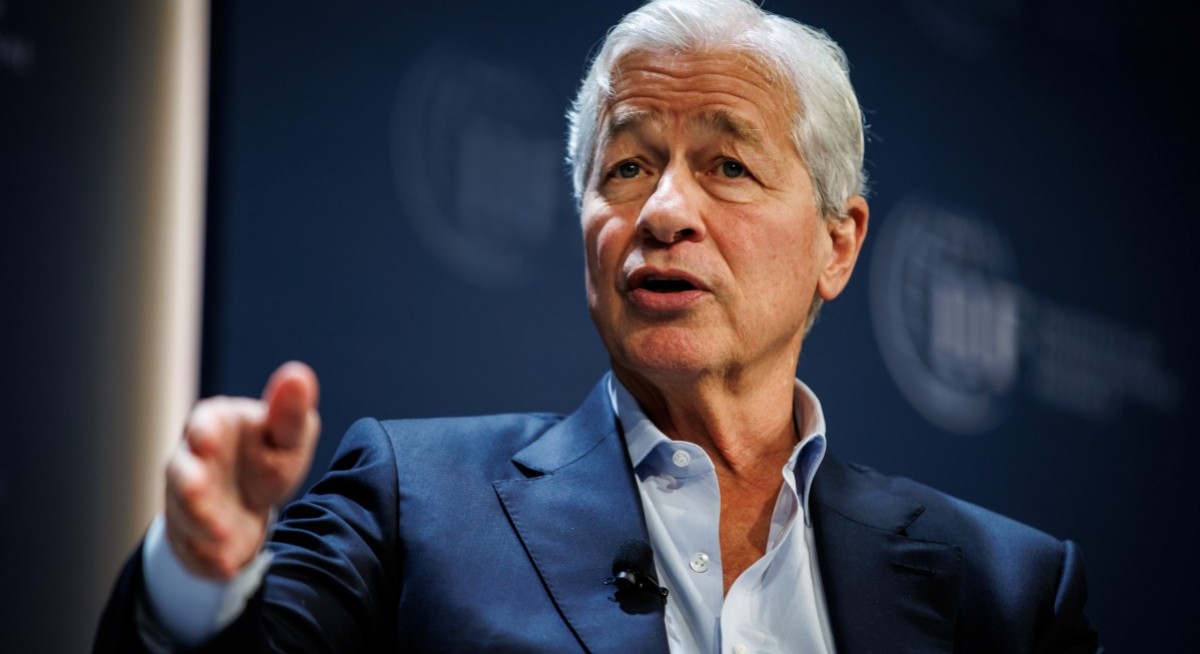


(Jan 23) : President Donald Trump sued JPMorgan Chase & Co and its chief executive officer, Jamie Dimon, for at least US$5 billion over allegations that the lender stopped offering him and his businesses banking services for political reasons.
The complaint, filed Thursday, accuses the bank of trade libel and breach of implied covenant of good faith. It also claims Dimon violated Florida’s deceptive trade practices law. In response, the bank said it doesn’t close accounts for political or religious reasons.
Trump has singled out JPMorgan repeatedly in his push to stamp out what he sees as banks refusing to provide financial services to customers for ideological reasons. JPMorgan closed accounts for Trump and his businesses about seven weeks after the Jan 6, 2021, assault on the US Capitol by his supporters. Trump was out of office then and his political standing was low.
The lawsuit was brought by Trump and several Trump business entities.
JPMorgan, the biggest US bank, notified plaintiffs, “without warning or provocation” that it was terminating accounts, causing significant financial and reputational harm, according to the complaint filed in Miami-Dade County state court. Bloomberg reviewed the complaint, which couldn’t immediately be found in court records.
Since taking office again last year, Trump has sought retribution against perceived political enemies. He or his administration have taken actions against law firms, universities, corporations, media outlets, Democratic officials, and others who don’t align with him ideologically.
See also: Commerzbank’s Orlopp urges EU to keep up with US on deregulation
The bank was motivated by its “woke” beliefs that it “needed to distance itself from President Trump and his conservative political views,” according to the complaint. “In essence, JPMC debanked plaintiffs’ accounts because it believed that the political tide at the moment favored doing so.”
JPMorgan said in a statement that the suit has no merit.
Regulatory expectations
See also: Hong Kong family offices numbers jump 25% since 2023 in wealth hub boost
“We do close accounts because they create legal or regulatory risk for the company,” the New York-based bank said. “We regret having to do so but often rules and regulatory expectations lead us to do so. We have been asking both this administration and prior administrations to change the rules and regulations that put us in this position, and we support the administration’s efforts to prevent the weaponisation of the banking sector.”
The bank disclosed in November that it’s facing reviews, investigations and legal proceedings tied to the Trump administration’s fight against “debanking.” Separately, the Trump Organization has already sued Capital One Financial Corp over similar allegations.
Florida bars financial institutions from ending their banking relationship with an individual or business “based on their political opinions, speech or affiliations,” Trump’s lawyers said in the complaint against JPMorgan.
“Debanking is a matter of public interest and significant importance to all consumers and businesses in the United States of America — and JPMC, especially given its storied and leading history, is a central actor in this ongoing and troubling saga,” it said. Beyond closing accounts, JPMorgan placed Trump, the Trump Organization and family members on a “blacklist” for wealth management accounts, according to the complaint.
“You shouldn’t be debanked,” Trump said to reporters while aboard Air Force One on Thursday. “It’s so wrong. I don’t know what their excuse would be. Maybe their excuse would be the regulators.”
Trump began publicly criticizing the country’s two largest banks over debanking almost as soon as he returned to office for his second term. A year ago, as he virtually addressed an audience at the World Economic Forum in Davos, he chided Bank of America Corp CEO Brian Moynihan — one of a handful of executives on stage for the session — over the issue, and named JPMorgan as well.
The president has brought up the matter repeatedly since then. In August, he accused JPMorgan and Bank of America of rejecting his business, telling CNBC that JPMorgan asked him to close his accounts and Bank of America declined his attempt to deposit over US$1 billion there. An Aug 7 executive order directed federal regulators to, among other things, identify financial institutions that engaged in unlawful “debanking” in the past.
To stay ahead of Singapore and the region’s corporate and economic trends, click here for Latest Section
Trump’s complaint was filed by Alejandro Brito, an attorney in Coral Gables, Florida, who also filed the lawsuit against Capital One.
Brito also has brought lawsuits on the president’s behalf against the New York Times, the Wall Street Journal and, last month, the British Broadcasting Corp, seeking a combined US$35 billion for allegedly defaming Trump. The companies deny wrongdoing and are vigorously fighting the litigation.
Uploaded by Isabelle Francis




