


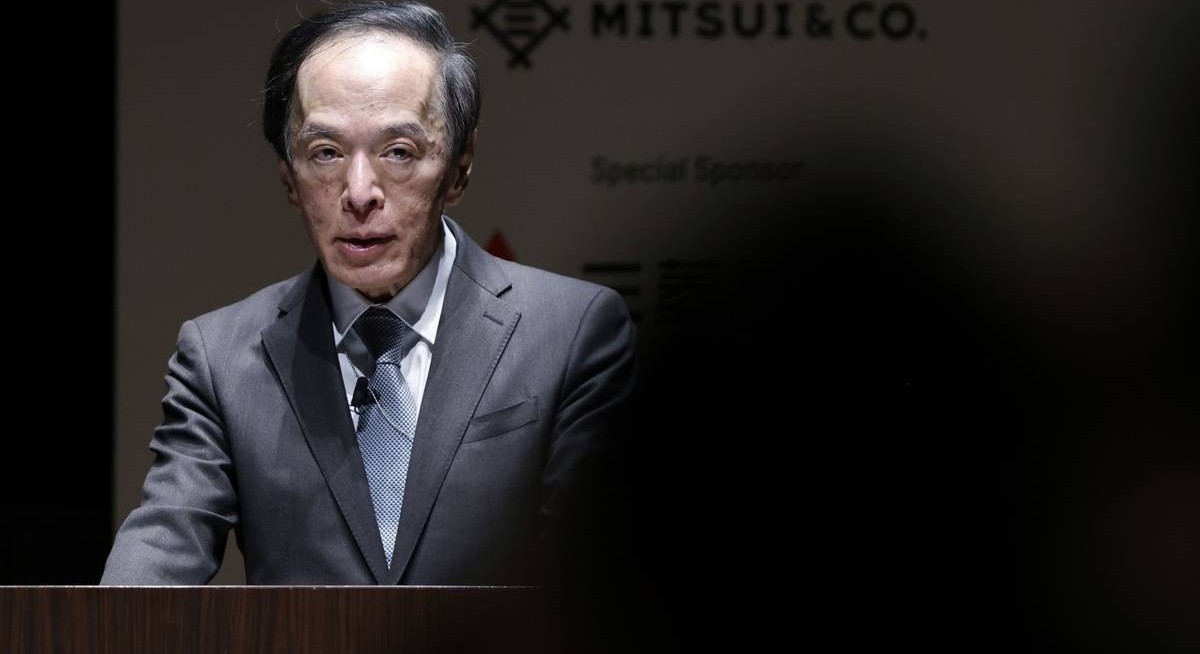


The comments, which came about two weeks after the most recent rate hike, made it clear that Ueda hasn’t finished dialling back monetary easing after bringing the rate to the highest since 1995. Shortly before his remarks, the yield on Japan’s benchmark 10-year bonds continued its recent ascent, hitting the highest since 1999 due in part to market expectations surrounding further rate increases.
“The mechanism between moderate wage growth and inflation is likely to be maintained,” Ueda said.
The BOJ raised its benchmark rate to 0.75% on Dec 19, the highest level in three decades. Most BOJ watchers expect the next move to come around the middle of the year, while some say there’s a risk it could happen sooner due to the weak yen. Japan’s currency was trading around 157.15 to the dollar at midday in Tokyo after earlier touching 157.25, the weakest in two weeks.
The yen moved little after Ueda’s comments. Its proximity to the key threshold of 160 per dollar is considered by market participants to have been a key factor in the BOJ’s rate decision last month.
See also: Commerzbank’s Orlopp urges EU to keep up with US on deregulation
A weak yen intensifies inflationary pressures via higher import costs. Households have become weary of a prolonged living cost crunch as Japan’s key inflation gauge has stayed at or above the BOJ’s 2% target for more than three and a half years.
The BOJ delivers its next policy decision on Jan 23.
Uploaded by Tham Yek Lee




