


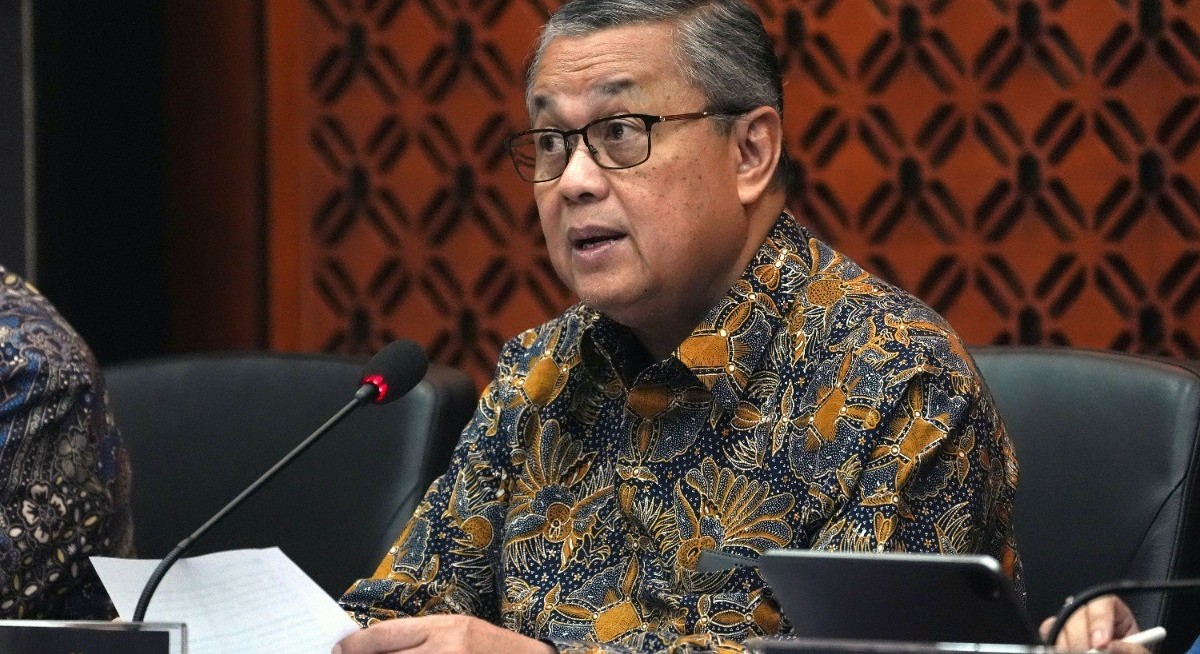


(Jan 21): Bank Indonesia held its benchmark interest rate steady to safeguard the rupiah, which this week fell to a record low on persistent fiscal worries and growing concerns over the central bank’s independence.
Bank Indonesia kept the BI-Rate at 4.75% for a fourth straight month on Wednesday as expected by all 32 economists surveyed by Bloomberg News. Governor Perry Warjiyo said in a briefing that geopolitical turmoil and higher US tariffs have increased global uncertainty, sending the dollar higher and triggering outflows from emerging markets.
“Such conditions demand vigilance and a strong policy response to strengthen domestic economic resilience against global spillovers and to accelerate growth,” he said before announcing the rate decision, which he said is in line with the bank’s current policy focus on rupiah stability.
The rupiah reversed an earlier loss of 0.1% versus the dollar after the decision, while the benchmark 10-year government bond yield was steady at 6.34%. Stocks held their earlier decline of 1.5%.
Just hours before the policy announcement, Warjiyo was summoned to a meeting at the state palace with Finance Minister Purbaya Yudhi Sadewa. The meeting — held with the state secretary as the president is currently overseas — mainly discussed fiscal and monetary coordination to improve the economy, Purbaya said.

See also: Thai assets rally as election victory signals policy continuity
Warjiyo said the rupiah’s weakness has been driven by fund outflows due to global uncertainty, as well as by increased foreign-exchange demand from domestic firms. The currency should remain stable going forward, he reiterated, with Bank Indonesia taking rupiah stabilisation measures, including by intervening in offshore and onshore markets.
The rupiah has extended 2025’s decline to be Asia’s second-worst-performing currency this year, thanks to both domestic uncertainty and concerns about growing global risks. Investor unease grew this week following the nomination of President Prabowo Subianto’s nephew to Bank Indonesia’s board of governors, raising questions about its governance at a time when policy credibility is crucial for currency stability.
Bank Indonesia forecasts economic growth of 4.9%-5.7% this year, according to Warjiyo. That’s below the finance minister’s target of 6%.
See also: Prabowo puts Indonesia on collision course with global markets
In addition to concern about any possible encroachment on the central bank’s autonomy, there are also fears that Indonesia is losing a hard-won reputation for fiscal probity. Demand for the government’s bonds fell to the lowest since March last year at an auction Tuesday.
Warjiyo and his board will likely continue to have to balance pressure to reduce rates and support growth against the need to defend the currency. Policymakers are also pushing banks to pass on more of the 150 basis points of earlier rate cuts since September 2024 to significantly lower borrowing costs and boost loan growth.
Warjiyo said Indonesia may have slightly improved external buffers in support of the rupiah. The 2025 current-account surplus will likely come in at between a deficit of 0.5% of gross domestic product (GDP) and a surplus of 0.3%. That compares with the previous estimate of a deficit of 0.7% of GDP to a surplus of 0.1%.
Uploaded by Chng Shear Lane




