


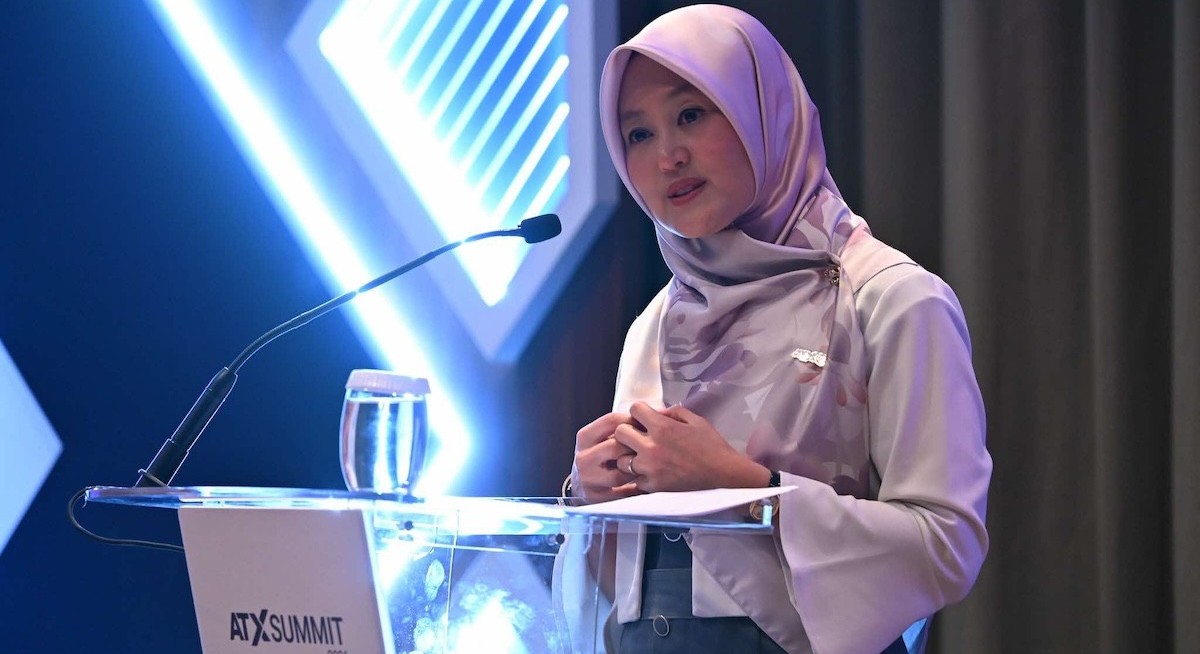


The first links Singapore General Hospital with A*STAR's Diagnostics Development Hub, designed to get research closer to patients. The partnership has backed three innovations so far, says Minister of State for Digital Development and Information and Health Rahayu Mahzam at the AI in Health x ATxSummit earlier today.
One is the in-vitro Antibiotic Combination Test (iACT), which helps doctors choose antibiotic combinations for patients facing antimicrobial resistance. Another is PENSIEVE-AI, a digital drawing application that detects early memory problems in seniors.
The third is HealthVector Diabetes, which Rahayu describes as the world's first digital twin model of human biology that can estimate the risk of chronic kidney disease in people with type 2 diabetes. Diabetes is one of Singapore's most pressing public health problems, with complications that include kidney failure, blindness and amputation.
"An AI tool that can help to identify high-risk individuals for early intervention is not just a research achievement. It is a direct response to one of the most urgent health needs of our population,” she says.
See also: France finds Ebola in humanitarian doctor returning from Congo
The second agreement takes Singapore's healthcare AI work into a different setting entirely. SingHealth and Gyalpozhing College of Information Technology, part of the Royal University of Bhutan, are developing an AI-assisted chest radiograph model trained on Bhutanese data to help rural hospitals diagnose lung diseases, including infections and cancer.
The model is built on MerMED-FM, co-developed by SingHealth and A*STAR. The two institutions will also work together on guidelines, education programmes and regulatory frameworks for responsible AI use in healthcare, tailored to Bhutan's context.
Rahayu says the partnership reflects Singapore's role as a regional health hub. She notes that the chest radiograph model was still in development at last year's ATx but “today, we see it find its footing beyond our shores”.
See also: IHH strives to lower medical costs, attract medical tourists
The hard part is trust
The agreements come as Singapore seeks to shift more healthcare toward prevention and community care. By 2030, the country will have more seniors than children for the first time, with one in four Singaporeans aged 65 or older. The harder task now is not simply adding years to life but adding life to those years, says Rahayu.
Singapore's Healthier SG programme has already begun shifting the healthcare system toward prevention. AI is most useful in that context when it lets clinicians act earlier rather than wait for patients to present at clinics.
Rahayu says Singapore can use data to detect health patterns before they become disease burdens and deploy AI to "catch what the human eye misses." For that to work, clinicians need tools they can trust.
SingHealth has developed the S.C.O.R.E. framework for that purpose. It stands for Safety, Context and Consensus, Objectivity, Reproducibility and Explainability, and is used to evaluate large language model outputs and AI-generated responses in clinical settings.
Clinical teams across SingHealth have applied S.C.O.R.E. to assess tools, including medication enquiry chatbots and systems that assist specialists during consultations. It has also been used to validate model outputs before deployment and guide the selection of suitable models for different clinical contexts.
The Singapore government has also issued the AI in Healthcare Guidelines, known as AIHGle, and the Model AI Governance Frameworks to support the safe deployment of AI in healthcare settings.
"Both MOUs are a reminder that the work does not end when the Summit does. Conversations open doors, but commitments are what move us forward,” says Rahayu.




