




Applications open in the third quarter of this year. There will be no application or accreditation fees.
The move comes as AI is being used in more sensitive areas, including healthcare, finance and public services. In those sectors, a weak test can affect whether a company is comfortable putting an AI system into use at all.
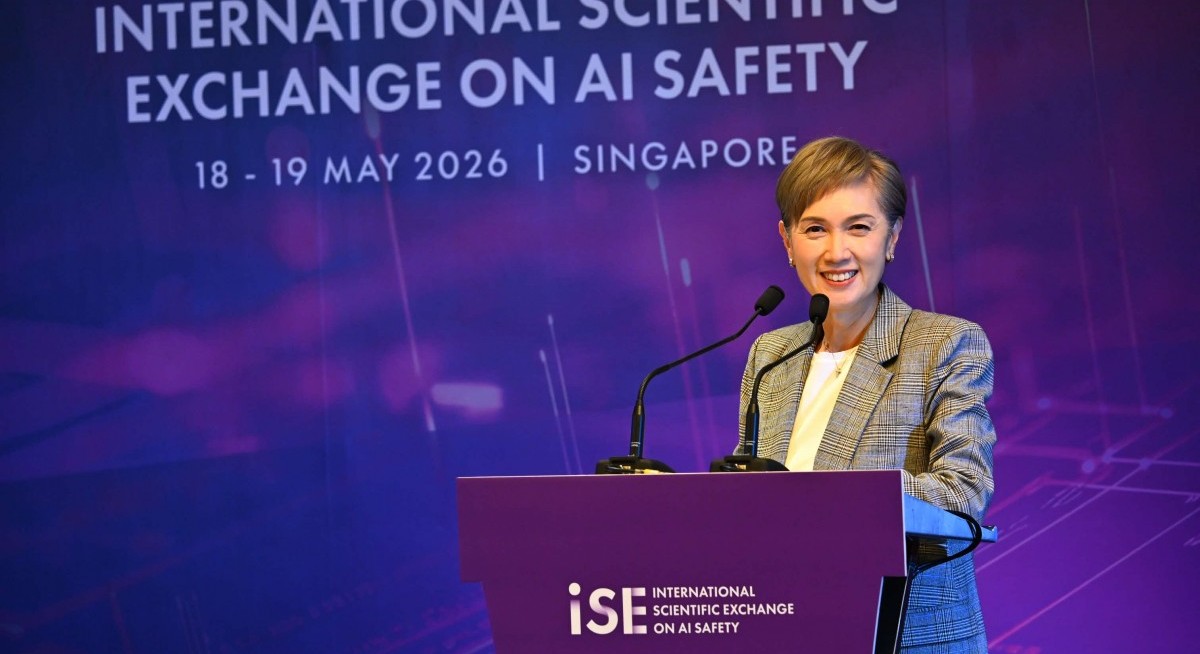
"We want deployers to go for proper testing, but they naturally ask the question: who can I trust as a tester?" Singapore’s Minister for Digital Development and Information Josephine Teo says at the International Scientific Exchange on AI Safety, where the programme was announced. The scheme "is intended to set standards and to uphold a certain level of confidence in the testers themselves”, she adds.
Testing firms will be assessed on technical competency, financial sustainability and operational readiness. They will also have to show that what they say they can do matches what they can actually deliver.
See also: NCS's new AI playbook targets hidden costs holding back AI returns
The accreditation will be benchmarked against IMDA's existing guidelines for testing large language model applications.
Advai, AIDX, Ernst & Young, Knovel Engineering, PwC, Resaro and Vulcan have expressed early interest.
The programme follows Singapore's Global AI Assurance Sandbox, which has tested 30 AI applications across 14 sectors since February 2025, including agentic AI systems and applications exposed to prompt injection attacks. The sandbox aimed to codify emerging norms around what to test and how to test it. The new programme is meant to give the market more firms that can do it.
See also: Meta debuts new AI image-generation model inside chatbot, Instagram
It also fits Singapore's wider AI strategy. Instead of trying to match the US, China or larger economies on compute spending, the city-state’s pitch is that companies should be able to build and deploy AI in a place where the rules, testing methods and institutions are clearer.
"A company deciding where to build an AI research centre should consider not only access to talent and infrastructure, but also whether the surrounding AI ecosystem is stable, trusted and well-governed. We believe that safety and innovation are becoming mutually reinforcing. A trusted AI ecosystem may ultimately become more attractive than a purely fast-moving one,” says Teo.
Singapore updates AI safety research agenda
Singapore also announced an update to the Singapore Consensus on Global AI Safety Research Priorities, a document that came out of the first scientific exchange event in April 2025.
The document is meant to help governments and institutions align their work on AI safety. The original version was built on a 2025 international safety report chaired by Yoshua Bengio, a Turing Award winner, and backed by 33 governments.
It grouped AI safety research into three areas: risk assessment, development and deployment, and post-deployment control.
The update is expected in the second half of 2026.
To stay ahead of the latest tech trends, click here for DigitalEdge Section
One new focus will be agentic risk management as more organisations deploy AI systems that can plan, act and use other tools with less human involvement.
Open-weight models will also get closer attention. Their publicly available parameters are estimated to trail closed frontier models by three to 12 months in capability, raising concerns about misuse as their performance improves.
The other change is the addition of societal resilience as a fourth pillar. That means looking beyond whether an AI system can be made safer before it is released. It also means asking whether institutions, companies and communities can absorb the damage when AI systems fail or are misused.




