


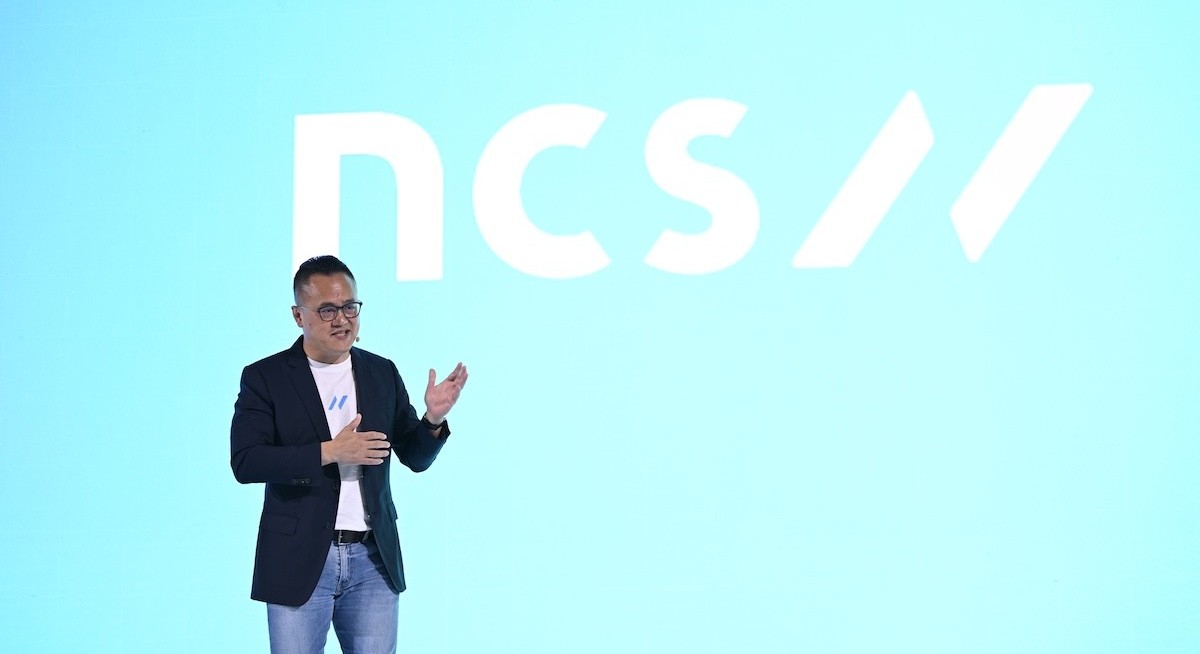


NCS is expanding its healthcare artificial intelligence (AI) work through new agreements with IHH Healthcare and NHG Health.
With IHH Healthcare, NCS will establish a Joint AI Centre of Excellence to co-develop and deploy AI solutions across IHH’s network. The work is aimed at clinical excellence, operational efficiency and cost management.
Meanwhile, NCS is developing agentic AI with NHG Health in areas including biometric identification, digital pathology and HR transformation. The projects are aimed at handling complex, multi-step clinical and operational processes.
NCS is also pushing into rehabilitation.
It is partnering with Fourier Rehab, which makes medical exoskeletons, or wearable robotic devices that support patient movement during rehabilitation. Sam Liew, NCS’s chief executive officer, says Fourier Rehab’s technology has been installed at one of Ren Ci Hospital’s facilities, and that the collaboration with NCS is intended to bring the solution to more sites.
NCS is also working with Hypershell, whose all-terrain exoskeletons are designed to help users move more easily outside hospital settings.
See also: France finds Ebola in humanitarian doctor returning from Congo
The exoskeleton partnerships place healthcare within NCS’s wider physical AI strategy. Separately, the company is launching Sunshine.commanderAI to manage robots and other AI-linked machines from different vendors, an issue Edward Chen, NCS’ chief AI officer, says becomes harder when devices are built by different developers and run on different standards.
Besides looking at physical AI for healthcare, NCS is also targeting the data and software systems behind care delivery and research.
It is working with healthcare IT provider iMedWay on digital tools for data-driven efficiency and patient outcomes. A separate agreement with LinkDoc focuses on using data and AI to support clinical trials for drugs and medical devices across Asia Pacific.
See also: IHH strives to lower medical costs, attract medical tourists
The healthcare partnerships sit inside a broader reorganisation at NCS, which is trying to build AI projects with sector teams, engineers and safety controls from the start rather than treating them as standalone technology deployments.
As such, the company has created an AI Central unit under Chen and says it has about 400 AI engineers and researchers across five groups.
According to Chen, that structure is needed because companies are unlikely to get larger returns from AI by simply adding tools to existing workflows. “When organisations really just adopt tools and technologies for AI by themselves without really changing their own structure and processes, we feel that actually caps the ability to achieve upside,” he says.




