




I once ran into him on a flight from Sydney to Santiago. He carried no checked luggage, but only a shopping bag with his clothes and personal items. His unusual style may have helped make him a successful investor.
In 1990, after General Augusto Pinochet stepped down as Chile’s president, the country was seen as a promising emerging market. Lightbown moved to Santiago to invest. During a morning stroll, he noticed many trucks delivering Coca-Cola to restaurants, suggesting strong consumption. In 1990, Chile had liberalised its economy, and personal spending was rising with greater access to credit. Lightbown figured that Coca-Cola sales would do well.
The local Coca-Cola bottler, Andina, was listed. Lightbown read the annual report, then got on a plane. The office was on the ground floor of the bottling plant. The plant was spartan but clean, and the general manager, Eulogio Pérez-Cotapos, was glad to receive him — investors did not come often.
Lightbown laid out the case plainly. Coca-Cola volumes were growing at 10% a year, while margins widened as the plant scaled. Coca-Cola Andina held 60% of Chile’s soft drink market. It was trading at just four times earnings. Investors had ignored the stock.
See also: AI and irrational exuberance in South Korea
Lightbown invested a million dollars in his fund. He did not sell the position for a decade. When he finally looked up, the stake was worth US$70 million. He made a 70-bagger on the back of a single factory visit.
Hidden gems
Today’s AI fixation may hide hidden gems. Lightbown’s discerning style could still help us.
The Halo thesis (heavy assets, low obsolescence) is a bet against the AI euphoria trade. AI is negative for businesses that can be digitised, like software.
See also: Tech and finance sectors losing 28,000 jobs monthly show AI impact on labour
But AI does not affect a heavy asset-oriented business like grain processing. It cannot replace a distribution truck or a brand that has sat in someone’s pantry for a hundred years. Physical assets with a loyal consumer following can be immune to the AI trade.
Some Halo trades stand out. General Mills is an American packaged food giant headquartered in Minneapolis. Most people are unaware that its brands are in daily use. It controls the Cheerios brand, which has been on breakfast tables since 1941.
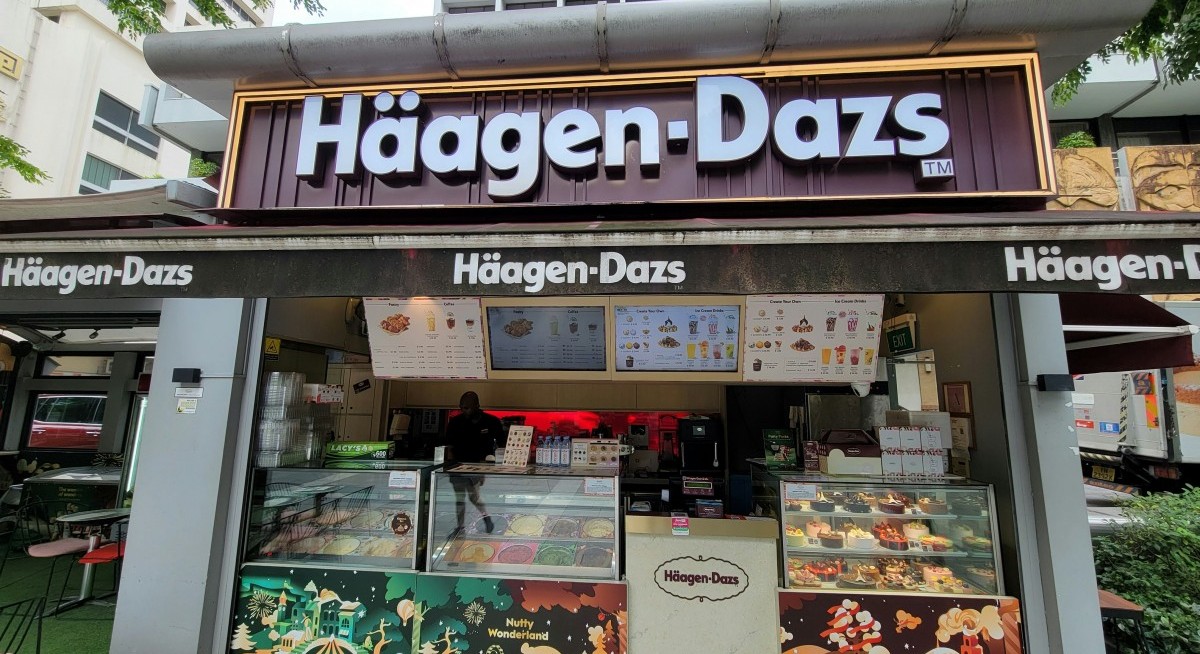
That connection is not always obvious. I am a regular visitor to a Häagen-Dazs outlet on Orchard Road. It was only last year that I realised that General Mills owns it. The company is a natural fit for the anti-AI Halo thesis. It produces consumer staples that have been around for almost a century. Its brand provides a moat that no large language model can replicate.
The stock has had a rough time in the face of AI. It is trading at 11 times P/E, which is 50% below its 10-year average. The stock trades around US$33, with a 52-week high of US$59.21. It is down sharply from its peak.
Campbell’s Soup is another stock worthy of attention. Its red-and-white soup can is a widely recognised image. Its sales rose during the Great Depression. The stock is down 30% year to date and is trading at a 5% dividend yield.
There is a compelling Halo trade on the Singapore Exchange. Wilmar International is Asia’s largest agricultural processor. The behemoth processes a third of the world’s palm oil. It also controls the largest vegetable oil brand in China, Arawana.
Its products sit in millions of Chinese kitchens, yet the stock remains unloved. At 10 times earnings and a 4.3% dividend yield, Wilmar International trades near its all-time low. Lightbown prefers reading printed annual reports to watching screens, and believes investors could spot the Halo in the same way.
Nirgunan Tiruchelvam is head of consumer and internet at Aletheia Capital and author of Investing in the Covid Era. The views expressed here are not investment advice.




