


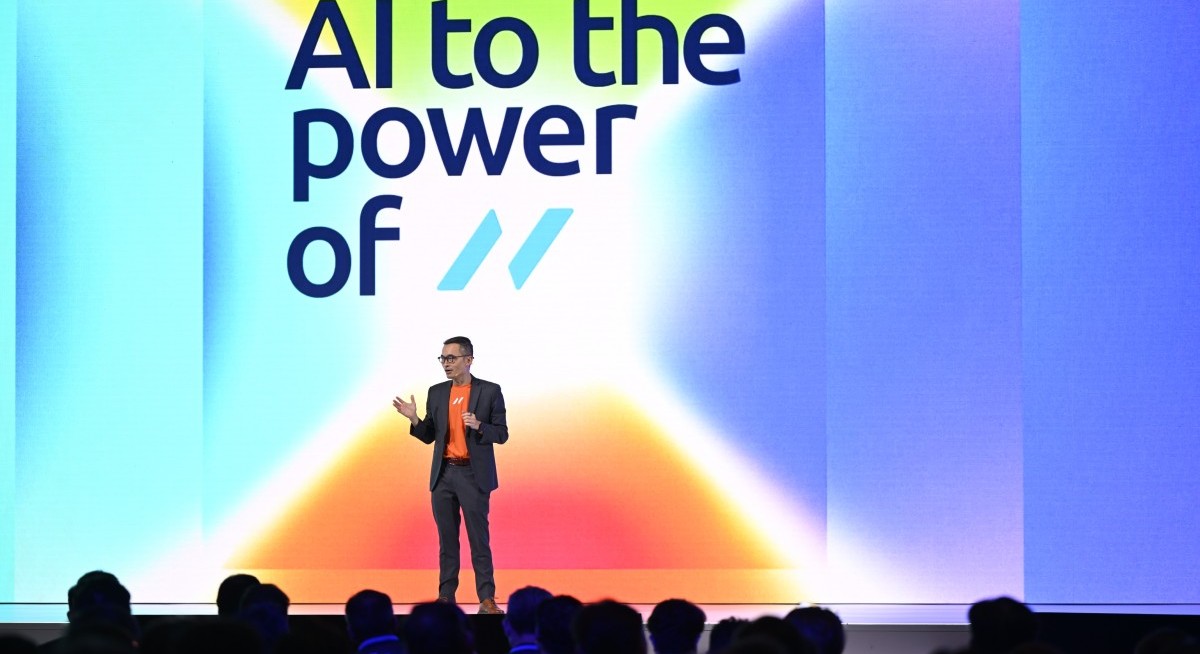


NCS is putting cost control at the centre of its new AI Playbook, arguing that companies risk burning through artificial intelligence (AI) budgets unless they manage model use, data quality and safety from the start.
It is pitching the playbook to companies trying to move AI from pilots into daily operations, where usage-based costs, weak data and ungoverned agents can erode returns. Presented at the NCS AI Impact 2026 event, the playbook draws on NCS’s experience across more than 100 AI projects and sets out how companies should assess use cases, deployment models and controls before scaling.
At a media briefing, NCS’s CEO, Sam Liew, states that the next phase of enterprise AI should go beyond incremental productivity gains. A year ago, NCS was discussing tools such as chatbots and learning assistants that delivered improvements of about 10% to 20%. “We’re now starting to uncover 10x transformation,” he says, citing advances in large language models, AI techniques and skills.
Cost discipline
A central concern of AI adoption is token consumption, which is the usage-based charge incurred when AI models process prompts and responses. Those costs can rise quickly once AI is embedded across customer service, software development, finance, operations and internal support.
To address that, companies should match each task to the right-sized model instead of defaulting to the most advanced option. Doing so can cut costs by up to 82% and improve response speeds by three to 10 times, according to NCS.
See also: Meta debuts new AI image-generation model inside chatbot, Instagram
Edward Chen, NCS’s chief AI officer, says the economics of deployment are becoming a finance issue. “Increasingly, token economics will be a big factor driving how AI adoption will take place in enterprises,” he says, adding that NCS is working with partners on an “AI for CFOs” course to help finance leaders model the cost of AI use.
The AI playbook groups AI returns into what NCS calls the “3R Framework”: return on customer, return on employee and return on future. Liew asserts that companies should not assess AI only by headcount reduction or cost savings. “We actually want AI solution to not just be about cost elimination, but to be about growing capacity and capability, and driving top-line growth,” he says.
Why pilots stall
See also: Microsoft replacing OpenAI, Anthropic with own AI in some apps — Bloomberg
According to the playbook, the five issues that can hold back AI programmes include unclear costs, unchanged processes, poor data, ungoverned agent development and unknown security risks.
AI systems are unlikely to deliver larger gains if they are added to old workflows without changing how work is done. Poor or fragmented data can also produce inaccurate output, weakening trust in the technology.
“When organisations really just adopt tools and technologies for AI by themselves without really changing their own structure and processes, we feel that actually that sort of caps the ability to achieve outsized returns,” says Chen.
The playbook also covers infrastructure choices, including when companies should run AI on their own systems, when they should use cloud services and how to avoid being tied to one model or vendor.
Keeping agents under control
NCS is supplementing the AI playbook with its expanded Sunshine.AI suite, which it describes as enterprise-grade AI products for organisations that need to manage data control, governance and compliance.
For instance, Sunshine.core is designed to help companies build and manage AI agents. The platform lets organisations see which agents are running, identify “shadow agents”, track cost by agent and user, and switch between open-weight and closed-weight models.
To stay ahead of the latest tech trends, click here for DigitalEdge Section
“In the next two years, every serious enterprise will be running thousands of AI agents,” says Chen, adding that companies will therefore need to know which agents are operating, what they cost and whether they understand the business data they are using.
Meanwhile, the Sunshine.guardian platform tests AI agents before and during deployment by monitoring behaviour, simulating attacks, recommending fixes and producing audit records. Chen describes it as “a flight simulator for AI agents” that checks whether a system is doing what it is supposed to do and whether it can be tricked into unintended actions.
NCS is also launching Sunshine.chiliclaw, an enterprise-safe personal AI assistant that can connect to workplace tools such as Microsoft Teams, Outlook and Slack. Chen says it was built for companies that want employees to use permissioned AI inside corporate systems rather than public tools. “[For example,] Openclaw is fundamentally insecure [but it is beneficial and popular so] what we’ve done is to build this enterprise-safe personal AI assistant,” he shares.
From software to robotics
Additionally, NCS is extending Sunshine.AI into physical operations through Sunshine.commanderAI, a platform for managing multi-robot fleets.
Chen notes that robotics deployments are fragmented because machines from different vendors often use different interfaces and standards. Sunshine.commanderAI is thus designed to assign tasks across robots based on their capabilities and apply safety controls in human environments.
The move into robotics sits alongside a broader restructuring of NCS around industry-specific delivery. The company has reorganised into 10 operating groups, including public service, defence, homeland security, education, transport, healthcare, financial services, commercial and telco.
It has also created an AI Central team led by Chen, with groups covering AI initiatives, mission engineering, integration, product development and training. The structure is intended to help NCS move AI projects from prototypes into production across sectors.




