


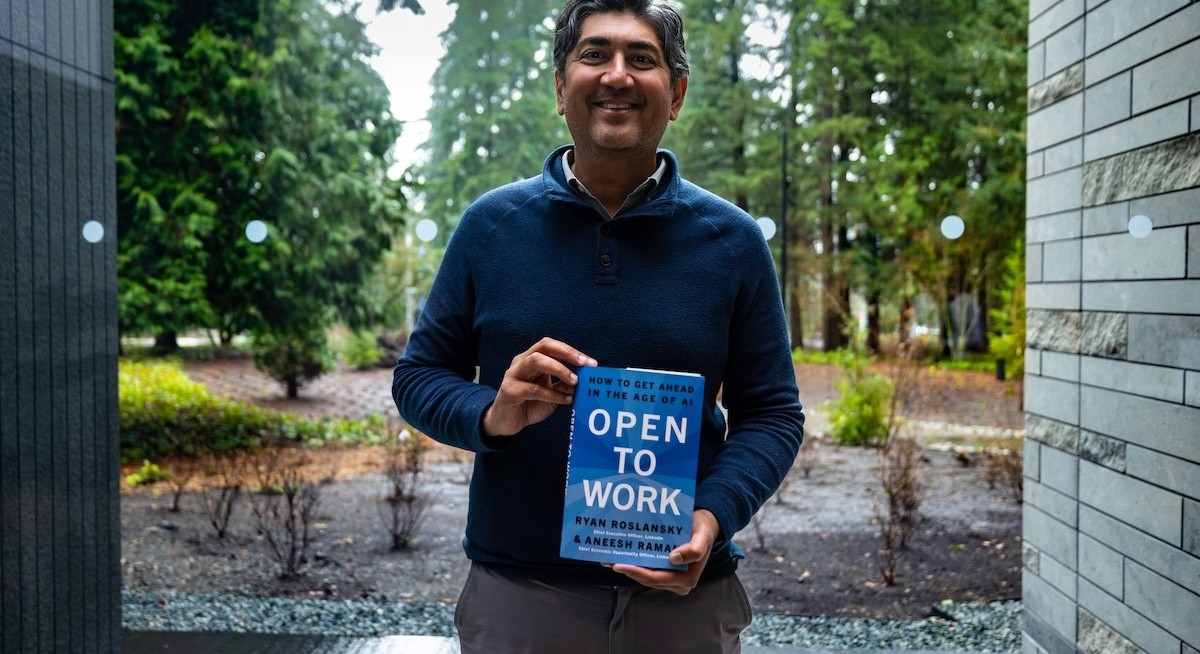


The observation carries weight coming from someone with a unique vantage point. LinkedIn sits at the centre of that market, processing millions of job postings and applications globally. What its data reveals, he says, is that the old system of measuring workers was already failing before AI arrived. The technology is now exposing how far it has drifted from reality.
The numbers behind the shift
LinkedIn predicts that 70% of the skills required for the average job will change by 2030. That does not point to mass redundancy, but to jobs evolving faster than workers can rely on static credentials.
At the same time, the average worker entering the workforce today is expected to hold roughly twice as many roles over their career as the previous generation. Raman argues that the linear career path is giving way to something less predictable and full of more options than prior generations had, provided workers move fast enough to shape the shift themselves. "You're not climbing a ladder anymore. The ladder is done. You're climbing a wall,” he says.
See also: Singapore’s workforce shows gains in resilience, slips in engagement: reports
This has direct consequences for how workers present themselves and how companies assess them. A résumé built on job titles and employer brands reflects a model of progression that is becoming less relevant. Long used as proxies for competence, degrees and brand-name experience are losing their reliability. “We do a lot of guesswork, where we do proxies for pedigree signals like degrees. But that blocks out a lot of people from opportunity," states Raman.
What companies are getting wrong
The problem is not just that the old measurements are obsolete. It is that many companies are still organised around them.
See also: Why communication defines corporate resilience
Raman draws a parallel with the early days of electricity. Factory owners initially replaced steam engines with electric motors, expecting productivity gains. Those gains only came later, when factories were redesigned around what electricity made possible.
AI, he argues, is at a similar stage. Many executives are treating it as a software upgrade, layering it onto existing workflows rather than rethinking how work should be structured. "One thing that we're missing on the leader side is appreciation for how big of a business transformation this is.”
The traditional organisational chart is part of the problem. Built in the industrial age to push information up a hierarchy and decisions down, the pyramid model cannot keep up with the pace and cross-functional demands of AI-enabled work.
In Raman’s view, what needs to replace it is what he calls a work chart, built around the project rather than the department, pulling in skills from across a company as the work requires rather than as the hierarchy allows. "Your job is a set of tasks. You are a set of skills. Those tasks and those skills are able to be applied in any number of ways as work transforms itself."
Some companies are beginning to reflect that shift. Moderna has combined its human resources and technology functions under a single executive, while others are pushing for closer coordination between people and technology leaders.
However, he argues the real test sits with the chief executive. "This is a leadership test at a whole other level. Are they creating a vision that is inclusive of their workforce?"
LinkedIn has begun making similar changes internally. It is merging product design and engineering roles so employees can move from idea to prototype without multiple handoffs. Its annual hack week this year drew about 3,400 employees, up 50% from a year earlier, with participation extending beyond technical teams.
To stay ahead of the latest tech trends, click here for DigitalEdge Section
The 5Cs that matter today
If degrees and titles are weakening as signals, the harder question is what replaces them.
To answer that, Raman and his co-author of the book titled Open to Work: How to Get Ahead in the Age of AI spoke with neuroscientists, behavioural psychologists, behavioural economists and organisational experts. They found that five capabilities — or what he calls the five Cs — matter most: curiosity, creativity, compassion, courage and communication. Even though these are harder to standardise, they are more difficult for AI to replicate.
"We had a century of IQ (intelligent quotient), [which we used for] standardised tests and credentialing around analytical skills and technical skills. Now we're talking about resilience, adaptability, and courage. How do you credential that?” he asks.
While there is no clear answer, he points to work product (or what a candidate has actually built or delivered) as the most credible signal. “[Candidates should] show what they did [in a project or challenging situation so that the hiring party can] decide whether that means you were resilient, creative, entrepreneurial, etc."
Of the five Cs, he singles out curiosity as the most immediately valuable quality a worker can develop right now. Workers gaining ground are not always those with the deepest technical expertise, but those actively trying to understand how AI changes their work. Creativity follows closely as companies look for more entrepreneurial thinking across roles.
For individuals, Raman's advice is blunt. Spend less time refining credentials and more time building tangible work that can be explained in detail. LinkedIn's data suggests workers have more control over the 70% skill shift than they realise, but only if they act before the shift hits them. "Feel a freedom of agency in this moment and then feel an urgency to act on it,” he says.




