




The 1,000-credit allocation is designed to support more than casual experimentation. AWS says it can be used for multiple structured exercises or hackathon submissions, or to take a single project from written brief to minimum viable product.
The initiative comes as technology companies compete to shape how future workers use AI before they enter the labour market. Coding tools can now produce applications from natural-language prompts in minutes. For employers, the issue is whether those applications can be tested, documented and handed over to another person without breaking down.
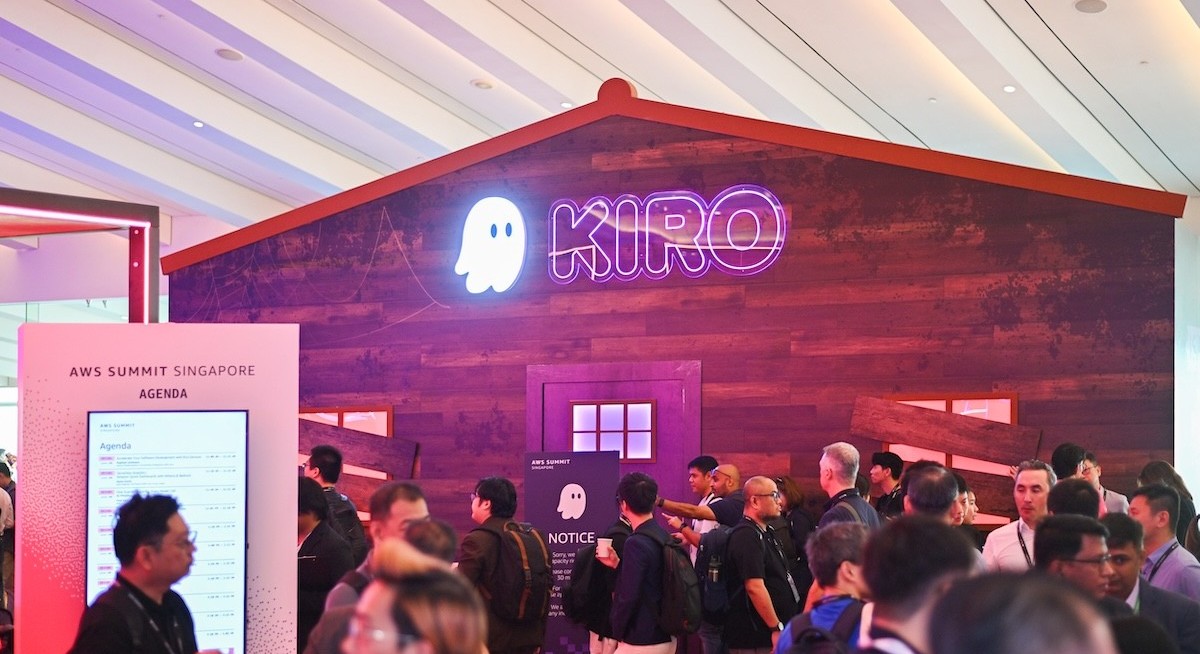
AWS is positioning Kiro as an answer to that problem. The tool, which became generally available globally in November 2025, uses what the company calls specification-driven development. Instead of generating code immediately from a prompt, Kiro first works with users to define the scope, scenarios and success criteria of an application in natural language. It then produces an architectural design, breaks the project into sequenced tasks and builds against the agreed specification.
This makes the rollout more than a free software offer. For Singapore, it is a test of whether AI education can move beyond basic tool use into workplace discipline. For AWS, it puts its development environment in front of students before they graduate and join employers that are still trying to turn AI experiments into production systems.
See also: Thailand seen as Southeast Asia’s surprise AI stock winner
According to AWS, Singapore was chosen because of its existing AWS Academy footprint across the education system, including all polytechnics and ITE colleges, six autonomous universities and SIM. It also cited Singapore's national push on AI literacy through Budget 2026 and the National AI Council.
"The difference between a student who can prompt AI and a student who can build with it professionally comes down to one question: can someone else pick up what they made and keep going? Vibe coding is telling a contractor to just start building. Spec-driven development is the blueprint that comes first — and what gets built with the blueprint is something a team, an employer, or an SME can actually depend on,” says Elsie Tan, country manager for worldwide public sector Singapore at AWS.
The distinction is likely to matter more as AI-generated code becomes common. Vibe coding can help users create a quick demo, but AWS says the output is often built against a guess rather than a defined brief, with no documentation of decisions made and no tests to verify that it continues to work. Kiro is designed to produce working code, documentation and automated tests by default.
See also: SoftBank's Son calls AI bubble talk an ‘insult’, delays retiring
Republic Polytechnic was the first higher learning institution in Singapore to embed Kiro into its curriculum, through a three-year memorandum of understanding signed with AWS in 2025.
In April, the school ran a two-day AI Product Bootcamp where students used Kiro to define requirements, generate specifications and build a generative AI-powered FAQ chatbot. The tool is also being piloted in the 2026 academic year to support final-year projects.
"This collaboration with AWS is a key part of Republic Polytechnic's broader AI transformation to prepare graduates for an AI-driven economy. By introducing Kiro, we get students to adopt a structured approach to define problems and design the solution before they build applications with AI,” says Wong Wai Ling, director of the School of Infocomm at Republic Polytechnic.
From classroom projects to company problems
AWS is also launching AWSome Lab in July, a web-based portal that will connect Singapore SMEs and larger enterprises with student teams. Companies will submit real problem statements using AI-assisted templates. Schools will review the briefs and submit student proposals. Businesses will then select the teams they want to work with directly. AWS says it will not evaluate or rank proposals on behalf of customers.
The platform gives companies a lower-risk way to see whether student-built AI projects can solve operational problems. Students will build proof-of-concept solutions in school-managed sandbox environments hosted on AWS and funded through existing AWS Academy teaching and learning credits, with mentorship from AWS employees. Before writing code, they must produce a structured proposal that defines the problem, explains their approach and sets out the proposed solution.
Completed projects will be assessed by businesses against their own criteria and timelines. Where a company decides to take a solution forward, AWS will provide a curated list of partners from its AWS Partner Network to support deployment. The final adoption decision will remain with the business.




