


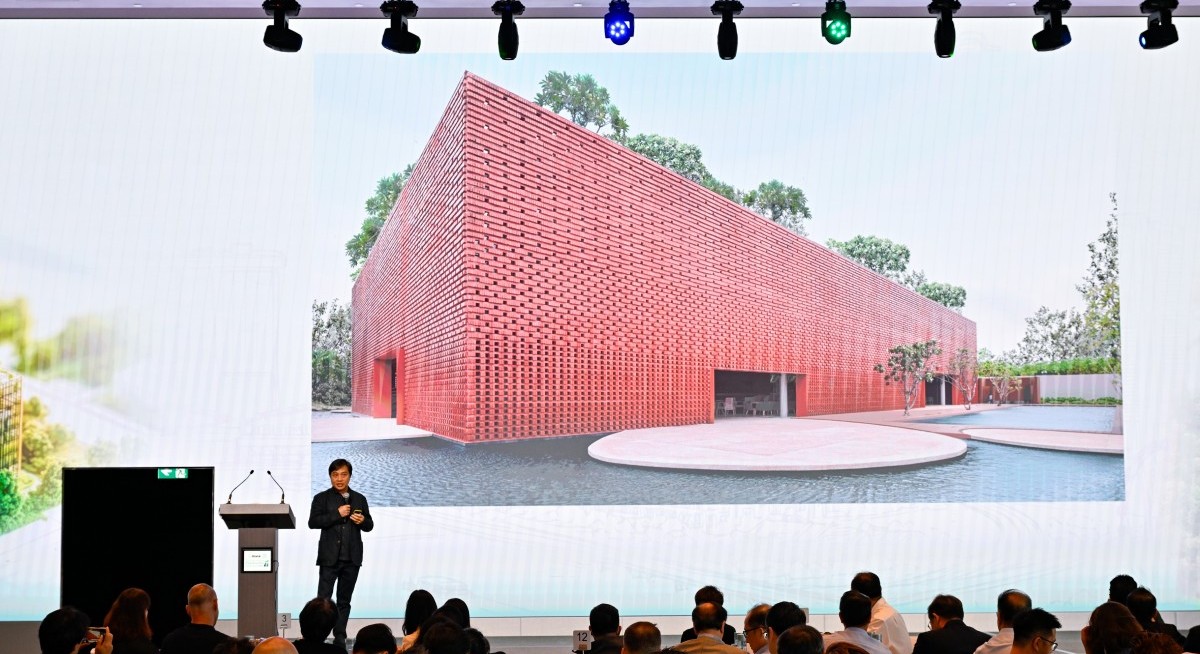


Vietnam is developing at breakneck speed, with urban built-up area surging from 220 sq km in 1999 to 994 sq km in 2015. Within Ho Chi Minh City, the amount of urbanised open space grew by some 10.9% between 1999 and 2015, according to MIA Design Studio founder and principal architect Nguyen Hoang Manh.
This rapid growth has led to high-density residential areas, says Nguyen at The Edge Singapore’s Sustainable Construction Symposium 2026 on April 29. These neighbourhoods lack open space and suffer from heavy traffic congestion during peak hours, he adds.

“By seeing our city as architects, we see our responsibilities in dealing with the context of the city,” says Nguyen, who established his practice in Ho Chi Minh in 2003.
MIA Design Studio has emerged as a pioneering force in master planning, architecture, interior and landscape design. With a three-pronged philosophy around modern living, sustainability and respecting culture and context, the firm has developed strong expertise in hospitality design, particularly in resorts, boutique hotels and wellness retreats.
“Many of our projects are located in tropical environments across Vietnam and Southeast Asia, where the relationship between architecture, climate and landscape becomes the core design driver,” Nguyen tells City & Country ahead of the symposium. “Our unique perspective is to approach hospitality architecture as an experience of nature rather than simply a built product. Instead of separating buildings from the landscape, we try to dissolve the boundary between indoor and outdoor spaces.”
See also: More Singapore residents target more than $1 mil and retirement in their 40s: CIMB-NTU study
The Wyndham Garden Phu Quoc villas, completed in 2018, were a hospitality project by MIA Design Studio. With no direct view of the sea, Nguyen’s firm overcame the disadvantage by creating a “Vietnamese village” over some 70,000 sqm.

With inward-facing designs opening to the sky, each single-storey villa boasts large courtyards with natural light and ventilation. “We ‘disappeared’ all the architecture… We used very simple landscape or building materials to celebrate the landscape as much as possible,” says Nguyen, a Master of Architecture graduate from KU Leuven in Belgium.
See also: Global fragmentation drives flows to Asean
Placed close to each other, villas are grouped into “small clusters” that share an entryway and yard. That said, each villa retains its privacy with 3m-high walls, with separate living and bedroom areas.

Some years later, MIA Design Studio again returned to the project by designing the Wyndham Club House. Inspired by lanterns, the main material selected is bare bricks, blocking out sunlight while allowing for natural ventilation.

In 2025, MIA Design Studio racked up a handful of awards for The Park, a quintet of community centre buildings that emerge from rice fields in Vietnam’s Nghe An Province.
“The Park in Vinh was designed with a simple intention: the architecture should feel like part of the landscape rather than an object placed on it,” says Nguyen. “From the beginning, we approached the project as an extension of the terrain and greenery surrounding the lake. Instead of emphasising architectural presence, the design allows the building to merge quietly into its environment.”
But the concept for The Park started out looking very different. From one long block, Nguyen’s firm divided it into five identical buildings before orienting each block “in different directions [and] in organic ways”. Canting the buildings towards the sky mitigates exposure to the afternoon sun and gives rise to the appearance of slopes emerging from the ground.

The grass-covered facade of the development visually connects the architecture with the surrounding gardens and creates a “dialogue” with the agricultural landscape opposite the project, says Nguyen. This allows the building to almost disappear into the landscape when seen from a distance. At the same time, the green roof helps reduce heat gain and creates a cooler microclimate for the public spaces below.
The final, and most recent, project named by Nguyen in his presentation is the Lotus Clubhouse. Completed in 2025, the project is located within the Eco Retreat project in Long An and has a usable area of approximately 2,000 sqm.

Concrete planter boxes house trees, collect rainwater and provide a contiguous canopy for the building users. Three main roof clusters composed of circular forms at varying heights are entirely covered with native plant species, forming a self-sustaining micro-ecosystem.
The Lotus Clubhouse combines green landscape surfaces, concrete roof structures and transparent glass facades to create a building that is “both environmentally responsive and visually connected to its surroundings”, says Nguyen. Moving through the clubhouse feels like strolling through nature itself: energetic zones such as the restaurant and children’s play area open towards the lake, while quieter areas like the spa, lounge and meditation spaces retreat into shaded pockets of greenery.

The solar panels that sit atop the green roofs were not part of the original design, says Nguyen in his presentation. Initially planned for a “different location”, the solar panels were shifted to the roofs after a “big discussion” with the client, he says. “Vietnam is not [like] Singapore. We’re still an emerging country; when you implement all these green factors, it’s very new for us, and we have to consult a lot with our clients. [It’s] challenging for the country, where you have to build everything [in an] economic way.”
Photos: Albert Chua/The Edge Singapore, MIA Design Studio
Read more from The Edge Singapore’s Sustainable Construction Symposium 2026:
- New mindsets and materials for sustainable construction in focus at The Edge Singapore’s symposium
- BCA sharpens focus on Super Low Energy Buildings in decarbonisation push
- Coffee or kopi? Contractors aboard sustainability bandwagon, but standards should harmonise: SCAL president
- Are sustainable building materials better and cheaper?
- Unlocking built environment opportunities in the green transition
Read more in our curtain-raisers prior to the symposium:
- Solving the ‘quadrilateral’ dilemma of cost, deadlines, quality and sustainability in construction
- Concrete, bamboo and clay: How future building materials can be more sustainable
- MIA Design Studio exemplifies Vietnam’s cultural identity and environmental sensitivity
- YTL Cement balances business, sustainability and ecosystem-building
- Transforming Singapore’s construction industry through mindsets, innovation and value creation




