




Asia’s rich, however, are taking that investment idea one step further: They are buying properties in Switzerland too.
According to resort developer Andermatt Swiss Alps (ASA), sales for their properties spiked from 2022 to 2023 due to pent-up post-pandemic demand.
ASA says about 7% to 8% of owners are based in Asia. Investors from Singapore (50%) and Hong Kong (20%) make up the lion’s share of these Asian property owners. The remainder (30%) is made up of buyers from mainland China, Malaysia and Thailand.
“Internationally, when there is turmoil, people will pop their money in Swiss francs because it’s like a gold hedge,” says ASA’s Asia regional director Maureen Yeo. “But I think Asian clients have a different perspective; in addition to the Swiss franc being a good hedge, Asian clients love real estate so this is a double win for them.”
See also: At 14.6%, ski homes in Andermatt top price growth in the Alps: Knight Frank
Strategic location a huge draw

According to Andermatt Swiss Alps, annual sales to Asian buyers climbed nearly fourfold to CHF9.4 million in 2024, up from CHF2.4 million in 2018. Photo: Andermatt Swiss Alps
See also: Dubai luxury property sales climb, aided by pre-war deals
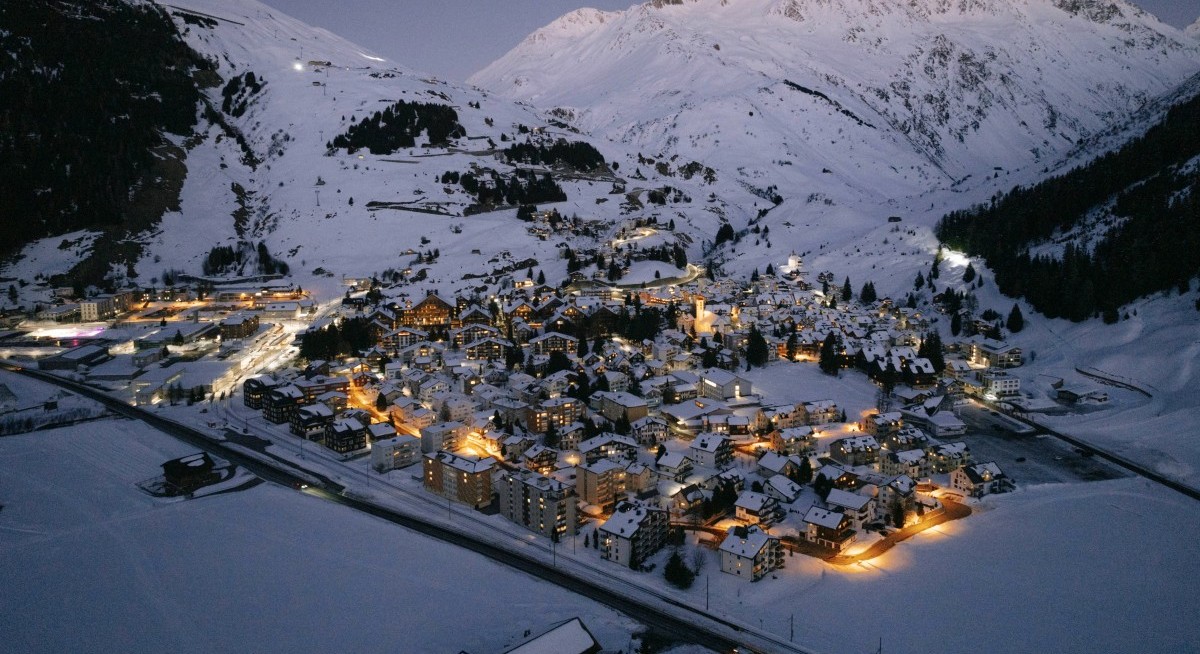
Located in the Swiss Alps’ Ursern Valley, ASA’s resort is just 90 minutes away from Zurich Airport, making it a huge draw for Asian property investors. “You can come in from Hong Kong and Singapore on an overnight flight,” Yeo tells City & Country.
More importantly, ASA’s properties are exempt from Switzerland’s Lex Koller laws, which prohibit foreigners from buying and owning property in the country. Close to a decade ago, Asian buyers were not aware of such an exemption; that is no longer the case.
“When I started eight or nine years ago, people in Asia had not started buying properties in Switzerland because there was no marketing,” says Yeo. “Because of the Lex Koller rule, you can’t just buy property in Switzerland easily like in London. Through years of marketing, people are now realising: ‘Oh, you can buy a property here.’”
This is reflected in the rising prices of ASA’s properties. Property prices averaged CHF13,000 ($21,368) per sqm between 2018 and 2021, before climbing rapidly to CHF19,000 per sqm from 2022. Annual sales to Asian buyers climbed nearly fourfold to CHF9.4 million in 2024, up from CHF2.4 million in 2018.
Enquiries from Asia have been growing by around 20% y-o-y. While the majority of property owners are Singaporean, interest from Hong Kong-based buyers has risen noticeably due to the instability in the real estate market there, according to ASA.
Swiss properties are not yield plays

The Vera apartment units feature interior design elements that are curated by luxury brand Louis Vuitton and award-winning Swiss design studio Atelier Oï. Photo: Andermatt Swiss Alps
Unlike for most overseas property purchases, Asia’s rich are not buying ASA’s properties for rental yield alone. Instead, Yeo says, they are driven by a desire to diversify their assets, on top of their love for Switzerland. “They are no longer rental income-driven people; they are more of the preserving-wealth kind.”
Yeo says the shift in buying motive was gradual. Initially, clients would approach her to ask about rental yield. “I have to tell them: ‘This is not how you play.’ Then they kind of understand that. So, they will then move their mindset into the usage and capital appreciation part [of owning the asset].”
Making that pitch isn’t difficult, says Yeo. This is mainly because ASA’s Asia buyers are from rich nations like Singapore and Hong Kong. For them, holding a Swiss property is not about emigrating but about securing a currency hedge and preserving their wealth.
According to Yeo, owners generally use their properties as a holiday home where they enjoy activities like skiing, golfing and hiking. Most of the time, the properties are let out on short-term rental contracts when the owners are away.
“The tenants use [the property] like a hotel. The owners, when they want to use it, must make sure it’s available for them to use. There’s this flexibility where they can just rent it out or use it by themselves,” Yeo says.
As a result, there is very little resale market activity because most owners intend to hold on to their properties for the long term.
Still, Yeo thinks owners who are looking to sell should not face any trouble doing so. “It’s easy. We do not have a lot of supply. Demand is high, so the liquidity is there. It’s just a matter of whether [the owners] want to sell or not.”
That said, buyers looking to purchase an ASA property may want to take note of Switzerland’s tax laws. Firstly, Yeo says buyers will have to pay deemed income tax even if they do not rent out their properties. Secondly, buyers will face hefty capital gain taxes if they try to flip the property after owning it for a year. “This is to prevent speculation,” says Yeo.
Swiss real estate is booming
It is not just ASA. Fabio Simoncini, a senior analyst and portfolio manager covering real estate at Lombard Odier, tells City & Country that demand for real estate in Switzerland is outstripping supply.
High immigration levels at around 70,000 to 80,000 people per year generates persistent demand but the slow pace of approvals for building permits means housing supply will not be able to meet that demand.
According to Simoncini, the total increase in capital in Swiss real estate in 2024, which includes listed and non-listed funds as well as foundations, was close to CHF9 billion, a 30% increase from 2021’s increase of CHF6.9 billion.
The spike in capital is mainly coming from three types of investors: Swiss private clients looking for carry yield, Swiss pension funds looking to diversify from Swiss bonds and direct real estate investments, as well as foreign investors searching for sector yield and exposure to the Swiss franc.
Maciej Skoczek, an economist at UBS Global Wealth Management’s chief investment office, shares the same view. Skoczek says Swiss properties are attractive to investors because they can generate stable returns while being less volatile than other real estate markets around the world.
According to Skoczek, Swiss holiday homes like the ones being sold by ASA are “emerging as a new asset class offering value growth, capital preservation and rental opportunities”.
Foreign investors are spending their capital on both holiday homes and commercial properties because they are not allowed to purchase other types of Swiss real estate under the Lex Koller laws.
In fact, Swiss commercial properties have been drawing strong investor interest as well.
“Many investors access the market via listed stocks, with Swiss real estate companies predominantly exposed to commercial properties. As a consequence, Swiss real estate stocks outperformed the European real estate sector in 2025,” Skoczek says.
With additional reporting by Samantha Chiew and Lin Daoyi
Read the sidebar to this City & Country cover story:
At 14.6%, ski homes in Andermatt top price growth in the Alps: Knight Frank
For more property trends and breaking news, visit City & Country’s microsite at theedgesingapore.com/cityandcountry




