


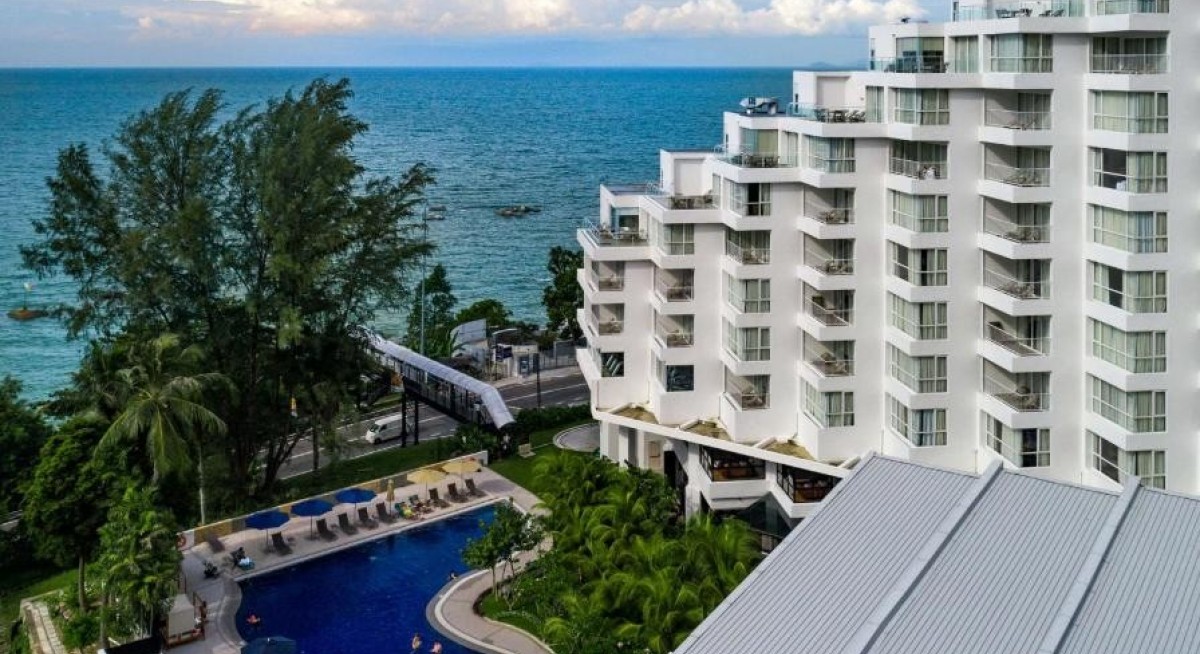


Pinnacle Nexus then acquired the property in 2014 for RM82 million, and extensively refurbished and repositioned it as the DoubleTree Resort by Hilton Penang, Hilton’s first resort in the country.
A recent company search lists Cities Connect as having an 88.1% stake and RHB Trustees with an 11.9% stake in Pinnacle Nexus. RHB Trustees is the major shareholder in Cities Connect as trustee for the private wealth management firm Areca Capital for both the Areca Composite Bond Fund and the Areca Dynamic Growth Fund 9.0.
Constructed on about 122,000 sq ft of freehold land, the room count was reduced from 350 to 316 rooms to accommodate on-site offices for the Hilton team, a spa, new room configurations and additional facilities. The resort is said to have a high occupancy.
Despite these solid underlying fundamentals, market observers suggest that a more risk-adjusted, realistic price tag for the property lies between RM190 million and RM220 million, a discount that reflects its positioning as a non-beachfront resort asset. The Edge understands that a valuation was done in 2018, at RM240 million.
See also: RM80 bil Johor Tech Smart City to anchor AgTech and AI development in Kulai
Ho highlights a comparable transaction in Penang in 2024. He points to the divestment of the 199-room Courtyard by Marriott Penang by Tropicana Corp to IOI Properties Group for RM165 million, which breaks down to about RM829,000 per room. Ho notes that despite the Courtyard by Marriott operating as a city-centre hotel, it stands as a direct brand competitor and peer within the upscale market tier, adding that the DoubleTree Resort’s current breakdown of roughly RM791,000 per key based on its 316-room configuration is not far-fetched in comparison.
When contacted, The Roof Realty group leader Alan Wong confirms that the agency has been appointed as the exclusive marketing agent for the deal. While declining to comment further, Wong says the tender exercise closes on Aug 15.
Nevertheless, incoming institutional investors will need to carefully navigate intensifying competition within Penang’s hospitality landscape, driven by a pipeline of new international hotel openings on the island.
See also: Resorts World Sentosa suit: Malaysian court rules gambling debt not enforceable
“New international hotel chains are entering the island. Among others, we have the JV by Hyatt and Galaxy Minyoun coming into The Light City, many brands under Ascott have already opened and announced, the Wyndham marquee over the former Hotel Royal, The Westin Penang from Boon Siew Group, Le Méridien at Penang Airport, Radisson Blu in Batu Ferringhi, and the long delayed but eagerly anticipated InterContinental in Teluk Bahang. And that is only on the island — we haven’t even started on the mainland yet,” Ho says. “The question ‘Will demand be able to keep pace with the upcoming supply?’”
He believes that Penang will very likely achieve a second “peak”. With its airport expansion expected to be completed in 2028, the upgraded capacity of almost double to 12 million passengers per annum (MPPA) and additional flights will only serve to send Penang hotel guest figures to new heights and milestones. Penang International Airport’s capacity is currently rated for only 6.5 MPPA. However, 2023 saw 6.7 million passengers (104.3% utilisation rate), 2024 had 7.6 million passengers (117.7%), and 2025’s figures should be provisionally around 8.31 million (127.8%).
While domestic tourism does support Penang as a destination, it is the international guests that the higher-end hotels on the island cater to. “With the recent energy crisis resultant from the Iran-US conflict, both long-haul and feeder flights to Penang’s airport may be affected, thus potentially deterring international guests. In the same vein, rising energy costs and the expected impact of higher inflation rates will affect the hotel’s supply chain and utility expenses, especially for ageing and less energy-efficient hotels,” Ho says.
Long seen as a bastion of medical tourism, particularly for the Indonesian market, Ho cautions that Penang is also facing challenges not only from Singapore, but especially Thailand, with its competitive pricing, cheaper labour and world-renowned hospitality.
This story first appeared in the July 6 issue of The Edge Malaysia




