




Throughout all these years, Chan remains enamoured with Japan — at how its economy is able to soldier on despite the bursting of the real estate bubble. The post-bubble landscape has thrown up interesting opportunities for investors who come in later. Due to deflationary pressures, interest rates in Japan have been held low — barely 1% — which makes borrowing cheap.

Yet at the same time, rental demand is resilient, which gives property investors the chance to make a good carry. Furthermore, banks eager to rebuild their loan books tend to favour real estate because of the safer nature of such lending. By applying some leverage, investors are able to enjoy what Chan calls “amazingly” good returns on their actual committed capital.
So, not only did Chan help improve the returns for Singapore’s foreign reserves, he was busy “bugging” friends and colleagues “every two, three weeks” to join him in investing in Japan’s real estate market as well. For individuals, banks can lend up to 90%. “They did well, and so did GIC,” says Chan.
See also: Renault reminds Nissan of its clout with ouster of key director
Too used to old numbers
In 2019, Chan left GIC to strike out on his own, founding the investment firm PCG with a focus on lifestyle assets in Japan, which includes residential, retail and hospitality.
Chan made sure his investors will recognise him as a serious player and the level he plays in. PCG’s Tokyo office is located within the Meiji Yasuda Seimei Building, which is right next to the expansive grounds of the Imperial Palace.
See also: BOJ governor Ueda to resume work next week after early discharge
As of March, PCG has built up cumulative managed assets worth over JPY300 billion, or just over $2.4 billion. Besides PCG’s own funds and funds raised from other investors, Chan has capital partners the likes of GAW Capital Partners and Nomura Real Estate Asset Management Co.
Chan is more upbeat than ever about Japan. Prime Minister Sanae Takaichi, who took office last October, has been gaining more popularity, giving her a stronger mandate to push through further reforms, further feeding a positive self-reinforcing loop for Japan’s market and economy.
The healthier economy is fuelled by ongoing reforms in corporate Japan that is finally prioritising improving returns for shareholders via share buybacks and higher dividends — something Chan wryly says is unheard of in his earlier three decades in the country.
Thanks to a buoyant economy since April 2022, Japan is experiencing inflation again, marking a significant reversal from the deflationary environment of the past few decades. Along with moderate levels of rising prices, income — at least in nominal terms — is up as well.
Higher income, in turn, encourages more consumption and thereby, overall economic growth. And of course, the expectation of inflation will also inspire stronger buying interest in properties before prices rise further. “Investors are benefitting, and consumers as well,” says Chan.
Mindset shifts are happening in tandem. A generation of Japanese who did not experience the bursting of the bubble has grown up. Chan recalls a recent debate with some of his younger colleagues who thought his conventional assumptions of rates and rentals are no longer valid. They told him: “You are too used to the old numbers; things have changed.”
Ginza prize
Despite the firm’s name, which suggests a long-term buy and hold strategy, PCG has moved nimbly where it can. For one, its first residential fund has been fully divested, generating returns in the “high teens” for its investors.
PCG is now raising capital for its second residential fund, comforted by favourable factors including limited new supply of quality housing assets and also demand growth from population inflows including high-net-worth individuals.
Chan is evidently happy to bet on what might be not-so-popular asset types, such as retail. Malls in many major cities, under the onslaught of online shopping, have been suffering from either lower occupancy, lower rental rates, or both. However, Chan observed that consumers in Japan are not totally focused on shopping online, suggesting that retail properties, if enhanced with an attractive tenant mix, will see capital appreciation.

That is why PCG, in a 9-91 joint venture with GAW Capital Partners, paid more than US$1 billion ($1.28 billion) for Tokyu Plaza Ginza in the prestigious Tokyo shopping district last February. The mall has since been renamed Ginza Novo.
More recently, on April 6, PCG announced a “strategic investment” in Keikyu Store. The latter operates a chain of supermarkets under the “Keikyu Store” brand along the Keikyu railway, the premium supermarkets under the “Motomachi Union” brand, and other associated businesses.
Retail aside, Chan is equally, if not more excited about the investment potential of the country’s hospitality sector. In the boom years, demand largely came from well-heeled domestic travellers making short trips. Japan’s hospitality sector today is enjoying new growth from record levels of overseas visitors. Not only are they from multiple markets, many of these international tourists have been making multiple return visits.
“Everyone has their favourite sushi or yakitori shop, or has gotten to know their bartenders,” says Chan. “That segment of lifestyle is something that we will continue to drive and continue to focus on.”
The cheaper yen is a key reason behind the current tourism boom. However, Chan believes that currency is not the key determinant. Singapore, he points out, is “ridiculously expensive” but that has not deterred the pick-up in arrivals and tourism receipts. This is because Singapore is successful in making itself “very attractive” to visitors, boosted by a calendar of events ranging from the Formula 1 races to concerts by big names such as Lady Gaga and Taylor Swift.
Winter Olympics dream
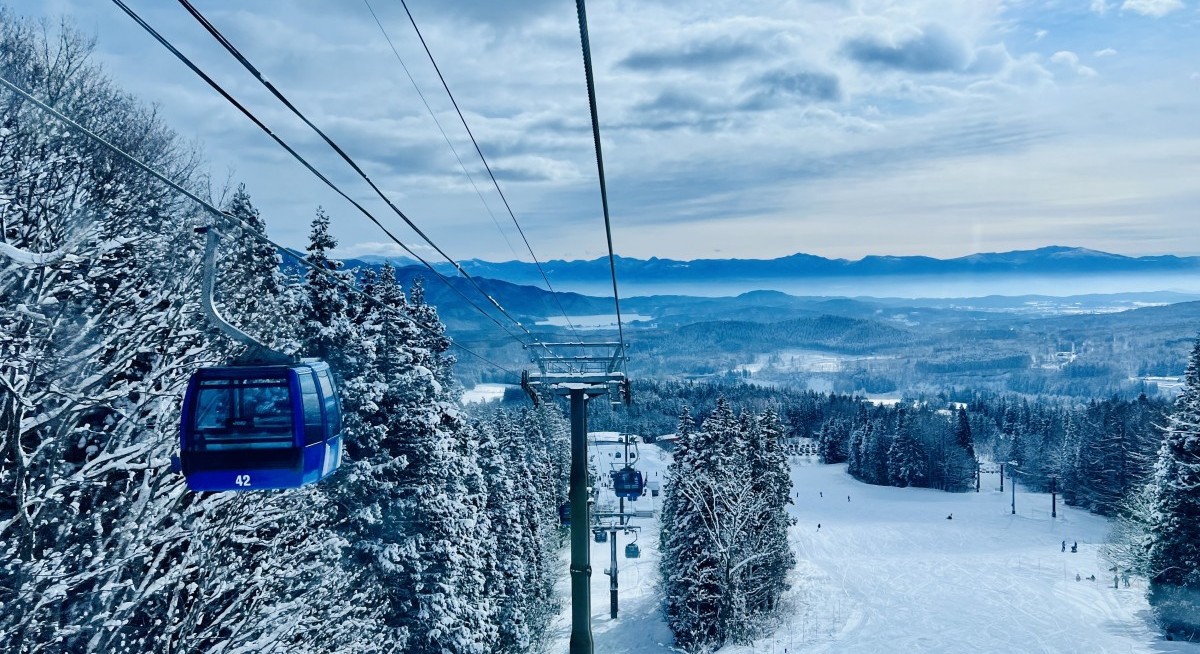
Many attractions of Japan are already on the world tourism map. For Chan, one way to enhance the country’s appeal is to zoom in on the ecosystem of ski resorts.
PCG has raised around JPY40 billion for its Japan Tourism Fund to develop world-class ski resorts in two adjacent regions — Mount Myoko in Niigata prefecture and Mount Madarao in Nagano.
Last October, PCG announced it is partnering with MGallery, a boutique hospitality brand that is part of the Accor hospitality giant from France, to operate the mountain resorts. Madarao Kogen Hotel – MGallery Collection, on Mount Madaro, will mark MGallery’s debut in Japan’s iconic snow region, described as a “choice destination” especially for ski enthusiasts. An existing property on the slope of the mountain is now undergoing a “comprehensive” transformation and will be ready for business in late 2027. The resort will feature 80 rooms, multiple dining options, conference facilities, onsens and supporting skiing services.

As for Lime Resort Myoko – MGallery Collection, it is at the base of the 2,454m Mount Myoko, within the Myoko-Togakushi Renzan National Park and where the Suginohara ski resort is located. An existing property is being transformed into a wellness-focused resort with 38 rooms, catering to ski enthusiasts keen to try out one of Japan’s longest ski runs at 8.5km with a vertical drop of 1,124m.

The two resorts are located just 30 minutes apart and will be connected via a dedicated shuttle service, linking the properties to PCG’s leisure assets in the region, including the Myoko Suginohara Ski Resort and Nagano Dunes Golf Club.
Also at Mount Myoko, Patience has teamed up with another hotel group, IHG, to launch a new Sixth Senses brand slope-side mountain hotel and residences. To be ready by the end of 2028, Six Senses Myoko will feature 57 rooms and suites, many to come with private onsens. There are another 21 units of branded residences too. Art galleries will help complete the experience. “The word to describe our work is ‘elevated’ — not just because it is an ‘elevated’ mountain,” Chan quips.

To distinguish Mount Madaro from Mount Myoko, the vision Chan has is encapsulated in one word, “cool” — with events such as music or art festivals, for example, in order to attract the “cool crowd”. “We want to make sure we are up there with the likes of Aspen, St Moritz [and] Whistler,” says Chan, referring to some of the famous mountain resorts around the world.
The key draw, however, is to grow the popularity of these mountains as venues for winter sports. From Chan’s perspective, winter sports are no longer the exclusive domain of Europeans and North Americans. Rather, the popularity and level of competency has grown among winter sports athletes including Asians from the equatorial countries, Africans and Brazilians.
“We are bullish about this ski mountain resort in Japan because of the diversity coming in; we want to encourage winter sports throughout the whole world,” says Chan.
Chan is unabashed to dream big — and say so. The upcoming 2030 Winter Olympics will be held in the French Alps, and come 2034, Salt Lake City in the US. The International Olympic Committee (IOC) is now in “exclusive discussions” with Switzerland to host the 2038 edition.
The discussions are being followed with great interest by Chan. Just like how he urged his friends and colleagues to invest in Japan’s real estate, Chan says he is drumming up interest among city mayors and prefecture governors.
“If the Swiss are not keen, let’s chase it; let’s bring the Winter Olympics back to Asia again,” he says. “We keep talking about dreams, chasing after these dreams — and sometimes we need some ‘crazy’ guy like me to come and define the dream, and we all go after it.”

Photos: Patience Capital Group, Albert Chua/The Edge Singapore
For more property trends and breaking news, visit City & Country’s microsite at theedgesingapore.com/cityandcountry




