


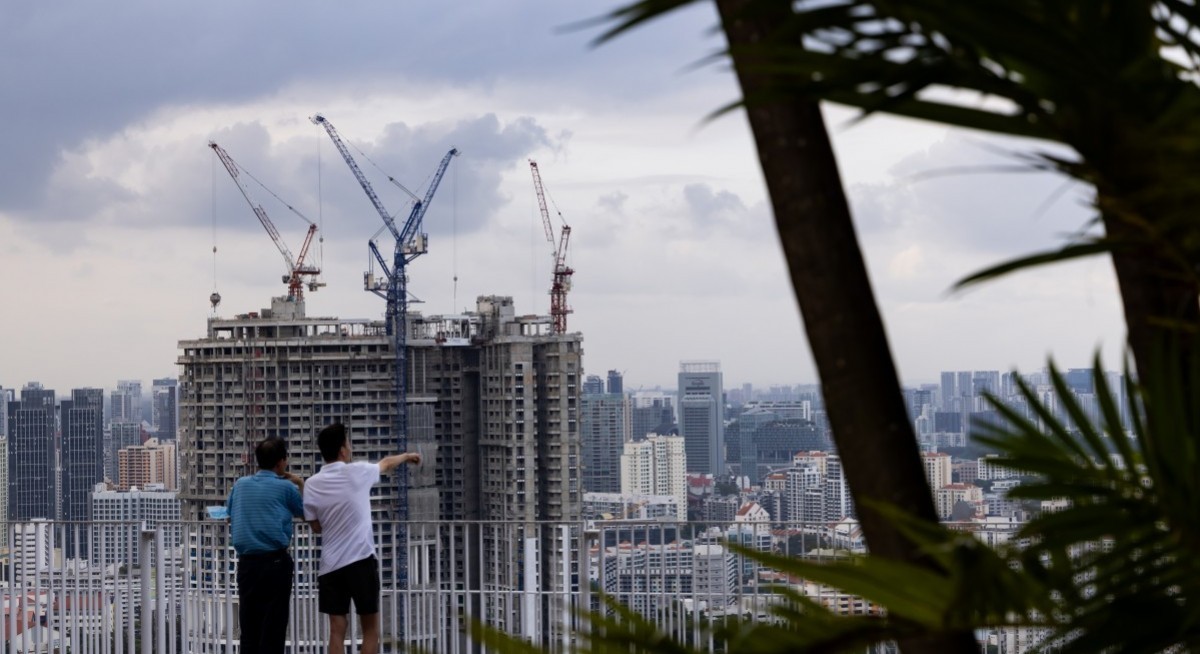


Instead, the biggest worry weighing on real estate investors’ minds was the rising cost of construction and related labour costs — a first since CBRE started conducting the survey in 2014.

Escalating construction and labour costs are “especially pertinent” in Australia, Japan and Singapore, according to the New Yorklisted commercial real estate services and investment firm.
Citing data from Turner & Townsend, CBRE says overall construction costs in these markets have risen “significantly” since the pandemic, with economic rents rising in tandem.
See also: Mideast tensions to push construction costs, delivery risks higher: Linesight
“The rents that a developer will need to make a project viable are substantially above where rents are today,” says Greg Hyland, CBRE’s head of capital markets in Apac. “There is a gap in terms of the viability of a project, which is really sort of crimping supply on a go-forward basis; that’s why construction costs are really the biggest concern for groups at the moment… It’s very difficult for developers, as they sit today, to make projects work economically.”

Construction costs in Singapore remained the highest in Southeast Asia last year at about US$3,104 ($3,938) per sqm, with Malaysia in second place.
According to a July 2025 market report published by Turner & Townsend, a third of the top 15 most expensive global markets to build in are in Japan, with Tokyo ranking at an average of US$4,647 per sqm.
With the exception of China, most markets have experienced some degree of construction inflation, adds Hyland in a Feb 3 media briefing. “Particularly in Japan, where vacancy rates are extremely low in most of the sectors, it’s very tight; that’s starting to flow through to rental growth. At some point, equilibrium is reached, and developers will start construction.”
Projects in Japan are even facing delays in completion, says Choi. “It’s the first time I’ve heard [of this] in my career in real estate.”

Costs have “increased dramatically”, affecting new builds and “the rest of the sector”, says Hyland to City & Country. “You’ve had this general, broader inflation across the whole construction supply chain; it’s not just new builds but also asset enhancement initiatives (AEI) and fit-out costs.”
The “uncertain geopolitical landscape”, meanwhile, fell to second place as investors’ concerns around US tariffs “diminished”, according to CBRE.
Still, respondents from mainland China and India “continue to display concern about geopolitical tension”. “These markets generally expect below-trend economic growth as a consequence, with Chinese investors most concerned about the economy.”
CBRE’s survey was conducted in November and December 2025, reflecting the views of 422 real estate investors. Some segments were particularly dominant: a third of respondents were from Japan (31%), while a third (35%) worked for private equity funds.
Photos and chart: CBRE
For more property trends and breaking news, visit City & Country’s microsite at theedgesingapore.com/cityandcountry




