


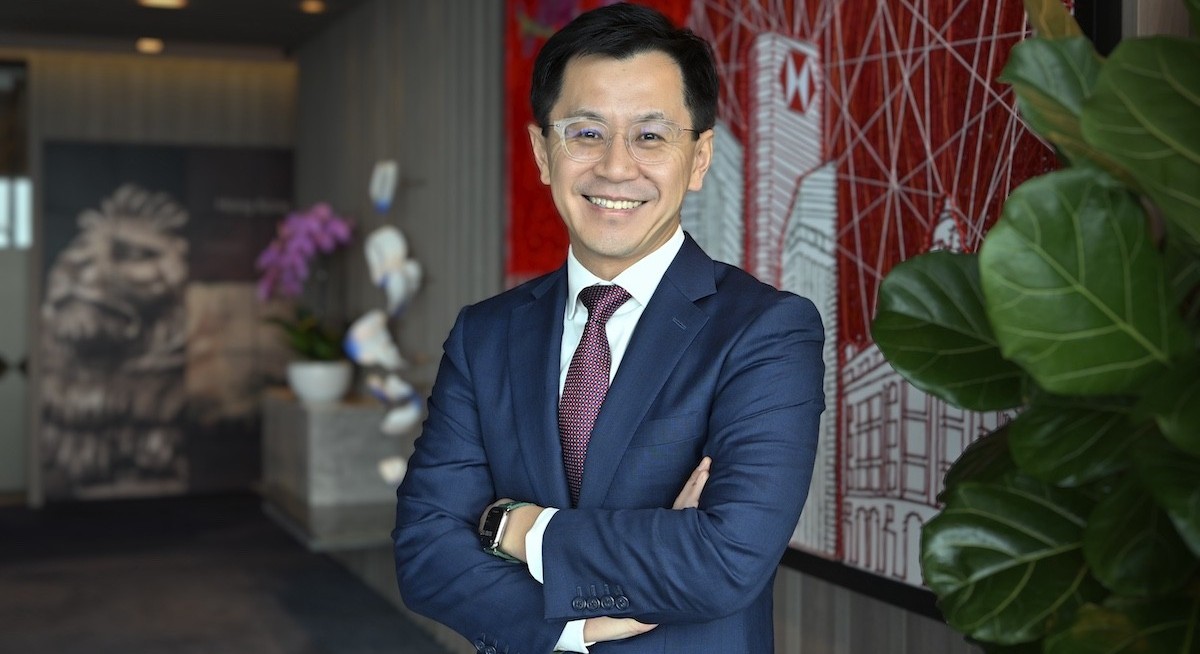


“Entrepreneurs are at the heart of Singapore’s economy and its rise as a hub for innovation and capital for the Asean region. Currently, close to two-thirds of our global private banking clients in Singapore are entrepreneurs,” says Tommy Leung, head of private bank, South Asia, HSBC.
Singapore’s pull for founders
In an interview with The Edge Singapore, Leung highlights a practical checklist that founders typically use when deciding where to base themselves and their wealth: standard of living, safety and security, access to talent and business opportunities, and the legal system and ease of doing business. In his view, Singapore “ranked very, very highly” across these categories, including compared with traditional private banking destinations such as the UK and Switzerland.
He also ties Singapore’s appeal to the growth profile around it. Leung highlights stronger expansion in parts of Southeast Asia, citing Vietnam’s 7%–8% growth and 4%–5% growth in Malaysia and Indonesia, alongside growth in the Philippines and elsewhere, as a backdrop that keeps Singapore relevant as a base for regional business and investment decisions.
See also: BoS’s Singapore-focused discretionary mandates double in 2025 amid strong equity demand
For HSBC, Singapore’s role as an offshore booking centre shapes its private banking franchise. Leung says the team based in Singapore covers clients from 12 Asian markets as well as two major economic areas outside Asia, mainly the Middle East and Europe, which influences both hiring and product decisions. HSBC is prioritising major client corridors, including China-Singapore, India-Singapore, Korea, the broader Middle East and North Africa region, and Asean.
The bank’s proposition aims to integrate private and corporate banking capabilities for founder clients. “Our proposition brings together the full strength of HSBC, combining our Private Bank and Institutional Banking capabilities to help entrepreneurs manage their business growth, liquidity and legacy within one connected ecosystem, supporting them at every stage of their wealth journey,” Leung says.
The offering includes three pillars. First is a Private Wealth Entrepreneur Incubation programme designed for existing corporate clients onboarding into the private bank, providing access to tailored wealth planning, investment events and a global network of industry experts.
See also: World’s richest add record US$2.2 tril in wealth this year
Second, is a business growth & transition series, positioned as educational and advisory sessions covering pre-exit decisions, IPO preparation and succession planning.
Third is an innovation exchange, introduced in Singapore after launches in Hong Kong and the UK, designed to connect private bank clients with entrepreneurs and ventures across Asia’s innovation economy.
From growth financing to liquidity events
HSBC’s pitch leans heavily on its “universal bank” model, particularly for founders juggling operating-company growth with personal wealth planning. Leung describes entrepreneurs as key drivers of economic growth across the region, and says what is “on top of their mind” is how to finance growth, whether through raising equity, using debt or borrowing from banks.
As companies scale, he says, founders begin to view M&A opportunities as buyers or sellers, and later consider funding rounds such as Series C, D and E. At that stage, the bank sees a role not only with institutional investors but also by connecting founders to family offices and ultra-high-net-worth individuals as potential partners.
Leung also points to the widening range of exit routes. While IPOs remain a key milestone, he says many entrepreneurs are staying private for longer and can consider alternatives such as trade sales or private equity involvement. At the same time, he notes signs of improving equity capital market activity in major markets, including the US and Hong Kong. He says activity is “picking up” more broadly across Asean, as risk appetite improves.
The bank’s proposition is designed to address a recurring challenge for founders: turning concentrated, illiquid wealth into diversified, long-term capital. In Leung’s view, the post-IPO discussions often focus on how founders can extract liquidity from their shareholdings and diversify into assets that are “not correlated or less correlated” to a single listed stock.
For more stories about where money flows, click here for Capital Section
Before that liquidity event, HSBC was seeking to differentiate through financing and structuring. Leung says founders often face liquidity constraints before an IPO and that HSBC supports some founders with financing solutions linked to unlisted shares. He adds that post-liquidity, this can include a range of lending and risk-management solutions tailored to individual client needs and circumstances.
The strategy is intended to cover the founder’s entire wealth journey, according to Leung, from early-stage growth funding and acquisitions to equityraising, and then to wealth-planning steps such as settling operating-company shares into a trust before an IPO. HSBC argues that this cross-bank connectivity is a key differentiator as founders navigate a more complex capital markets environment, with more paths available but also greater volatility to manage.
The proposition is also anchored on longer-term planning as founders move from building wealth to preserving it. “Trust and succession planning are a core part of private wealth for many business families. It’s about stewardship of what they’ve spent decades building, and ensuring it is structured thoughtfully for the next generation,” says Leung.
Leung says the recent period of market volatility has reinforced diversification as a core theme among founder clients, noting that prior concentration in Chinese tech led to hard lessons in 2021 and 2022 and drove decisions to spread risk across asset classes and geographies.
“We encourage clients to think about broad diversification across asset classes, including public equities, public fixed income and, where appropriate, private markets,” says Leung, adding that diversification has been a common theme, with clients increasingly looking across asset classes and geographies to reduce reliance on any single market or concentration risk, especially after recent years’ volatility.
His view on alternative investments reflects that broader risk framing. Leung says interest in private equity, private credit and infrastructure has grown over the past five to seven years, supported by the development of more open-ended structures that can offer greater liquidity than traditional closed-end funds. But he emphasises that alternatives are not automatically a “must have” for every founder. For clients early in their wealth journey, with most of their wealth tied to a single illiquid operating company, he suggests private market exposure may be less suitable than for clients with large pools of liquid assets.




