


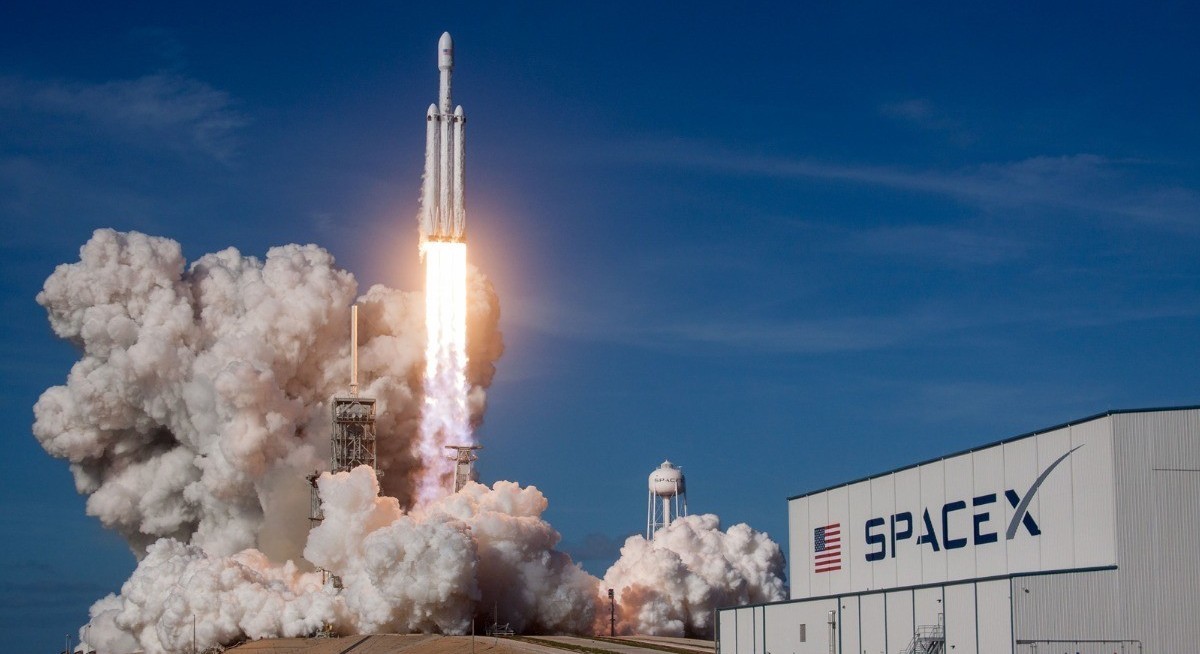


There is no doubt that Elon Musk is a great businessman and an even better storyteller, a combination that looks set to make him the world’s first trillionaire.
At its best, this reflects a defining feature of US markets, one we have noted in recent articles: the ability of American companies to monetise innovation by translating technological possibility into narrative, and narrative into capital.
At US$135 a share and 555.6 million shares up for grabs, SpaceX’s IPO aims to raise a record-setting US$75 billion in the market, which will bring the company’s valuation to around US$1.8 trillion. Musk owns around 42% of SpaceX.
A 3-in-1 ‘bargain’
See also: Investing where the economics take us: Today, it is America
To be fair, minus the corporate poetry, SpaceX does have more to sell than tickets to Mars. The question, of course, is whether it is worth the US$1.8 trillion price tag.
SpaceX spans three operating segments: space, connectivity and artificial intelligence (see Charts 1 to 3 for recent segmental performances).

See also: Pivoting to US stocks that are the biggest beneficiaries of the current phase of AI revolution


Space is the oldest segment, built around its reusable rocket launching business. Over the past two decades, SpaceX has transformed space transportation through relentless engineering and ruthless cost-cutting, displacing incumbents such as Boeing to become the dominant launch provider for both the Pentagon and Nasa.
It continues to remain in a league of its own on cost efficiency, reusability and launch frequency, with industry peers such as Rocket Lab, Blue Origin and United Launch Alliance trailing far behind. The segment delivers the strongest unit economics within SpaceX, with gross margins of 55% as of 1Q2026 (see Chart 4).

The connectivity segment is built around Starlink, currently the world’s largest satellite broadband network. Its roughly 9,600 operational satellites account for around three-quarters of all active manoeuvrable satellites in orbit. This is SpaceX’s only profit-generating segment today.
It is, however, the AI segment — formed around SpaceX’s xAI acquisition earlier this year — that warrants the greatest attention from investors, as it carries most of the weight of SpaceX’s lofty valuation.
For more stories about where money flows, click here for Capital Section
The AI segment houses SpaceX’s compute infrastructure initiatives (including the Colossus and Colossus II 1GW training clusters as well as the newly announced Terafab foundry), alongside its AI models (the Grok family) and the social networking platform X (formerly Twitter).
Internal projections for the segment point to a total addressable market of approximately US$26.5 trillion, a figure equivalent to roughly one quarter of global gross domestic product (GDP) at 2025 levels. A substantial share of these projections hinge on enterprise AI adoption (see Chart 5), as AI systems are assumed to automate complex workflows, compress operating costs and rewire productivity across industries at scale.

At the company level, Goldman Sachs, the lead IPO underwriter, projects revenue exceeding US$470 billion by 2030. This implies a compound annual growth rate north of 90% over the period.
SpaceX is therefore, by any measure, as good a growth story as there has ever been. Or, for Musk, even better than the last one.
The Tesla template
At its 2010 IPO, Tesla listed at US$17 per share to a market cap of around US$1.6 billion, with around 2,000 pre-orders and a grand total of 12 showrooms to its name.
The company was valued as a transformative automaker at the centre of what its prospectus described as a “historic opportunity”: the first credible challenger to incumbents of the internal combustion engine era.
Fast forward to today, Tesla has certainly not failed by any conventional measure. Yet, it has clearly fallen short of the expectations embedded in its valuation. In 2021, Tesla’s valuations suggested that it could sell more cars than the eight largest automakers combined.
Today, similar assumptions still underpin its outsized valuation (see Charts 6 and 7), even as its electric vehicle (EV) market share has begun to decline in key regions. Chinese manufacturers have been adept at dismantling Tesla’s early lead. In 2026, BYD overtook Tesla as the world’s largest EV manufacturer.


As it stands, the market no longer appears to value Tesla as a car manufacturer. The more ambitious thesis presently rests on autonomous ride-hailing and humanoid robots. A giant story to accompany its equally giant valuation.
What’s next?
The same question may soon confront SpaceX.
Today, Musk has already promised SpaceX investors the moon. What new frontiers are left to conquer if that narrative, too, must eventually be replaced?
Conclusion
Markets are voting machines in the short run and weighing machines in the long run. But before either, they are storytelling machines.
For Tesla and SpaceX, their valuations are not because everyone believed the story, but because enough people did.
To quote Albert Einstein, “reality is merely an illusion, albeit a very persistent one”.




