


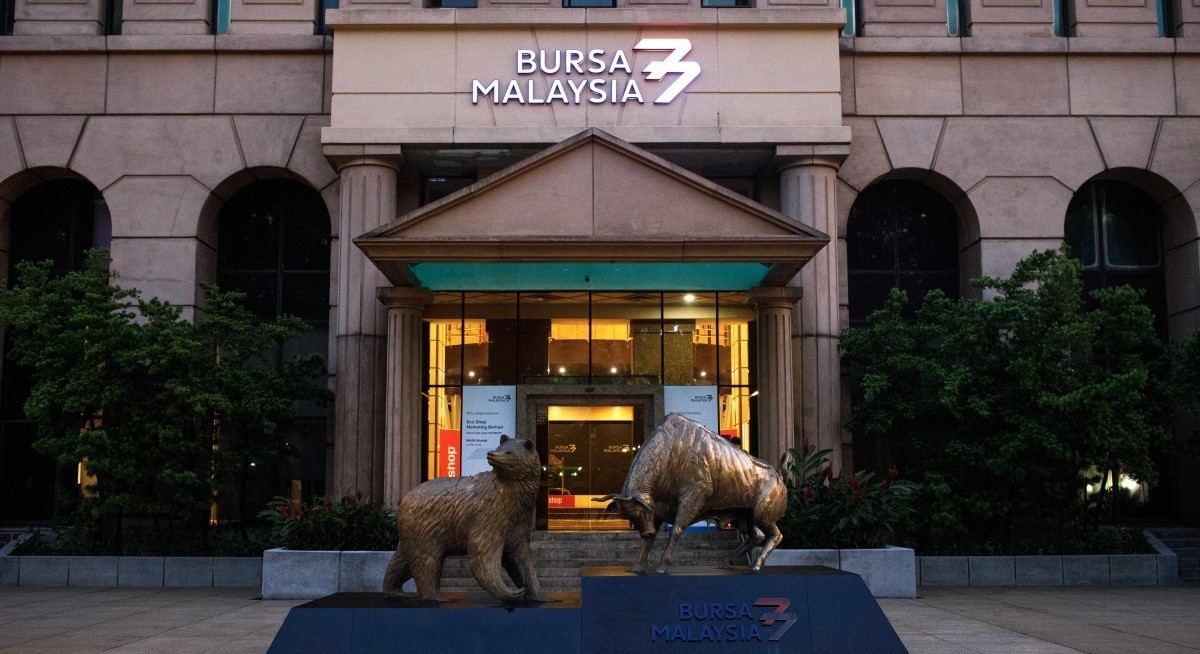


As we noted in the sidebar of our previous article (“Record number of new listings — record losses”, The Edge Malaysia, Dec 15, 2025), two out of every three new listings in 2025 ended the year below their IPO prices. And this poor performance was seen across small and big caps on both the Main and ACE Markets.
In fact, many IPOs in recent years have performed poorly (see Chart 2). This hardly inspires confidence in Bursa Malaysia as a long-term investment destination for wealth building, beyond speculative day trading. Little wonder that bursts of retail investor interest are often short-lived, with participation remaining low and declining.

We dug a little deeper into the financial data for new listings between 2023 and 2025 (see Chart 3). The IPO companies inevitably reported rising profits in the three years prior to listing. Inexplicably, though, for most, profits started to decline post-listing. For instance, of the 31 IPOs in 2023, 20 (65%) reported lower profits in their latest financial year versus pre-IPO. Meanwhile, 28 of the 51 IPOs (55%) in 2024 saw their profits decline in the year immediately following their listings (see Chart 4). Why? The answer, we believe, is inflated or peak profits at listing — to gain better valuations. In other words, to achieve a higher IPO offer price. Inflated profits = higher valuations = more money for pre-IPO shareholders and promoters.


See also: Oil futures market was right, as expected
Many IPOs are exit strategies for shareholders and promoters, cashing out of businesses near or at maturity and peak earnings. In 2024, 48% of the RM7.4 billion ($2.4 billion) raised through IPOs went to existing shareholders and promoters; last year, this figure exceeded one-third of the RM6 billion raised. This is in sharp contrast to, say, the US, where most new listings are primarily to raise funds for expansion, mergers and acquisitions, research and development (R&D) and innovation. In other words, to fund future growth.
Inflated profits give the false impression of reasonable valuations (lower than sector PE) at IPO. But when earnings decline thereafter, valuations suddenly become far less attractive. Since PE = share price/earnings, share prices fall to reflect this new reality. Growth prospects get recalibrated. That is just maths.
We highlight the five best- and worst-performing IPOs between 2023 and 2025 in the table. Consider DS Sigma Holdings, which was listed in early 2023. At IPO, its shares were sold at a PE of 12.6 times, in line with the average sector PE. Profits then promptly fell by more than half, from RM20 million and RM21 million in the two years prior (FY2021 and FY2022 respectively) to RM8.2 million in the year immediately after listing (FY2023). In the latest FY2025, profits stood at RM10.8 million. As a result, its share price is down 55% from IPO price — adjusting to the significantly lower profit levels.

Another IPO that has lost half its value in little more than a year since listing is Sik Cheong, which debuted in August 2024. Its PE valuation at IPO appeared attractive, at less than 12 times versus the sector average PE of 17 times. But when profits subsequently collapsed by 83%, from RM6.3 million (FY2024) to just RM1.1 million in FY2025, its IPO valuations are no longer remotely attractive.
That brings us to the next obvious question. Why do earnings drop so soon after listing — and at such a huge disparity between earnings pre- and post-IPO? Is there a structural flaw in the due-diligence process or the methodology by which the IPO candidates are evaluated and approved by the regulators?
How do we hold the investment bankers to account for the very poor due diligence, evaluation and analysis? How do we avoid the obvious conflict of interests? Investment bankers make a lot of fees from IPOs, for advisory, underwriting and share placements. The greater the number of IPOs, the higher the fee income. Whether investors make or lose money is irrelevant to them. Listing fees totalled nearly RM330 million in 2025 — about 5.5% of total IPO proceeds — the bulk of which went to the investment bankers.
For more stories about where money flows, click here for Capital Section
New economic strategy
To a certain extent, the IPO malaise is reflective of the broader Bursa and the underlying structure of Malaysia’s economy. As we wrote in an article a few weeks ago, the stock market and economy are dominated by “old businesses” (“Hope is not a catalyst: Why Malaysia’s stock market won’t rebound without real change”, The Edge Malaysia, Jan 5, 2026). Case in point: Sixty per cent of IPOs in the last three years comprised industrial and consumer products/services businesses and 11% were construction and property-related.
Many of these old businesses are well past their prime growth phases, operating in a near-saturated domestic market. As such, sales growth is inevitably low — in line with, or even slower than, GDP growth — and profit margins are being gradually eroded by rising costs and intense competition, especially from China and emerging nations such as Vietnam. Many have little to no intellectual property (IP), branding and pricing power. Rising costs plus slow/stagnating or falling revenue growth equal falling profits. We already know that stock prices will always be driven by earnings (see sidebar, “Sustained stock market performance requires structural economic reforms, not just story-telling”, next page). It is not rocket science.
For decades, Malaysia has stressed the urgent need to move up the manufacturing value chain, proposing numerous policies and implementing some, yet has little to show for it. Our primary export, the electrical and electronics (E&E) sector, remains positioned at the lower end of the global supply chain, with high import content and low domestic value-added. That the ringgit continues to move closely in tandem with global commodity prices — particularly oil and crude palm oil — says it all. The National Semiconductor Strategy (NSS) is the latest iteration, a long-term blueprint to move the nation beyond current backend outsourced assembly and testing for MNCs (servicing traditional industrial, auto and power applications) into chip design and development, advanced packaging and ecosystem building.
But let’s be honest. Malaysia has neither the talent pool, private capital market depth, established R&D institutions and environment that fosters the animal spirit and innovation of the Americans nor the laser focus of China’s policymakers, its deep pockets, whole-of-nation approach, hyper-efficient supply chain and manufacturing-tech skill set, and ability to scale rapidly. We are not being defeatist; we are being realistic. A case in point is the reportedly faltering US$250 million deal with UK-based Arm Holdings — unveiled with much fanfare in March 2025 — intended to offer select Malaysian firms access to Arm’s IP portfolio and tools, enabling the development of home-grown chips for AI, the Internet of Things (IoT), robotics and autonomous vehicles. We have never had much success in selecting and growing global champions.
To be clear, industrialisation has been crucial to our economic development, and a strong manufacturing base will always be vital to any nation. But we need to cast a wider net and focus on where our competitive advantages truly lie — areas that are unlikely to be glamorous or headline-grabbing. In 2025, the sectors that outperformed were plantations, domestic-centric real estate investment trusts (REITs) and financial services.
We will explore this topic in greater depth in an upcoming article and the sector we think Malaysia should pivot towards as the driver for future economic growth — and the outlines of a new economic strategy.
(Note: “Inflated earnings” typically refer to profits that are overstated relative to the underlying economic reality. This can result from accounting choices and timing — such as provisions, revenue recognition or expense recognition. While the numbers themselves are real, they can be misleading about the sustainability of earnings. To be clear, this practice is neither false nor illegal.)
Portfolio performance
The Malaysian Portfolio gained 2.3% for the week ended Jan 14, outperforming the benchmark FBM KLCI, which was up 2%. All stocks in the portfolio ended higher, with Insas – Warrants C (+300%), United Plantations (+6.6%) and Malayan Banking (+3.4%) being the biggest winners. Last week’s gains lifted total portfolio returns to 213% since inception. This portfolio is outperforming the benchmark FBM KLCI, which is down 6.5% over the same period, by a long, long way.
The Absolute Returns Portfolio also traded higher last week, up 0.3%. Total portfolio returns since inception now stand at 47.8%. The top gainers were Alibaba Group Holding (+15.7%), ChinaAMC Hang Seng Biotech ETF (+5.9%) and SPDR Gold Minishares Trust (+4.1%). Meanwhile, Ping An – A (-8.5%), Kanzhun (-6.4%) and Trip.com (-5.2%) were the three biggest losing stocks.
The AI Portfolio, on the other hand, fell 3.4% last week. The loss pared total portfolio returns since inception to 3.1%. The two gaining stocks were Alibaba (+15.7%) and RoboSense Technology Co (+1.5%) while the top losers were Twilio (-13.9%), Datadog (-13.5%) and ServiceNow (-10.8%).

Sustained stock-market performance requires structural economic reforms, not just story-telling
Charts 1 and 2 reinforce a well-known truth: Ultimately, stories aside, stock prices are driven by earnings. Over the longer-term, 10-year period from 2013 to 2023, equity market performance was closely correlated with earnings growth. The top-performing markets — India, the US, Taiwan, Vietnam and Japan — also recorded relatively stronger earnings growth. Conversely, the worst-performing markets, including Hong Kong, Malaysia and Singapore, experienced comparatively weaker earnings growth (see Chart 1).

This relationship is also evident over the shorter term. Chart 2 shows equity market performance in 2024 and 2025, where the best-performing markets (Taiwan, South Korea, Vietnam and Japan) align with the strongest EPS growth, while the weakest performers (Thailand, France and Malaysia) correspond to the poorest earnings outcomes. While storytelling and expectations can temporarily push valuations above underlying fundamentals — as seen recently in Singapore and Hong Kong — sustained outperformance must ultimately be supported by the realisation of stronger earnings.

The key takeaway is clear: Lasting improvements in market performance are not merely a function of stock-market reforms, but of deeper, economy-wide reform.
Disclaimer: This is a personal portfolio for information purposes only and does not constitute a recommendation or solicitation or expression of views to influence readers to buy/sell stocks, including the particular stocks mentioned herein. It does not take into account an individual investor’s particular financial situation, investment objectives, investment horizon, risk profile and/or risk preference. Our shareholders, directors and employees may have positions in or may be materially interested in any of the stocks. We may also have or have had dealings with or may provide or have provided content services to the companies mentioned in the reports.




