


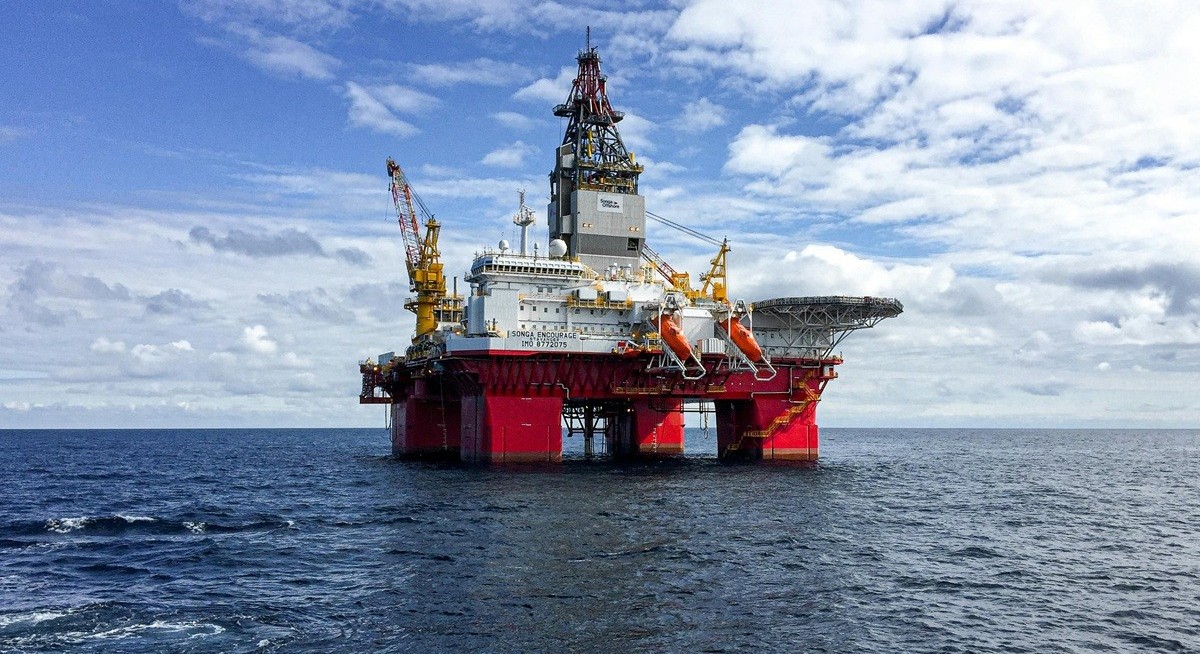


Moving into 2026, a number of analysts believe prices of “black gold” will remain sluggish or even decline further during the year, in contrast to actual gold, for which prices remain elevated.
The US Energy Information Administration expects oil inventory to continue rising in 2026, with Brent falling to an average of US$54 per barrel in 1Q2026 and US$55 for the rest of the year.
Investment bank Goldman Sachs chimed in with its forecast in an interview with CNBC on Nov 18. “We have WTI [West Texas Intermediate] declining to a US$52 average for next year, Brent mid-US$50s,” says Daan Struyven, co-head of global commodities research. His team estimates that there is a surplus of around 2 million barrels per day (bpd) through 2026.
JPMorgan is more bearish. “Demand, defying widespread bearish sentiment, has consistently exceeded expectations,” writes Natasha Kaneva, head of global commodities strategy in a Nov 24 note. “Yet supply has outpaced these gains by more than twofold, with the bulk of growth coming from the Americas.
See also: European banks could cut 20% of jobs on AI, Morgan Stanley says
“In JPMorgan’s view, the stage is set for a potential decline of as much as 50% in oil prices through the end of 2027, taking Brent crude down to the low US$30s per barrel range from its current level of around US$63.50.”

Long term: Aviation, petrochemicals to fuel oil demand
See also: Ferrari CEO says first EV racking up orders despite criticism
However, the long-term outlook is more optimistic, with the International Energy Agency (IEA), Oxford Institute of Energy Studies (OIES) and Morningstar forecasting that oil prices will rise from 2027 onwards as demand catches up with supply.
According to IEA’s World Energy Outlook (WEO) 2025 report issued in November, oil consumption is expected to increase till 2050 under the Current Policies Scenario (CPS).
The CPS outlines the energy future based only on laws and regulations already enacted and excludes stated goals or future intentions. It was reinstated to this year’s edition due to demand for forecasts more grounded in reality and the recognition that the transition to renewables has slowed.
Under the CPS, demand for oil could reach 105 million and 113 million bpd by 2035 and 2050 respectively, while the price of oil is projected to hit US$89 in 2035 and US$106 by 2050.
Rising oil prices are underpinned by two assumptions. Firstly, energy-hungry emerging markets and developing economies would increase consumption for road transport, petrochemical feedstocks, and aviation.
Secondly, the CPS assumes sanctions on oil producers ease and production will be determined by underlying economics. If this does not materialise, demand could be met through other sources at the cost of more investment, which suggests prices will rise.
“Underlying declines in production from existing fields and continued growth in consumption run through today’s overhang of oil supply relatively quickly,” the IEA writes. “Some 25 million bpd of new oil supply projects are needed [through] to 2035 in this scenario to keep markets in balance, and oil prices rise from today’s levels to incentivise the additional upstream projects.”
For more stories about where money flows, click here for Capital Section
Meanwhile, OIES projects global oil demand to reach 108 million bpd in 2030, representing an increase of 6.3 million bpd compared to 2023, with developing economies and petrochemicals spurring the growth. While OECD countries’ consumption declines by 1.2 million bpd, emerging economies will increase consumption by 7.5 million bpd.
According to OIES, petrochemicals and aviation will be the “main drivers” of global demand growth, while demand for road fuels is set to gradually reverse towards the late 2020s. Additionally, OIES expects India to surpass China as the main driving force of demand with “strong expansionary contributions” in gasoline and diesel/gasoil.
Similarly, in the Future of Oil to 2050 report, financial services firm Morningstar forecasts oil demand to peak at 108 million bpd in 2032, up from 104 million bpd in 2024. The report was authored by chief US economist Preston Caldwell, equity research director Joshua Aguilar and resources equity analyst Adam Baker.
The trio forecast demand for oil to drop to 96 million bpd in 2050, but expect that demand will remain resilient as other sectors will find it “difficult or impossible to find an equivalent to electric vehicles (EVs) that can displace oil demand”.
“As a result of our demand outlook, we’ve recently upgraded our midcycle oil price to US$65 per barrel from US$60 (Brent),” they wrote. “For oil producers, this resulted in fair values increasing by a low-double-digit percentage.”
Looking far ahead, Morningstar believes that prices will average US$65 until 2035 before soaring above US$100 in real terms by the 2040s, partly because a “large chunk of oil demand is resistant to demand disruption”.
The first driver of resistant oil demand is the aviation industry. With planes carrying 15%–25% of weight as fuel, compared with about 3% for a typical car or long-haul freight truck, the report expresses doubt about the feasibility to electrify aeroplanes.
“Even with drastic improvements, batteries won’t come close to the energy density of liquid fuels, so they’re untenable from a techno-economic perspective,” the report points out.
Additionally, it adds that clean synthetic liquid fuels are needed to decarbonise the industry at scale, but the costs of production are likely to be prohibitive.
The unlikelihood of decarbonisation of aviation, coupled with increasing air passengers and freight, means that the demand for oil by aviation could increase by 85% through 2050 from current levels, representing 13% of total demand.
The second industry resistant to oil demand disruption is petrochemicals. Factors influencing Morningstar’s belief include increasing demand for plastics, with recycling not being widespread enough to make a dent in increasing demand for oil in the sector.
The analysts write: “Plastics are indispensable to the modern economy. While packaging (31% of global plastic demand) is often most visible, plastic is ubiquitous in other sectors like transportation (14% of demand), textiles (10%), consumer goods (10%), and construction (17%).”
The report believes restrictions on plastic use have had a “muted effect” on increasing plastic use, with recycling limited by the supply of suitable waste plastic. Based on the combination of the aforementioned factors, demand for oil in the petrochemical sector is predicted to “soar” by 72% from 2024 to 2050, representing more than one-quarter of total demand.
Offshore and marine: Oil for thought
With regards to Singapore-listed marine and offshore players, whose prospects are closely tied to oil demand, brokers seem to be optimistic — at least in the year ahead.
For instance, Morningstar is positive on leading O&M company Seatrium, given how it is chasing after a pipeline of opportunities worth approximately $30 billion. Chok Wai Lee, director of equity research for greater China, notes that the price of oil is not the deciding factor when oil majors and national oil companies (NOC) make capex decisions. “Companies often approve FIDs [final investment decisions] even in lower price environments when projects are strategically important, have low costs, or offer long-term value,” he says.
CGS International’s Lim Siew Khee is also upbeat about the offshore and marine sector. She expects earnings growth, especially for Seatrium which is delivering and putting behind lower margin projects taken on in the pandemic years. For small caps like Marco Polo Marine, Pacific Radiance and Mermaid Maritime, she adds that they will experience “earnings growth from higher fleet utilisation and charter rates”.
Earlier in the year, Marco Polo Marine had shared that “sustained exploration and production activities” in southeast Asia will ensure demand for its offshore service vessel (OSV) fleet remains “firm” and that it had acquired two more vessels to meet growing demand in September. In addition, the company is scaling up its vessel repair and newbuild capabilities with a new dry dock and is poised to take advantage of new opportunities arising from sustained oil demand. Further catalysts might come from the planned spin-off listing of its Taiwan business.
Meanwhile, Pacific Radiance, an owner and operator of OSVs, reported a 27.9% increase in y-o-y profit for 1HFY2025 to $24.37 million, with gross margins improving from 33.3% to 49.1%. Paul Chew of PhillipCapital wrote in an August report that demand remained “robust” for OSVs due to production targets in the Middle East. The company could benefit from strengthening oil demand.
Mermaid Maritime, which provides a wide range of maintenance and installation services, is another potential beneficiary of sustained oil demand. If production activity and capex increases, Mermaid Maritime could increase the size of its orderbook which stood at US$642 million as at Sept 30, according to CGS International’s Lim.
As for Nam Cheong, it now derives significant business leasing its OSVs to Petronas via multi-year contracts. If demand for oil proves resilient and even increases, Nam Cheong could potentially win more contracts for its OSV fleet chartering and newbuilds. At its current price of around 5 times P/E, Nam Cheong has been described as an “undervalued OSV gem” by DBS Research Group, which has a $1.25 target price on this counter. The share price closed at 82.5 cents on Dec 16.
Last but not least, Beng Kuang Marine has been focusing its efforts on “scaling up” its infrastructure engineering business in the floating, production, storage and offshore and floating storage offloading segments. It is gearing up to win more contracts in markets it already operates in ranging from West Africa to Brazil to the Middle East and Asia Pacific. In August, Maybank Securities had a target price of 22 cents for the counter. The share price closed at 28 cents on Dec 16.




