


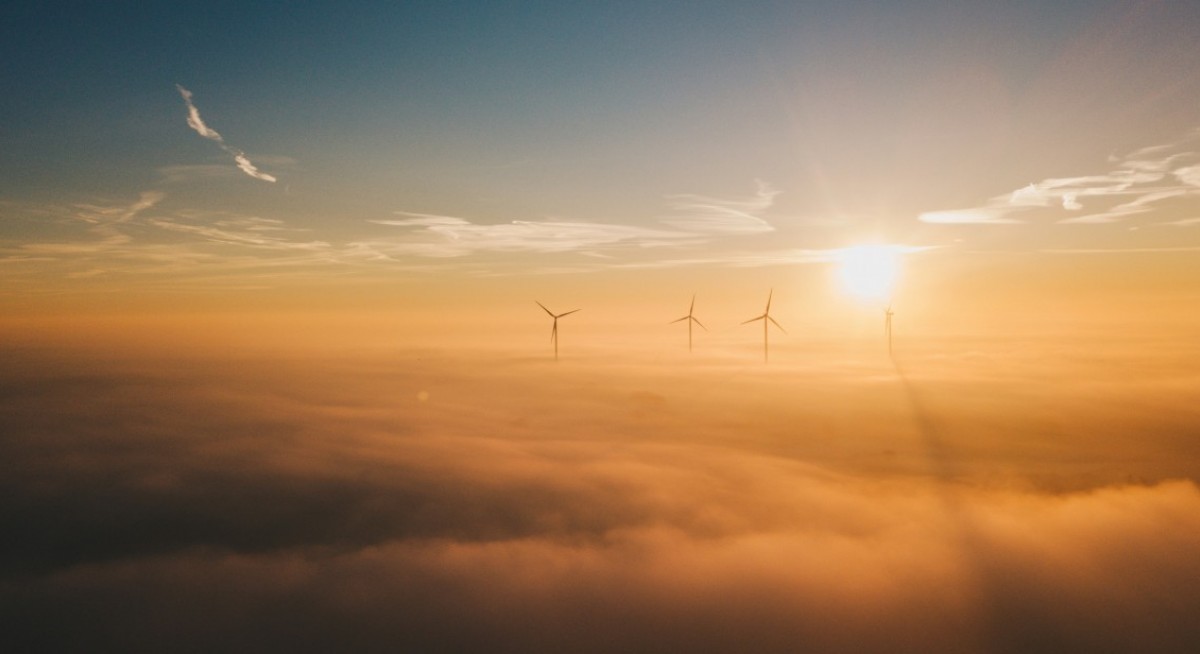


Renewables are increasingly central to this transition. New wind and solar projects are now typically cheaper to build and faster to roll out than gas, coal and nuclear alternatives.
Furthermore, renewables are locally produced and improvements in energy storage are rapidly addressing the intermittency issues. As such, renewables are emerging as solutions to all aspects of the competing “energy trilemma”: affordability (accessible pricing), security (reliable supply) and sustainability (avoiding climate change impacts).
China already illustrates many of these dynamics, but at a far greater scale and speed. As the world’s largest clean energy investor, China spent more than US$600 billion ($763 billion) on renewables in 2024 alone — almost double the 2015 level — achieving its 2030 wind and solar capacity target six years early.
Clean energy now contributes more than 10% of China’s economic output and was responsible for more than 90% of the increase in investment.
See also: We are not at the peak of the AI cycle: Eastspring
As the world’s second-largest economy ramps up renewables, it is also committing hundreds of billions of dollars to its grids.
State Grid Corporation of China plans to reinforce the national transmission network by the end of the decade, using high-voltage power lines to transmit electricity across thousands of kilometres from windy western regions to its industrialised east, and to expand distribution networks and pilot off-grid and microgrid models.
China offers an important test case for how far policy and investment can simultaneously improve energy security, affordability and decarbonisation, the three dimensions of the energy trilemma.
These developments have significant implications for investors in clean energy.
See also: World Cup: Not just a major sporting spectacle, but also a growing investing theme
Real winners of the energy transition
But investing in clean energy is not just about buying the stocks of solar panel and wind turbine developers. The real winners of this unfolding energy transition are likely to be found in the less glamorous plumbing of the power system — grids, equipment and efficiency technologies that make clean power reliable and available when and where it is needed.
This means investing in companies that operate power networks and infrastructure, manufacture electric components, supply heating and cooling systems and produce sustainable building materials — areas where long-term structural growth is most visible. These areas combine tangible and hard assets with well-established business models and visible, long-term structural growth.
Power grids, which deliver electricity from producers to consumers, are a case in point. These are complex networks consisting of power generation stations, transmission lines and distribution hardware such as transformers, switchgear and circuit breakers.
One large network due for an urgent overhaul is Europe’s.It is one of the world’s largest systems, spanning 36 countries, but it is no longer fit for a modern economy after years of underinvestment.
Around 40% of the network is over 40 years old, nearing the typical lifespan of power lines. An ageing grid and interconnectors mean higher power losses and more constraints on connecting new renewables, raising the risk of outages — a typical bottleneck for the clean energy transition.
The European Commission estimates that investments of over EUR580 billion ($868 billion) are required to meet electricity demand, which is expected to increase by 60% between 2023 and 2030.
Even before the Iran war, tech giants like Amazon, Google and Microsoft – among Europe’s largest electricity users – were calling on the EU to accelerate electrification and improve the continent’s power infrastructure as grid congestion and slow connection threaten decarbonisation and industrial competitiveness.
For more stories about where money flows, click here for Capital Section
Europe’s challenges are not unique. The US grid has a similar age profile, leaving it ill-equipped for a world of EVs, digitalisation and a push for reindustrialisation.
Listed utility companies offer an attractive route for investors to capitalise on this grid overhaul. Faced with mounting urgency, many utilities are re-allocating capital toward networks, heralding a multi-year investment cycle that could underpin long-term earnings growth. Spain’s Iberdrola, for example, plans to allocate two-thirds of its capital spending to network upgrades, describing the investment as a “once-in-a-century opportunity”.
Proxies to energy infrastructure shift
Electric equipment makers should also benefit from this shift in priorities.
These firms provide the nuts and bolts of modern energy infrastructure, from transformers and switchgear to cables and circuit breakers. Demand for such components is already running structurally higher as grids are reinforced and expanded.
Beyond power networks, rising and volatile energy prices are sharpening the case for efficiency, particularly in buildings. Heating and cooling can account for up to 80% of household energy use in certain regions, and a large share of commercial building operating costs.
Companies supplying energy-efficient heating, ventilation and air conditioning (HVAC) solutions represent another set of investment options for the energy transition.
A silver lining in a world of higher, more volatile energy prices is that payback periods for energy-efficiency investments are shortening. This is illustrated by a recent retrofit of 55 Water Street in New York — one of the city’s largest commercial buildings. Trane Technologies, which led the project, installed an advanced thermal system that is three times more efficient than traditional heating methods.
This lowered overall energy intensity by nearly a fifth, cutting emissions and saving the building management US$1.5 million in annual utility costs.
Elsewhere, companies providing light and sustainable materials stand to benefit from a wave of reindustrialisation and infrastructure buildout. In the US alone, companies have announced trillions of dollars of megaprojects aimed at reshoring manufacturing, expanding data centres and AI computing capacity, and reinforcing physical infrastructure.
Overall, clean and electrified power now offers stability at lower cost, making it a compelling choice for governments, businesses and investors. Today’s crisis, therefore, could spur a new wave of investment in the energy transition.
Jennifer Boscardin-Ching is a client portfolio manager, thematic equities at Pictet Asset Management




