


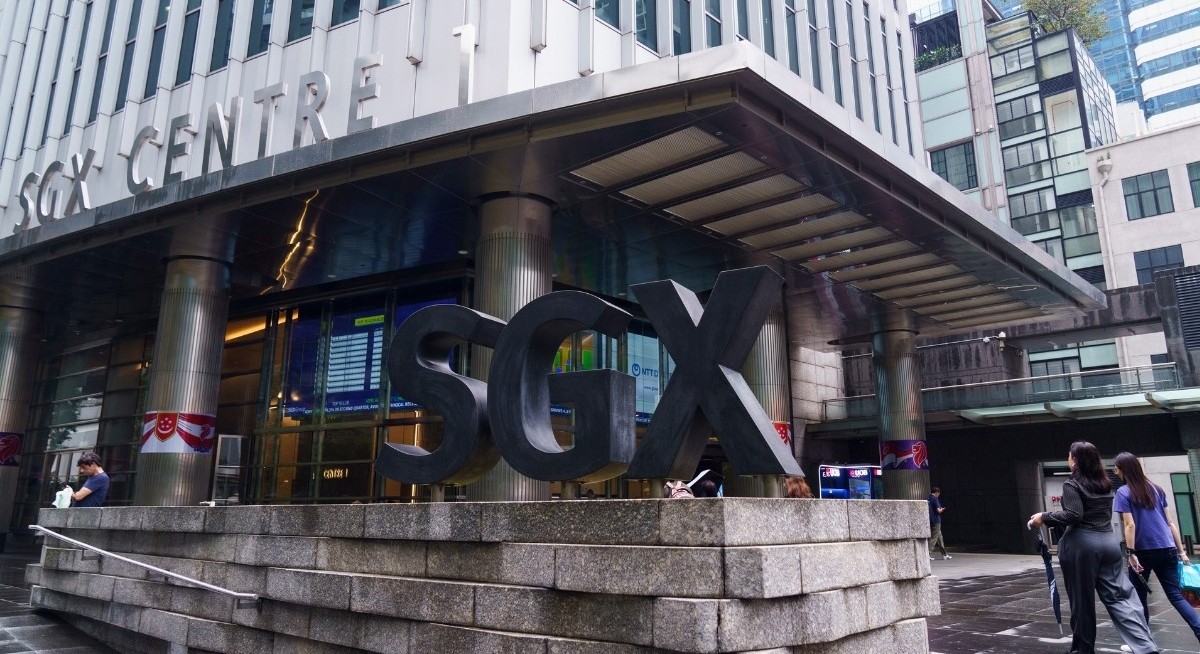


Beaudoin, the lead author of the Morningstar report Singapore’s Equity Market Recharged, published in June 2026, does not dispute that the numbers look good. Inflows into Singapore equity funds hit US$1.6 billion ($2.07 billion) in 2025, against an annual average of about US$118 million over the previous decade. They have since picked up, with the funds drawing US$2.7 billion in the first five months of 2026, lifting total assets to US$10.7 billion, more than double the US$4.7 billion held at the start of 2025. Trading on the Singapore Exchange (SGX) has roughly doubled since the start of 2025 to about $40 billion a month, after briefly topping $50 billion in March.
The first thing investors may miss is how little this rally can be pinned cleanly on the reforms. “While it’s tempting to give credit for these improvements solely to the equity market reforms, the picture is a bit more nuanced,” Beaudoin says. A strong Singapore dollar has flattered returns, and money has rotated into safe, high-dividend assets amid volatility from tariff shocks in 2025 and the outbreak of the war in Iran in February. "It is interesting to point out that passive flows have also picked up a bit, even though [EQDP] money is solely for active strategies at this point," Beaudoin notes, referring to index-tracking funds that draw none of the government seed money.
That is on top of the high levels of concentration in stocks that receive fund inflows. On Morningstar’s measure, Singapore is the second most concentrated market in Asia, behind only tech-heavy Taiwan. The three local banks — DBS Group Holdings (DBS), Oversea-Chinese Banking Corporation (OCBC) and United Overseas Bank (UOB) — loom largest in the Morningstar Singapore index. “These have represented over 60% of the index currently from just around 30% a decade ago, and this was also helped in part by their outperformance since Covid, as net interest margins soared in the high rate environment at that time,” Beaudoin says. According to his report, Singapore’s banks, along with restructuring names such as Singapore Telecommunications (Singtel) and Keppel, are driving the most gains. In other words, the returns have come largely from the old guard, not the small- and mid-cap (SMID-cap) companies that the reforms were designed for.

See also: Local firms powering Singapore’s strong green revenues
A trap in the making
That is not to say that SMID-cap stocks have not been able to attract funds. According to the Morningstar report, average SMID-cap exposure among active Singapore equity funds has risen to 29% from 12% over 2025.
But thinner stocks are harder to trade. The report finds the SMID-caps these funds hold mostly trade on daily volumes of single-digit millions — First Resources, the most liquid, at about $11 million — against a $97 million average for the five most-held blue chips, leaving managers a far narrower market to move in and out of. Liquidity, Beaudoin says, is “one of the most overlooked risks that I’ve seen when reading about these initiatives in the media.”
See also: ‘Generational’ investment opportunity in green economy: LSEG
Ironically, the huge size of the funds may add to the strain. “As these funds continue to grow, it becomes more difficult to execute trades without affecting stock prices, which could lead to unfavourable entry and exit prices,” Beaudoin says, leaving managers slower to build or exit positions.
The EQDP may even worsen the problem. The requirement for managers to crowd in third-party capital, Beaudoin notes, works against the prudent capacity management that illiquid stocks demand.
Demand is racing ahead of supply
Investor demand has responded convincingly, but the supply of new listings has not kept pace. SGX delistings have continued to outpace new listings from the start of 2025 through May. The 2025 IPO proceeds were the highest since 2019 and led Asean peers, but the US$2 billion ($2.59 billion) raised was less than a third of the 2011 peak of US$7.2 billion. New listings still skew towards real estate and industrials rather than the growth names the market lacks.

Beaudoin is similarly guarded on Value Unlock, a scheme announced by the Monetary Authority of Singapore in November 2025 to push companies towards stronger shareholder engagement and value creation.
In Japan and Korea, he notes, regulators have “implemented more punitive measures … which have helped drive some of the changes.” Meanwhile, Singapore’s version relies on financial grants and incentive-only approaches, which, according to the Morningstar report, fund managers doubt will create enough urgency for companies to overhaul long-standing practices.
For more stories about where money flows, click here for Capital Section
Drawing in new listings comes with its own risks as well. If the reforms succeed in drawing early-stage growth companies into the bourse, they will bring “unproven business models, sensitivity to economic cycles, and elevated share price volatility,” Beaudoin says. The cautionary cases are the ones that got away: Singapore-founded Sea listed in New York and Grab on Nasdaq, with share-price swings well above those of typical local stocks. Several managers who bought in, the report notes, were burned by their extreme price fluctuations. The ability of managers to navigate such stocks will be a critical watchpoint as the universe widens.
The quiet winners are the simple funds
For all the noise around the new active EQDP funds, the best-rated Singapore equity vehicles that Morningstar covers are passive. The State Street SPDR Straits Times Index ETF and the Amova Singapore STI ETF both carry Bronze Medalist ratings, ahead of their active peers, largely on cost. Their expense ratios are 28 and 24 basis points, compared with a category median of 137.
That said, Beaudoin says this is not a recommendation to pursue passive investment products. “I wouldn’t say a blanket statement like passive funds should be purchased over active funds,” he says. “It really depends on what you’re looking for and your own risk tolerance.” Passive funds may charge lower fees, but active funds have their merits as well. The final call rests on whether an investor believes the market offers room to beat the index.
It is hard to pin down the cost of new funds. Many Singapore unit trusts have yet to publish a full expense ratio, so their management fees understate the true cost of ownership. The Morningstar report notes that choosing between a newly launched fund and an established one means looking past the launch buzz to the manager’s record in SMID-caps and capacity management, as well as their fees.
While Morningstar expects the Singapore market to continue evolving, it notes that the city-state remains a niche market and that most investors will be better off spreading themselves across regions and asset classes. The webinar’s audience seemed to sense the same unfinished quality. Asked whether the reforms would leave a structurally stronger market over the long term, the closing poll drew mixed responses, with some saying it was still “too early to tell.”




