


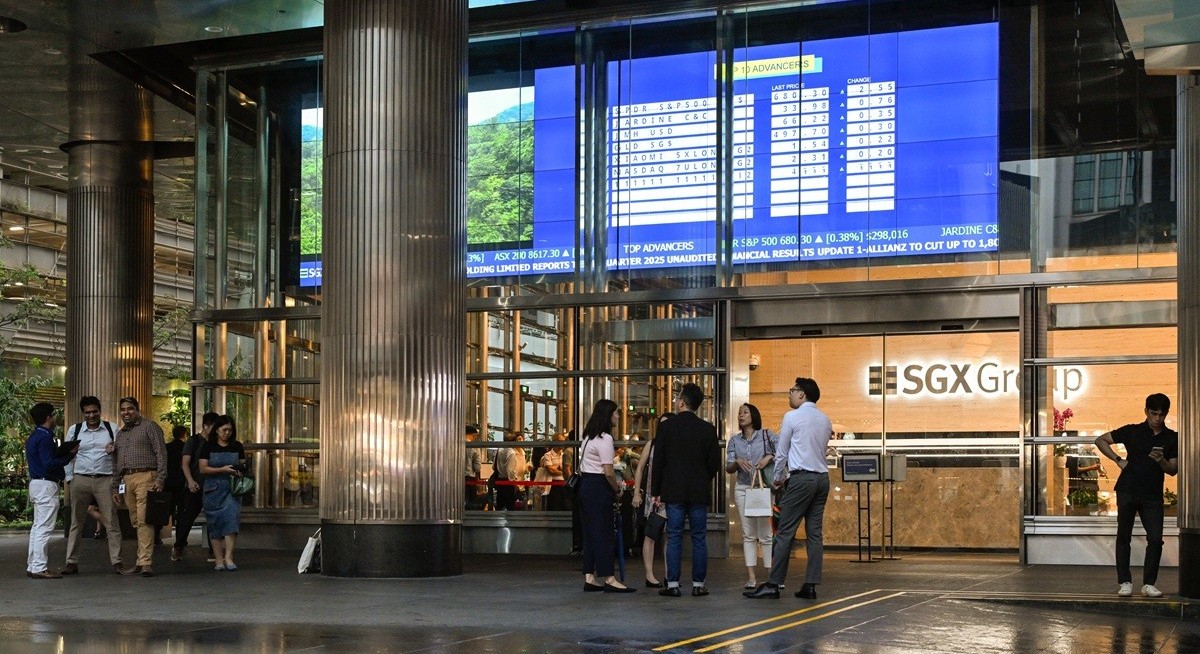


To strengthen their competitiveness and unlock value, SGX-listed companies (listcos) are getting a boost in sustainability reporting and capability building, with the local bourse teaming up with sustainability reporting solutions provider Gprnt to enhance SGX’s ESGenome digital disclosure portal. The partnership was announced on July 2 by Minister for Sustainability and Environment Grace Fu at the inaugural SGX Group-Gprnt Climate Action Forum.
Augmenting their initiative, SGX and Gprnt will collaborate with the Council for a Competitive Climate Transition (C3T) to foster more robust transition planning and supply chain engagement for businesses. C3T will provide listcos with relevant information and resources relating to climate risks, transition pathways, and sectoral benchmarks and will continue to identify information gaps and additional resources needed to support transition planning.
The way Fu sees it, good sustainability disclosure helps organisations better understand their own risks and opportunities, which in turn drives action. “When companies systematically assess and disclose climate-related risks, they are often better able to identify vulnerabilities and strengthen their resilience,” says Fu. “It provides investors and financial institutions with greater transparency and confidence.”
Fu adds that climate adaptation is critical for Singapore’s standing as a trusted business hub. She says: “The business proposition of Singapore, what's that? It's really a trusted hub where there's connectivity and there's continuity of businesses. We don't take the power outages lightly, we want to make sure that our data communications work all the time, 24/7, fastest, most reliable.
“So there is risk that can disrupt our businesses, that can impact our reputation as a trusted business hub. We want to address them one by one, so that in Singapore, it's not that we can never be, you know, knocked out by extreme weather or power outages, but when we have such a disruption, we must recover as quickly as we can.”
Coming from the investor’s perspective, SGX CEO Loh Boon Chye says that investors are pricing risks and resilience just as closely, adding that heightened geopolitical tensions and disruptions to global energy supply have brought risks firmly into focus. He believes that in time, investors will demand boards and management disclose climate-related risks and the preparedness to mitigate them.
See also: The city that knows itself
Encouraging smaller issuers to view climate disclosures from a different perspective, Loh says, “In time, other climate shocks will emerge to test companies in the same way that this energy crisis has tested them, rising sea levels and flash floods, higher temperatures and heat waves. In the context of SGX value unlocked movement, we encourage issuers to think about how climate-related disclosures can serve as a value creation tool.”
Through synergies with Gprnt’s nationwide sustainability reporting utility, ESGenome is envisioned to streamline and simplify the process for SGX-listed companies to fulfil mandatory Climate-Related Disclosures issued by the International Sustainability Standards Board as well as supporting Scope 3 emissions and corporate transition planning.
Additionally, by bringing ESGenome with national movement Green 100, the collaboration paves the way for a more interconnected and interoperable sustainability ecosystem in the island-state. From a business standpoint, this will enable participants to more seamlessly leverage their sustainability data to unlock supplier engagement, sustainable procurement, and green financing opportunities as well as improve overall Scope 3 readiness on a common digital infrastructure.
See also: OCBC launches free ESG tool for more sustainable SMEs and supply chains
Previously, The Edge Singapore reported that with Green 100 enabling Scope 3 emissions reporting, large companies, including STI constituents (and presumably other issuers), could monitor, report and reduce emissions across their value chains.
“What began as an effort to simplify sustainability reporting has now evolved into a common infrastructure for nationwide disclosures,” says Gprnt CEO Lionel Wong who envisions a ESGenome for the future.
“Through ESGenome and the Green 100, we are creating a shared foundation for ESG reporting, trusted data, transition planning, value-chain engagement, and sustainable finance, reducing fragmentation and making it easier for companies of all sizes to participate meaningfully in Singapore’s green transition,” adds Wong.
According to the SBF National Business Survey, half of Singapore businesses expect climate risks to affect them, with most primarily motivated by practical business considerations. The strongest drivers of decarbonisation include cost savings (48%), regulatory compliance (48%) and enhancing corporate reputation (48%), with one-third citing customer requirements as a key factor.
The report highlights that businesses are enjoying the benefits of decarbonisation, with 49% reporting improved ability to meet regulatory requirements, while 42% have realised cost savings. Others report reduced greenhouse gas emissions (39%) and increased customer interest (37%), demonstrating that sustainability efforts can deliver both operational and commercial value.
“What we are seeing is that sustainability is also moving from a reporting conversation to a competitiveness conversation,” says Singapore Business Federation CEO Kok Ping Soon. “But what we hope to see is to start seeing this moving from a competitiveness conversation to a growth conversation.”
However, most businesses have yet to establish robust emissions tracking systems, with 62% of those decarbonising not yet measuring their emissions, hindered by capability and manpower constraints.
“Listed companies can change this by leading from the front and bringing their suppliers along,” adds Kok who encourages SGX-listed companies to participate in Green 100 as enterprise “Queen Bees”, mobilising their suppliers, customers, and business partners to embark on basic sustainability reporting and capability building.
“Climate action is no longer just about compliance, it is about competitiveness,” reiterates Kok who is co-chair of C3T with Singapore climate ambassador Ravi Menon. “Through C3T, we look forward to working with SGX, SGX-listed companies, and their value chains to turn reporting into action, and action into competitive advantage.”




