




CSE Global — powered by electrification
CSE Global is an end-to-end engineering services provider for electrification, communications and automation systems.
The Mainboard-listed company derives the majority of its revenue from the electrification segment, which enables the energy transition. For 1Q FY2026 ended Mar 31, revenue from electrification rose 50.1% y-o-y to above $146 million, which represented 55% of total revenue. Order intake rose 393% y-o-y to almost $178 million, or 66% of total order intake for the quarter. The total order book stood at $716 million (16.2% higher y-o-y), providing revenue visibility.
While favourable industry conditions are pushing the company to new highs, recent developments have drawn attention to its boardroom after CSE’s lead independent director Tan Chian Kong resigned due to “unresolved differences of views with regards to working with controlling shareholders”.
See also: ‘Generational’ investment opportunity in green economy: LSEG
Heliconia Capital, a subsidiary of sovereign wealth fund Temasek, is the controlling shareholder of CSE with a 23.44% stake. Despite this incident, analysts remain upbeat about CSE’s prospects. UOBKH’s John Cheong and Heidi Mo have retained their “buy” call along with an unchanged $1.79 target price, which is based on 29 times FY2027 P/E, or two standard deviations above its mean.
“This reflects CSE’s re-rating from its historical 15 times mean of its P/E ratio, driven by the data centre electrification narrative and strong order intake,” notes UOBKH’s June 9 report. “We believe the premium is justified by the Amazon relationship and its robust $716 million order book.”
Amazon is both a long-term customer and a potential strategic investor in the company. Meanwhile, Maybank’s Jarrick Seet does not see Tan’s resignation as something to worry about, believing that CSE’s fundamentals remain intact. He views CSE as a proxy play for booming AI data centre demand in the US, maintaining his “buy” recommendation with an unchanged target of $2.25 in his June 18 report.
See also: Can sustainability make money? Yes, say professional investors
As at June 30, CSE’s share price is $1.34. The company’s shares have tripled over the past 12 months.
Keppel — diverse green solutions
Conglomerate Keppel Corp has wide-ranging interests in the green economy. These include sustainable aviation fuel (SAF), cooling systems and power generation, among others.
The company commenced operations for the Republic’s first hydrogen-compatible combined cycle power plant in May with Keppel Sakra Cogen Plant, a 600 MW combined cycle gas turbine (CCGT) facility, which increases Keppel’s power capacity to 1,900 MW.
Capable of co-combusting up to 30% hydrogen with natural gas from the outset, Keppel says the new plant positions the business to benefit from Singapore’s and the region’s shift towards lower-carbon fuels.
Overall, Keppel’s power generation capacity is supplemented by up to 200 MW of imported low-carbon power via the Laos-Thailand-Malaysia-Singapore Power Integration Project and is well positioned to support Singapore’s growing energy needs, including demand arising from semiconductors, digitalisation and AI-driven infrastructure.
Meanwhile, the company has announced a slew of more sustainable cooling projects across residential, commercial and industrial sectors.
For more stories about where money flows, click here for Capital Section
In February, Keppel announced $600 million in new contracts for liquid cooling solutions and services across the city-state and regional markets. These have raised the backlog of long-term contracted revenues for Keppel’s decarbonisation and sustainability solutions from $6 billion as at end-December 2024 to over $7.1 billion, with revenue expected to be earned over 10 to 15 years, as at end-December 2025.
The HDB also awarded Keppel’s infrastructure division a contract in April to design, install and operate residential cooling systems at the new Tengah housing estate. With 10,000 households under the new contract, Keppel will be servicing a total of 14,000 homes.
The Mainboard-listed entity will also be partnering with Aster to undertake front-end engineering design work for the development of Asia’s first commercial-scale ethanol-to-jet (EtJ) SAF facility on Jurong Island. The project is envisioned to be one of Asia’s first purpose-built EtJ SAF facilities, supporting both the national SAF target and ongoing efforts to decarbonise the local aviation ecosystem.
JP Morgan’s Mervin Song upgraded Keppel to overweight from neutral, with a five-cent higher price target of $12.05 for end-June 2027. “In our view, Keppel’s pivot towards becoming a global asset manager remains on track and earnings should benefit from the ramp-up at the new Sakra plant,” Song notes in his May 21 report.
Meanwhile, Adrian Loh from UOB Kay Hian (UOBKH) maintains a “buy” rating with an unchanged target of $13.23, representing a P/E of 18 times, which is a 25% discount to global asset management peers that have greater reach in scale and geography, deeper liquidity and longer track record.
For FY2025 ended Dec 31, Keppel reported a net profit of $1.1 billion, excluding its non-core portfolio for divestment and discontinued operations. This was a y-o-y increase of 39%. As at June 30, Keppel’s share price is $10.94, representing an increase of around 47% over the past 12 months.
Sembcorp Industries — renewables and low-carbon urban development
Energy company Sembcorp Industries has been transforming its portfolio from brown to green since Wong Kim Yin became CEO in 2020. Its focus on the energy transition is reflected on its website, which features a “Driving Energy Transition” tab.
The company has grown its renewables portfolio to 21.9 GW as of June (from 2.9 GW in 2020) and is presumably able to meet its 2028 target of 25 GW gross installed renewables capacity.
Sembcorp says that its ability to conduct self-operations and maintenance of its assets gives the company the autonomy to enhance the energy-based availability and reliability of its assets while lowering maintenance costs. This is presumably a competitive advantage versus its peers.
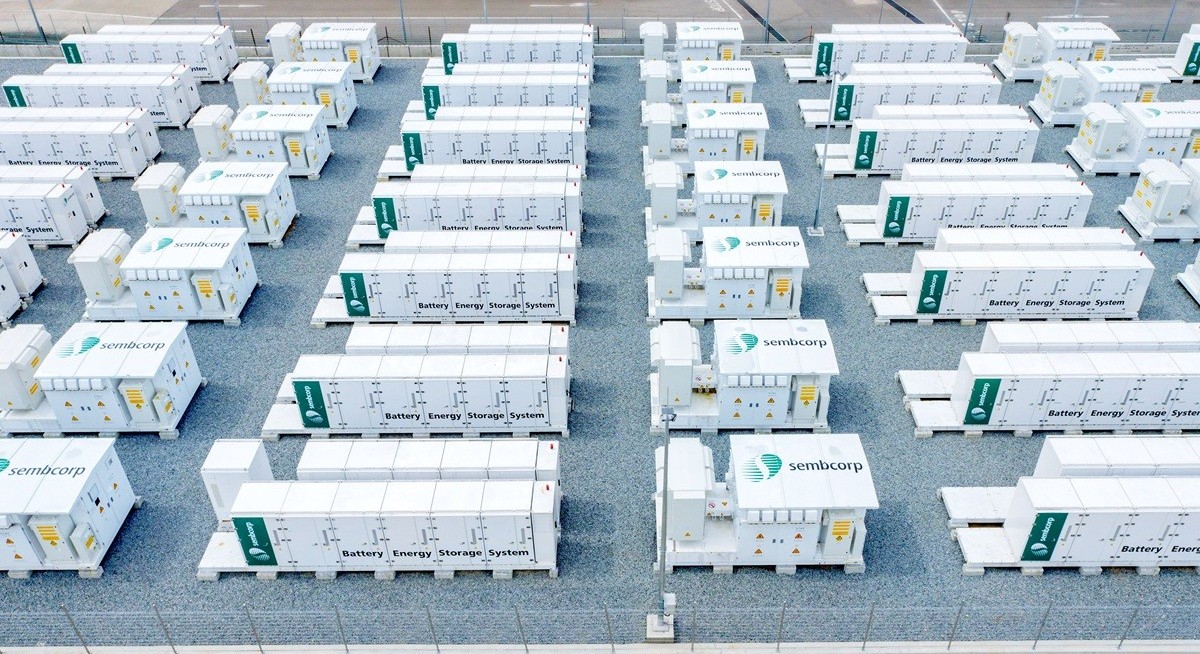
With its portfolio spanning Southeast Asia, Australia, China, India, the Middle East and the UK, Sembcorp believes that it has the expertise to support the region’s energy needs and transition. The company operates one of the world’s largest inland floating solar farms in Singapore and Southeast Asia’s largest energy storage system.
In May, Sembcorp announced a development agreement to deliver Phase 1 of a new data centre at its Wilton International site in Teesside, in partnership with data centre and digital infrastructure specialist Digital Reef. The project forms part of Sembcorp’s efforts to reposition its UK energy business towards data centre opportunities and broaden its customer base.
The company also just completed its acquisition of Australia’s Alinta Energy, adding the latter’s 3.4 GW operating portfolio and 10.4 GW development pipeline. However, as Alinta operates a coal-fired plant, Sembcorp’s carbon emissions are set to increase along with its earnings.
In addition to energy, Sembcorp is active in urban development, including industrial parks, commercial hubs, water and waste-to-resource solutions. The company aims to establish itself as a leading low-carbon industrial park operator in Asia.
As of June, Sembcorp has delivered more than 17,600 hectares of development across 30 projects in Vietnam, China and Indonesia. It has a 2028 target to expand its land bank to 18,000 hectares and increase its industrial properties to 1.5 million sqm. Its Urban Strategy 2024 aims to achieve a net profit CAGR (2022-2028) of more than 15% and a 2028 ROE of 10%.
CGS International (CGSI) analysts Lim Siew Khee and Meghan Kande maintain their “add” rating and target price of $7.68 in their June 11 report. CGSI expects Alinta to contribute a core net profit of $115 million in FY2026, and to then increase to $230-240 million, post financing costs, on a full-year basis from FY2027 onwards.
They also believe that, amid geopolitical tensions and a gas shortage, Sembcorp will benefit from elevated spark spreads for its Senoko portfolio, which is due for recontracting in 2026. Its “defensive” gas earnings profile, supported by cost pass-through mechanisms and potential upside from gas portfolio optimisation in a tight domestic market, leads analysts to view the stock as undervalued.
For FY2025 ended Dec 31, Sembcorp earned $984 million in net profit attributable to shareholders, a y-o-y dip of 3%. Segmentally, net profit before exceptional items for renewables rose 5% y-o-y to $192 million, while the corresponding figure for integrated urban solutions increased by 3% y-o-y to $178 million.
As at June 30, Sembcorp’s share price is $6.35, which is around 7% lower than 12 months ago.




