


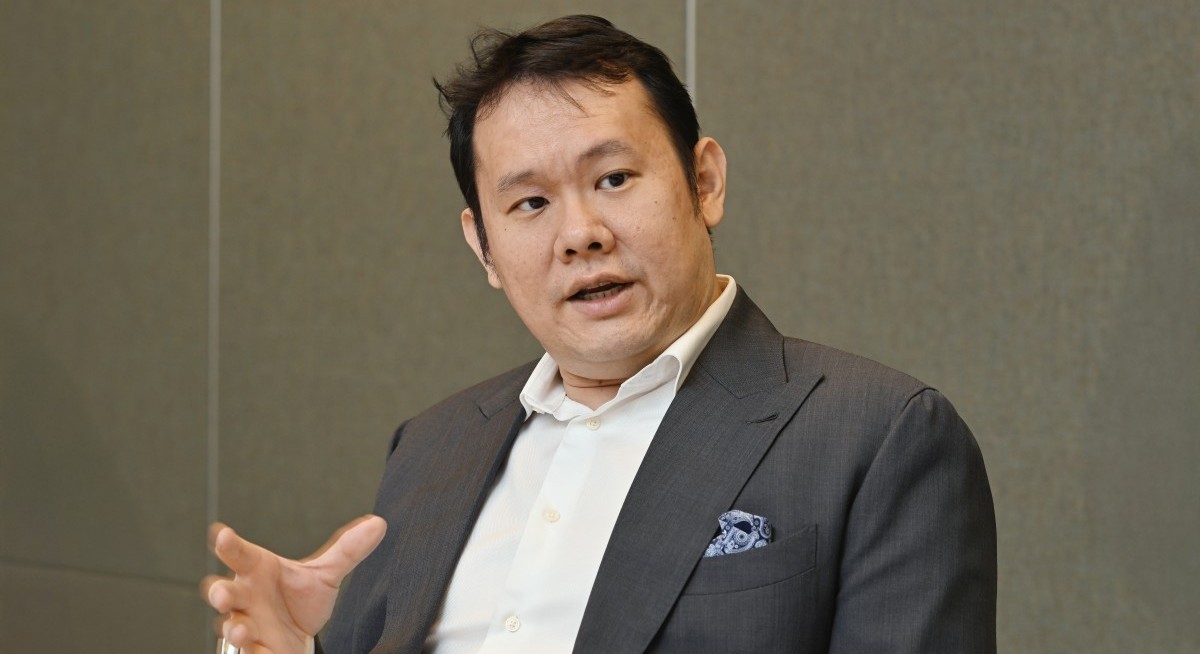


Fullerton is one of nine asset managers to receive capital from the Monetary Authority of Singapore (MAS) to invest in Singapore-listed stocks under the Monetary Authority of Singapore’s (MAS) $5 billion Equities Market Development Programme (EQDP) fund. So far, $3.95 billion of the $5 billion has been allocated to the selected asset managers.
MAS established a review group in August 2024 to recommend measures to strengthen Singapore’s stock market, and the group’s final report was released on Nov 19. The EQDP fund was one of the group’s recommendations and is meant to raise investor interest and channel capital into the Singapore stock market. Another measure recommended by the group was to set up a “Value Unlock” programme to help listed companies strengthen their investor relations, corporate strategy, and capital optimisation.
Fullerton is the second asset manager appointed under the EQDP to name its fund and portfolio managers. Avanda Investment Management, which was co-founded by former GIC CIO and 2023 Presidential Election candidate Ng Kok Song, announced in July that its head of equities, Richard Chan, and portfolio manager, Sherman Lim, will manage its new standalone fund, the Avanda Singapore Discovery Fund. Avanda says the fund will have a “strong focus” on small- and mid-cap Singapore stocks.
The other seven asset managers — JP Morgan Asset Management, Amova Asset Management (formerly Nikko Asset Management), AR Capital, BlackRock, Eastspring Investments, Lion Global Investors, and Manulife Investment Management — have yet to launch their respective funds.
See also: Local firms powering Singapore’s strong green revenues
According to FSGV’s fact sheet, the $321.36 million fund targets a 30% allocation to small- and mid-cap Singapore equities. The remainder will be allocated to large-cap stocks, cash and money market funds. FSGV, which had its inception date on Oct 2 and its pricing date on Oct 31, is benchmarked against the FTSE Straits Times All Share Total Return Index and charges an annual management fee of 1.5%.
Thus far, the fund has attracted interest not just in Singapore but also from other Asean nations and developed countries. “There’s a little bit of buzz, and I think the closer you are to the epicentre, that is, Singapore, you get a lot of interest,” Ang says.
Ang co-manages the fund with lead portfolio manager Michelle Sim, and the pair is overseen by Fullerton CIO Ken Goh. FSGV is supported by analysts from Fullerton’s equity team, who Ang says have “a lot of experience in terms of having wide coverage across multiple sectors or geographies and countries”.
See also: ‘Generational’ investment opportunity in green economy: LSEG
“It’s important because if you think about Singapore, many Singapore stocks are also dependent on foreign companies,” Ang says. “So to cover these names in Asia, in the global sense, it’s a very useful read-through for us, for the Singapore names as well.”
Notably, Ang emphasises that FSGV is not seeking dividend stocks — popular investments for their high certainty of returns — though he concedes that some of the growth stocks they select may pay dividends when businesses streamline or recycle their assets. He adds that he is not explicitly looking for value stocks either, but rather for counters with the potential for value creation and growth.
“When people talk about value stocks, it’s about valuation first. But we think about earnings growth first. When you unlock value, to give you an example, by divesting assets, reshaping the business, hiving off non-core, you can drive ROEs, you can drive ROICs, and those are companies we would love to invest in,” Ang says.
“So value unlocking is part of it, but not a value stock per se.”
It’s not about mid- or large-caps, but returns
The FSGV is fully invested, and its top five holdings are all constituents of the Straits Times Index, Singapore’s flagship index of the top 30 blue chips. DBS Group Holdings is the fund’s largest holding, at 21.9%, followed by Oversea-Chinese Banking Corp (11.7%), United Overseas Bank (8.3%), Singapore Telecommunications (7.4%) and CapitaLand Integrated Commercial Trust (4.9%).

For more stories about where money flows, click here for Capital Section
When asked about FSGV’s 30% allocation to small- and mid-cap stocks, Ang says the figure is not a hard number and can be adjusted depending on market conditions. FSGV views small- and mid-cap stocks collectively and defines them as companies with market capitalisations below $10 billion.
“What we want to do is that we want to drive returns, from either mid-caps or large-caps, and if there are returns from large-caps, we will try to focus on the large-cap as well,” Ang says, adding that while Fullerton has yet to reach its 30% target yet, they are hoping to achieve it over the next couple of months.
In terms of investment themes, Ang is focusing on infrastructure, real estate, wealth management, as well as consumer and industrials.
While infrastructure and real estate may appear to overlap, Ang says the former is tied to multiple construction projects underway in Singapore, including public housing and transportation. Real estate, on the other hand, is attractive because many companies in this segment are growing their earnings by unlocking value and disposing assets. The wealth management play is tied to the city-state’s rising income levels, while the consumer and industrials segment is promising because companies there are pivoting toward stronger growth by streamlining their portfolios.
Ang says FSGV is not heavily invested in the technology sector at the moment, as there are not that many Singapore-listed names to consider. “It’s not one of the big areas that we are invested in, but I think it’s an area that will become interesting,” Ang says, citing the MAS review group’s proposed dual-listing bridge between Singapore Exchange and Nasdaq.
“That’s great because I think that gives a pathway for more tech companies to potentially list in Singapore, making it easier and creating a kind of cluster as well. It’s an area that we are looking at with bated breath.”
Mid-caps have rallied, but valuations are not stretched
The launch of EQDP-backed funds, such as Avanda’s and Fullerton’s, has taken place amid a rally in Singapore’s mid-cap stocks. According to SGX Group, the iEdge Singapore Next 50 Indices, which tracks the next 50 largest companies besides the top 30 blue chips, have generated an 18% total return in 2H2025 to Nov 4.
“The rally is not necessarily a bad thing, and I don’t think valuations are stretched at this point in time. Companies that want to unlock value are still unlocking value. Companies that aren’t doing much haven’t re-rated in the same way. I do think there is more room to go,” Ang says.
For him, the EQDP has highlighted Singapore’s mid-cap stocks, which had very low valuations to begin with. This makes the re-rating of those stocks unsurprising. Instead, what’s more interesting is how not all stocks were re-rated in the same way. It was companies that showed growth or were unlocking value that saw their valuations rise.
“It means that markets are discerning between different companies, which is what you want with price discovery, where more people are looking at them,” Ang says.
The FSGV may be a new fund, but Fullerton intends to take the same hands-on investing approach as their earlier products. In addition to taking a bottom-up approach to understanding a company’s business model and revenue drivers, Fullerton will engage directly with companies on corporate strategy, investor communications, and the creation of value for shareholders through dividends or share buybacks.
“We want to get our hands dirty. You want to be out and about talking to companies,” Ang says. “It’s not a check-in for us. It’s really about engaging them at a deeper level.”
The ultimate objective for Ang and his team at Fullerton is to create a “win-win-win situation” for companies, investors and the overall ecosystem. Working together to unlock value is not only beneficial for companies and shareholders but also results in a more vibrant market with greater capital.
Although the second Trump administration’s trade war has introduced an element of uncertainty into markets, Ang says the impact has not been as significant in Singapore. He expects companies to achieve 10% earnings growth this coming year.
On Nov 21, the Ministry of Trade and Industry (MTI) announced that Singapore’s 3Q2025 GDP print had come in better than expected. The city-state’s GDP grew by 4.2% y-o-y in the third quarter, higher than the 2.9% an advance estimate released in October had forecasted. MTI upgraded this year’s GDP growth forecast to “around” 4% from 1.5% to 2.5% previously.
“Look at the fundamentals of Singapore: A strong Singapore dollar, high value-added products, relatively low tariff rates versus other countries, and low and controlled inflation. The fundamentals are strong to begin with. We have policy support, and that’s icing on the cake. Singapore’s actually doing good to begin with. We do not want to overlook that,” Ang says.




