


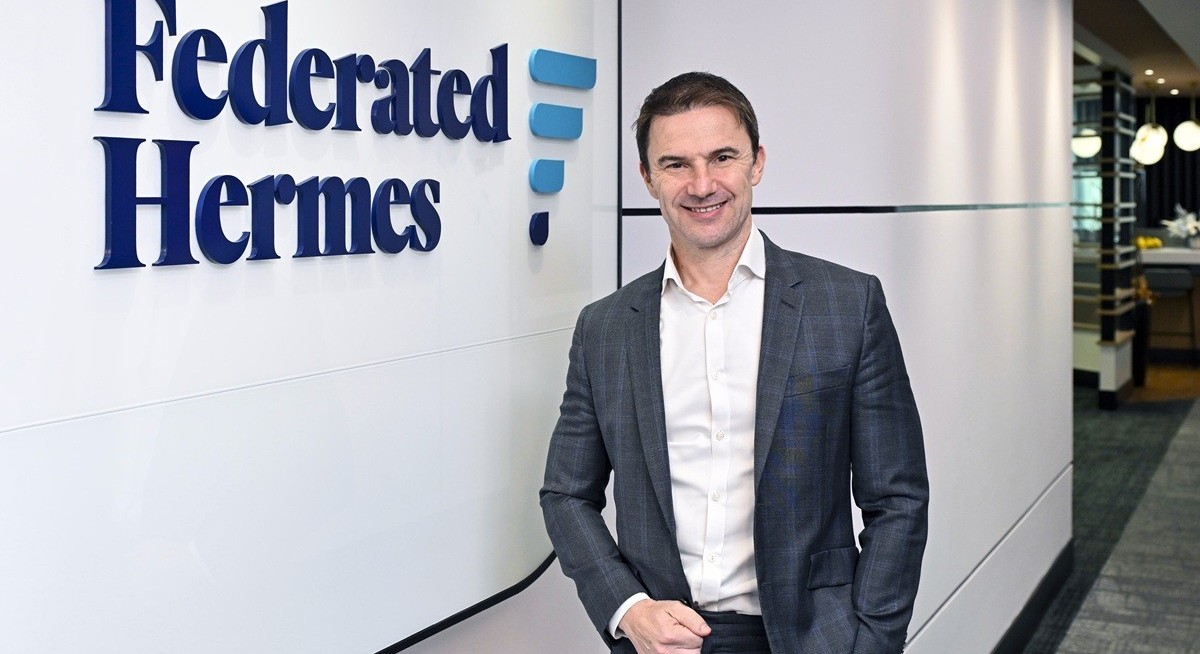


The way Pines sees it, valuation is critical and he avoids paying up for popular stocks, even high-quality ones. Giving a simple analogy, he says: “If we can’t find a $50,000 Ferrari, we’d rather buy a $5,000 Ford.” This refers to the fund’s strategy of investing in less glamorous stocks that are trading at a compelling discount, rather than investing in the big names that are trading at a premium.
The portfolio spans both large and mid-cap names, with the top five holdings being Taiwan Semiconductor Manufacturing Company (TSMC), Tencent Holdings, Samsung Electronics, JD.com and AAC Technologies Holdings.
While the average market cap of holdings is around US$33 billion ($42.8 billion), this is well below the US$75 billion average of the benchmark. “We don’t go in with the aim to buy mid-caps, but mispricings often occur there,” he notes.
The portfolio’s geographical exposures reflect where Pines sees value. China and South Korea are “overweight”, while India and Taiwan are “underweight”. The only Indian stock in the fund is GAIL, a state-owned gas pipeline operator. “India is the most expensive major market in the world, more expensive than the US — and without the AI growth story,” he adds. He finds it hard to justify paying 60 times P/E for Indian consumer goods companies growing at only about 5% a year.
See also: Waking up from a ‘pleasant fiction’ to invest in an era of scarcity
Korea reforms and China recovery
Much of the team’s conviction in South Korea stems from recent corporate governance reforms. Following years of advocacy, Federated Hermes played a visible role in lobbying for changes to shareholder rights. In July, South Korea enacted a fiduciary duty law, improving protections for minority shareholders. Other planned measures include mandatory treasury share cancellation and reforms to inheritance taxes and dividend policy.
“We’re now seeing a meaningful shift in how Korean companies are run. That’s critical for lifting the Korea discount,” Pines says. The KOSPI index has already responded — up 70% year-to-date — and he believes more upside is possible if the government follows through.
See also: Scarce investments
Pines believes that Korean equities are undervalued at the moment. He likes the country’s financial companies due to dividend yields ranging from 5% to 10%, as well as banks that are trading “at well below book value”. Overall, he sees much upside in Korea’s equity market, which has lagged behind many other major Asian markets.
In a letter to unitholders that was issued in September 2025, Pines shares that the South Korean stock market currently stands among the best-performing asset classes in the world this year. He adds: “To be sure, at this level the market has become more volatile and we believe that South Korean regulators will need to follow through on other proposed reforms in order to maintain the rally’s momentum.”
China, meanwhile, remains a contrarian favourite. “Everything is cheap — except the most glamorous parts of semiconductors,” Pines says, while avoiding real estate companies in the meantime too. While deflation and consumer caution remain headwinds, he sees signs of cyclical recovery, and the country’s large domestic economy offers a buffer against external volatility.
Importantly, the tone of US-China relations appears to be stabilising. “We see a maturing of the relationship,” says Pines, pointing to recent negotiations that indicate a more pragmatic stance on both sides. That reduces the geopolitical risk premium attached to Chinese equities.
Though wary of direct exposure to property developers, he still sees ways to play a China recovery — particularly via cement and appliance companies with net cash positions and strong market presence.
Anchored by valuation, not narratives
The fund maintains core exposure to large-cap tech firms, including TSMC and Samsung Electronics, but only where valuations justify. “TSMC is the only company in the world that can manufacture the most advanced chips. Yet it trades at only 21 times earnings,” Pines says. “We see it as a defensive play on AI.”
For more stories about where money flows, click here for Capital Section
Similarly, Samsung trades at just 1.6 times book. The way Pines sees it, these are not the high-flying names up 300% on speculation, but quality compounders with real earnings and dominant market positions.
“We prefer the chip sellers to the chip buyers,” he says, pointing out that hyperscalers like Google and Meta are spending heavily on capex just to defend their positions, with little clarity on monetisation.
Pines is cautious on Taiwan beyond TSMC, citing strong correlation between Taiwan’s market and US equities. “It is my view that the US is probably overvalued. And if that’s true, and the US corrects, it’s very difficult for me to imagine Taiwan not correcting, because they moved up in [the] last year, even the little kinks. And therefore, if you believe that the US is out of value, I think you have to believe that Taiwan is probably overvalued too.”
The fund’s contrarian positioning — owning unloved stocks before they recover — has required patience. Momentum has dominated for the past decade, and 2020 was a difficult year, as cheap stocks got cheaper during the Covid-19 tech boom. But Pines argues that the risk-reward profile still favours his approach. “When value stocks don’t work, we usually don’t lose much. When growth stocks don’t work, the losses can be catastrophic.”
He prioritises companies with earnings growth, avoiding sectors in structural decline. For instance, he avoids legacy automakers outside China, citing Chinese EV makers’ rising dominance in EMs. “The writing’s on the wall,” he says.
Foreign exchange (FX) risk is less of a concern than expected. Most Asian currencies tend to move together, reducing tracking error versus the benchmark. As a result, Pines does not hedge currency exposure, except in rare instances of policy divergence — as was the case with China several years ago.
Outliers and overlooked markets
The fund’s mandate allows investment in non-Asian stocks if they derive most revenue from Asia. That’s how Swiss-listed Swatch Group makes it into the top 10. Pines explains: “Turns out that Swatch makes most of its profits from watch sales in China, so it becomes allowable for us to invest in them.”
He adds: “We compare its attractiveness relative to what we can get when we invest in Asia ex-Japan stocks, and we find that in China, the higher-quality jewellery companies trade at a bunch of high valuations.” He adds that the fund has a holding in China-listed Chow Tai Fook. While he says it is a good-quality company, it is trading at a much higher valuation than Swatch Group. He also notes that Swatch Group’s valuations are depressed and significantly below book value for various reasons, including management issues. This is a classic value opportunity.
For Singapore, he thinks the island-state is going to be a “clear beneficiary” of internationalisation and banks are on his watchlist, although none are currently held.
Beyond China and Korea, he also sees value in Thailand and the Philippines — two markets that have lagged but offer attractive valuations and structural growth. Japan, though outside the benchmark, is also worth watching, especially small-cap value names.




