




On June 23, Singtel announced it had sold a third of its 7.7% stake in Thai-listed Gulf Development, raising around $1 billion in proceeds and booking cumulative gains of $140 million.
With the sale, Singtel has monetised some $6.8 billion of the $9 billion mid-term capital recycling target, which is a key plank of its Singtel28 plan to sweat its capital harder. Proceeds from the sale of assets are used to fund capex for new growth segments, pay special dividends to shareholders and buy back shares.
Recycling capital
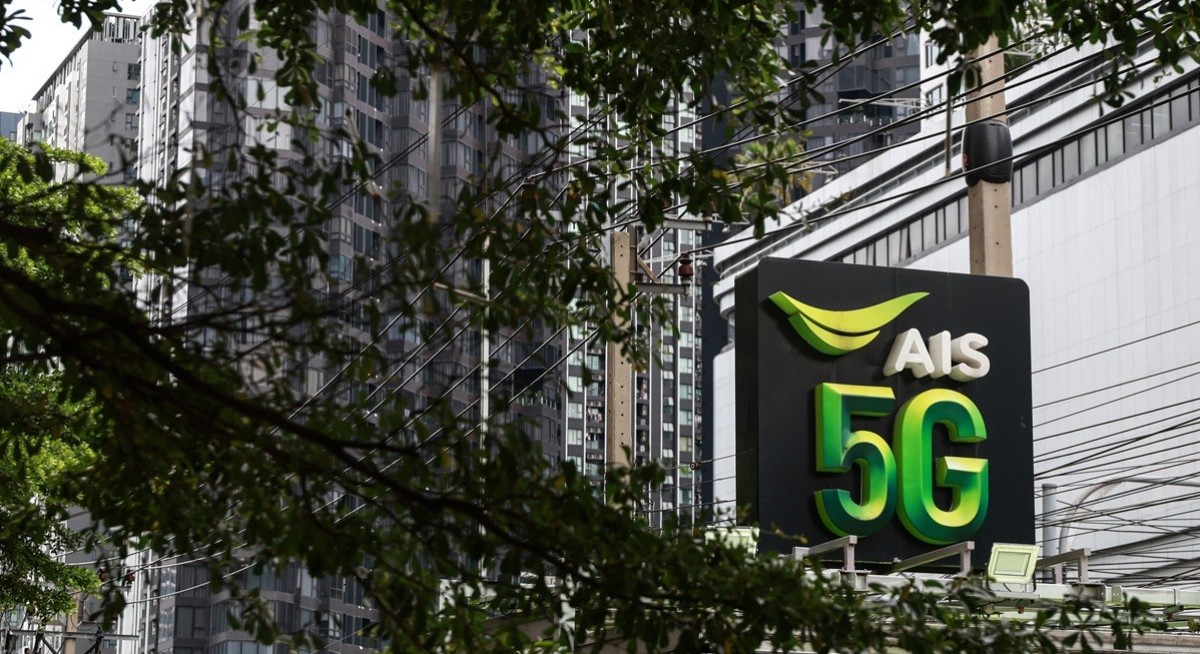
To recap, Singtel received its 7.7% stake in Gulf Development in 2025 following the amalgamation of Intouch Holdings and its largest shareholder, Gulf Development, which helped simplify Singtel’s shareholding in its Thai associate AIS. The merger removed Intouch as the intermediary holding company and created a new entity, Gulf Development, with a market cap exceeding THB950 billion ($37 billion).
Group CFO Arthur Lang calls the partial sale of its shares in Gulf Development “just one of many levers in Singtel’s capital management arsenal” to consistently return capital to shareholders and to fund the development of the company’s growth engines.
See also: Is sentiment turning towards ComfortDelGro’s beaten-down shares?
“This gives us considerable ability to fund and sustain our value realisation dividend, value realisation share buyback as well as digital infrastructure investments, putting us on track to deliver sustainable yield and growth over the coming years,” says Lang.
This divestment announcement came amid a post-results drop in the company’s share price. From a peak of $5.21 on March 20, it traded as low as $4.21 on June 8, then recovered slightly to $4.41 on June 24.
Lang notes that Singtel’s holding company discount has narrowed significantly since the implementation of Singtel28 two years ago, when the share price was below $2.50. “We still believe that the current market valuation does not fully reflect the long-term value of the group, given the strength of its core businesses, digital infrastructure and services assets and its regional associates,” he adds.
See also: With no ‘sell in May’, SGX enjoys higher target prices on ‘strong’ May
In any case, Singtel, which has a $2 billion share buyback programme in place, has been taking advantage of the lower prices in recent weeks to steadily buy back its own shares. As of June 22, Singtel has spent $681 million, or 34% of the $2 billion, to buy and cancel 148.8 million shares.
Upon full execution of the buyback, on a pro forma basis using FY2026 underlying net profit, this would result in a permanent 3% accretion in underlying earnings per share. “Our share buyback programme is a value-accretive use of capital to enhance the value of our shares and signal its upside potential,” says Lang.
What analysts say
In response to the sale of shares in Gulf Development, Sachin Mittal of DBS Group Research has maintained his “buy” call on Singtel and set a target price of $5.46, noting that this deal is drawn from the same playbook as the one the company is using with Bharti Airtel.
He calculates that Singtel’s 7.7% stake in Gulf Development is worth around $2.8 billion, equivalent to some 4% of its own market cap — indicating that this is “a modestly sized but non-trivial” portfolio asset. “While Singtel has not disclosed the specific use of proceeds, this is consistent with management’s strategy of unlocking value to fund growth capex for the data centre business,” says Mittal.
He notes that of the $1.2 billion in growth capex for FY2027, $0.7 billion is already funded by customer advances, with the remaining $0.5 billion potentially funded by this sale. “This suggests that another $0.5 billion can go towards value realisation dividend and buybacks,” says Mittal, noting that Singtel’s projected yield is around 4.2%.
Hussaini Saifee of Maybank Securities says that beyond Gulf Development, Singtel retains several visible capital-recycling “buckets”. First, Singtel has already indicated that it is looking for a local partner for Optus, its Australian unit.
Next, more proceeds can be booked by further trimming in Bharti Airtel, which might benefit from “pending” hikes in mobile tariffs, says Saifee, who has kept his “buy” call and $5 target price.
For more stories about where money flows, click here for Capital Section
Also, he points out that Jio’s IPO, a rival mobile operator in India, will provide a “positive reference point”. Jio is being listed at 13 times forward EV/Ebitda, versus 10 times which Bharti Airtel now fetches. “For Singtel, this matters as 34% of our sum-of-the-parts comes from Bharti Airtel,” he says.
Another “bucket” could come from a REIT that Singtel is looking to list — part of a move described by Lang as creating “permanent capital pools”. In addition, Singtel and KKR are in the midst of taking full control of STT Global Data Centres and an IPO of its India business has been flagged.
Meanwhile, new growth is seen to come from Singtel’s GPU-as-a-service business under the RE:AI brand, which Saifee, who has a “buy” call and $5 target price, estimates can generate revenue of more than $300 million and some $100 million of ebit when the first phase is ramped up.




