


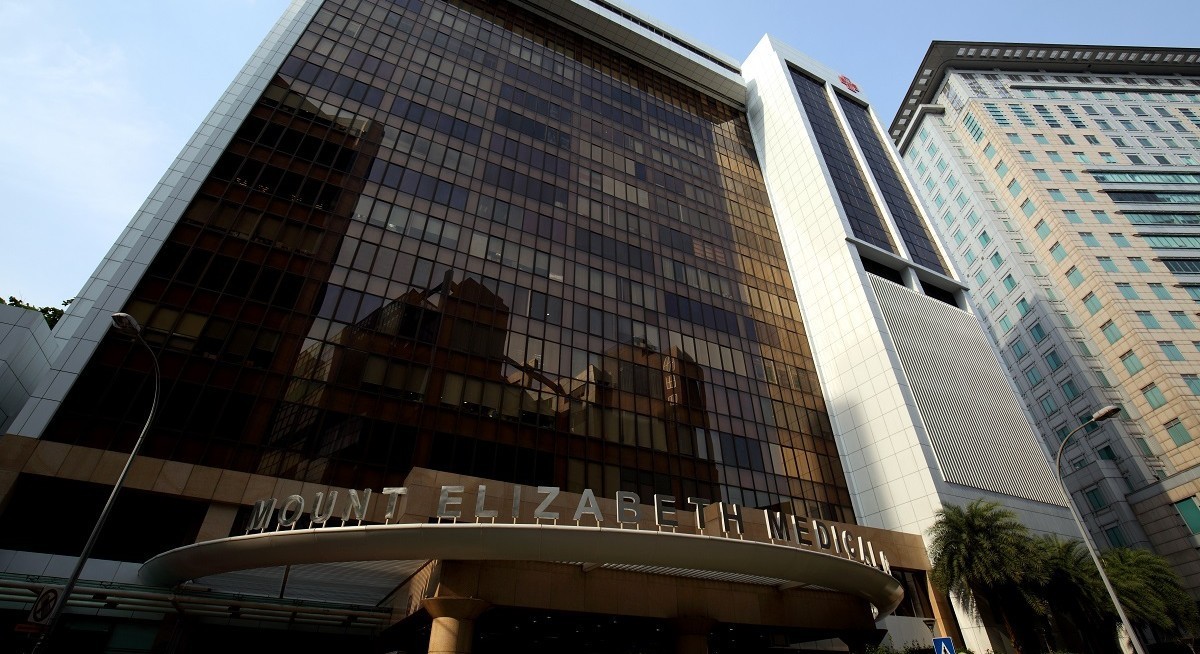


Upgrading Mount Elizabeth
Even so, Tan is suggesting ways to generate further upside: the recent completion of “Project Renaissance”, an extensive $350 million refurbishment of Mount Elizabeth Hospital, the REIT’s flagship hospital, presents an opportunity to adopt a revenue-sharing formula instead of the existing one tied to the CPI. According to Tan’s scenario analysis, this switch could “structurally accelerate” DPU growth by 5% to 10% in FY2027 — an upside markets have yet to price in.
To recap, Mount Elizabeth Hospital, which contributes around 40% of the REIT’s revenue in FY2025, recently completed an extensive three-year-long refurbishment. The $350 million cost is split between IHH Healthcare, which pays $200 million, and Parkway Life REIT, which pays the remaining $150 million.
The refurbishments have resulted in more efficient workflows. In addition, the hospital has been reconfigured such that the proportion of single-bed rooms has been increased by 50% to meet “changing patient references and premiumisation trends” and set the hospital up for “stronger revenue intensity over time”, says Tan.
As such, he suggests changing the current inflation-linked rental structure to a revenue-sharing model, which Tan calls a “credible upside scenario”. In May, Mount Elizabeth’s blended occupancy has already reached 63%, which, according to management, is likely an underestimation of actual utilisation due to faster patient turnover and a growing proportion of outpatient and ambulatory services not captured in traditional inpatient metrics.
See also: RHB’s small-cap jewels shine on growth, tech and structural domestic growth
Meanwhile, so-called higher-acuity assets, such as intensive care unit and high-dependency unit beds, are already operating at around 70% occupancy, suggesting stronger demand for more complex and higher-yield procedures. Tan figures a potential DPU upside of 5% to 10% for FY2027, assuming average bed occupancy of 50% to 70% for the full year.
According to Tan, as it is, given the nature of the master lease, Parkway Life REIT effectively compounds off a progressively larger revenue base each year. “Under the current structure, each year’s higher rental base becomes the foundation for the following year’s growth. Over time, this creates a compounding effect where incremental rental increases are earned on an already enlarged income base, supporting highly visible and resilient DPU growth,” he reasons.
“Importantly, this compounding profile could strengthen further following the completion of Project Renaissance, particularly if the revenue-sharing rental formula is adopted, which will structurally lift Parkway Life REIT’s long-term DPU growth trajectory,” he adds.
See also: SIA flies into turbulence but should stay profitable in FY2027
With the asset enhancement initiative at Mount Elizabeth Hospital, IHH Healthcare will likely look at two other hospitals it operates, Gleneagles and Parkway East, which are also part of the REIT’s portfolio, for potential refurbishments too. “Given the mature age profile of these assets, discussions are either ongoing or expected over time, with a focus on refreshing the facilities and improving operational efficiency. Over the medium to long term, such initiatives could serve as potential catalysts for further DPU growth,” says Tan.
Inflation as tailwind
Meanwhile, rising inflation is a “clear tailwind” for the REIT, as official estimates have been revised for the second time to 1.5%–2% this year due to higher energy prices and supply disruptions linked to the Middle East conflict. Tan notes that every 1% increase in CPI will lift DPU by around 0.14 cent or 0.7%. The higher 2026 inflation outlook is expected to support stronger FY2027 rental growth, implying potential DPU upside of 0.4% to 1.6%.
Tan believes the market has yet to fully price in the close to 20% uplift in DPU for FY2026, driven by the renewal of the master leases for the Singapore hospitals. “Parkway Life REIT remains one of our preferred picks in the sector and is becoming increasingly attractive at current valuations.”




