


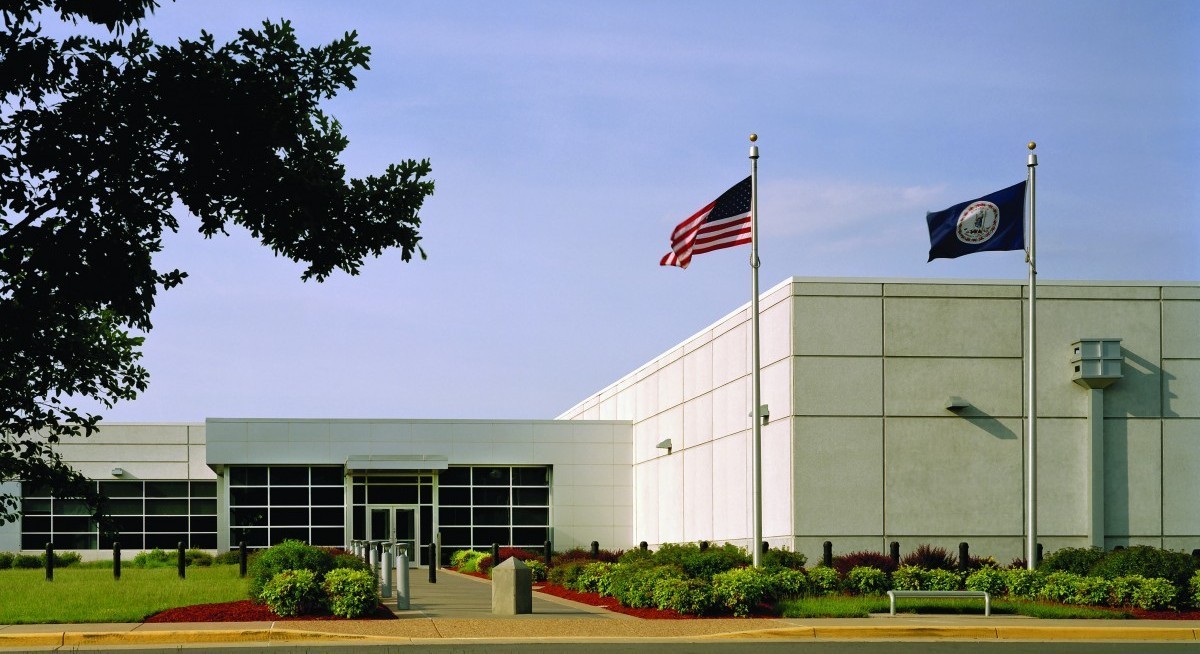


To recap, the Linton Hall data centre in the US, which was empty for nearly six months after the previous tenant’s departure, has been leased since last December to a new “investment grade” tenant on a 10-year lease at a rate 35% higher than the previous net rent.
The other way to look at it is that this new lease will generate annualised net property income (NPI) of US$13.3 million for DCREIT’s 90% share. In addition to a positive rental reversion of 20%, the new lease is based on a higher capacity of 10.8MW, an increase of 13%. Also, the lease provides for an annual rental escalation of 3%.
With Linton Hall filled, the REIT’s overall portfolio occupancy has also increased from 81% to 98%, and its weighted-average lease expiry has lengthened from 4.6 years to 5.5 years.
In its most recent 2HFY2025, the REIT plans to pay a distribution per unit of 1.8 US cents, bringing the full year FY2025 total to 3.6 US cents. Despite the downtime from Linton Hall, the REIT was able to maintain the FY2025 payout at the same level as FY2024’s. “We managed to offset the loss of rental income with accretive investment activity, organic growth from lease-up and rent growth across the rest of our portfolio and interest rate savings from our proactive balance sheet management strategy,” says John J Stewart, CEO of the manager, at the results briefing.
See also: With no ‘sell in May’, SGX enjoys higher target prices on ‘strong’ May
The previously empty space at Linton Hall was significant, as the REIT had a total of just 11 data centres, valued at US$1.8 billion as at Dec 31, 2025. DCREIT, according to Koh, aims to double its asset base to US$4 billion over the next three to five years.
Now that the space has been taken up, DCREIT’s management can turn its attention back to growth. “The recent Linton Hall lease-up significantly stabilises our business and puts us in an excellent position to continue to create unitholder value through the generation of organic growth and execution of our external growth strategy by capitalising on our industry-leading acquisition pipeline,” says Stewart.
According to Koh, the REIT will first divest another asset in North America and then redeploy the capital thus freed up by acquiring stakes in data centres in Japan and Singapore, where Digital Realty, the REIT’s sponsor, currently owns three data centres. Other possible acquisitions for the REIT include raising its 65% stake in a Frankfurt data centre and increasing its 20% stake in two Osaka data centres.
See also: DBS lays out case for DFI Retail to move ahead with Hong Kong supermarket consolidation
In addition to pursuing potential acquisitions, DCREIT is pursuing organic growth. Specifically, its two data centres in Los Angeles have occupancy of just 90.5% as of last September.
Beyond providing the acquisition pipeline, Koh says DCREIT has received support from Digital Realty in other ways as well. For one, DCREIT has the flexibility to acquire partial stakes in data centres as part of its sponsor pipeline. “It could gradually enlarge its stakes over time through successive follow-up acquisitions of the remaining partial stakes. As such, DCREIT can tap into off-market investment opportunities, which are likely to provide higher yield accretion,” says Koh.
In addition, Digital Realty is providing a five-year interest-free loan that matures on December 28. Koh is also giving a thumbs-up to the “close collaboration” between Digital Realty and DCREIT, as seen recently in finding and securing a new replacement tenant at Linton Hall. He notes that Digital Realty’s sales and sales engineering teams managed customer relationships and provided support to facilitate the signing of the 10-year lease. “The sponsor’s design & construction team likewise assisted in planning and managing the refurbishment of Linton Hall data centre,” says Koh.
Koh estimates that, with healthy leasing and higher rents on a same-store, constant-currency basis, DCREIT’s portfolio valuation has increased by 3%. Aggregate leverage for the REIT has eased 1.4 percentage points q-o-q to 37.1% as of Dec 25, aided by revaluation gains. Koh expects the REIT’s cost of debt, which eased 0.4 percentage points to 3.5% in FY2025, to be held steady in FY206. The REIT now has US$108.6 million in debt headroom, with an aggregate leverage of 40%.
Koh notes that DCREIT provides a DPU yield of 7.5% for FY2026 and 8.7% for the coming FY2027. In contrast, Keppel DC REIT and Mapletree Industrial Trust, two other REITs with data centre assets, yield 4.8% and 6.4% respectively.
At the same time, DCREIT’s units are trading at a “sizeable” 39% discount to NAV, at 80 US cents per unit, despite having a portfolio of entirely freehold data centres. Keppel DC REIT, meanwhile, is trading at a 32% premium, and Mapletree Industrial Trust at a 17% premium.




