




In FY2025, QAF reported patmi of $39.8 million, up 14.8% y-o-y, equivalent to EPS of 6.9 cents. Excluding the exceptional items and an impairment charge, its underlying profit before tax was $39.1 million, a slight dip from $39.4 million recorded in the preceding FY2024.
QAF runs what Eng calls an “exceptionally strong” balance sheet with net cash of $190.9 million, equivalent to 33 cents per share. It is lightly geared at just 0.05 times, allowing it to maintain at least 5 cents in annual dividends since 2012.
Despite this, Eng notes that QAF has been trading at around 14 times trailing P/E and 6.5 times adjusted EV/Ebitda, representing a discount to comparable regional bakery peers and is undemanding for a company that owns the market-leading Gardenia franchise in Singapore and leading positions in the Philippines and Malaysia.
Eng, in his July 7 initiation report, rates this counter a “hold” with a target price of $1.02, based on a blended 60% sum-of-the-parts and 40% forward P/E methodology, implying 4.6% capital upside and an estimated total return of 9.7% including a 5.1% forward dividend yield.
See also: RHB remains upbeat on Raffles Medical’s growth story, cites insurance unit as ‘overlooked’ catalyst
According to Eng, the investment case for QAF rests on three key pillars. First, the counter is trading at an undemanding valuation below comparable regional bakery peers, despite its leading market positions. The cash hoard, equivalent to a third of the current market cap, is a sign that investors are undervaluing the operating business relative to its franchise strength and regional footprint.
Next, QAF is seen to reverse the dip in its margins. Between FY2024 and FY2025, the company’s ebitda margin from the bakery business went from 12.8% to 10.6%, due to higher staff costs, lease and distribution costs.
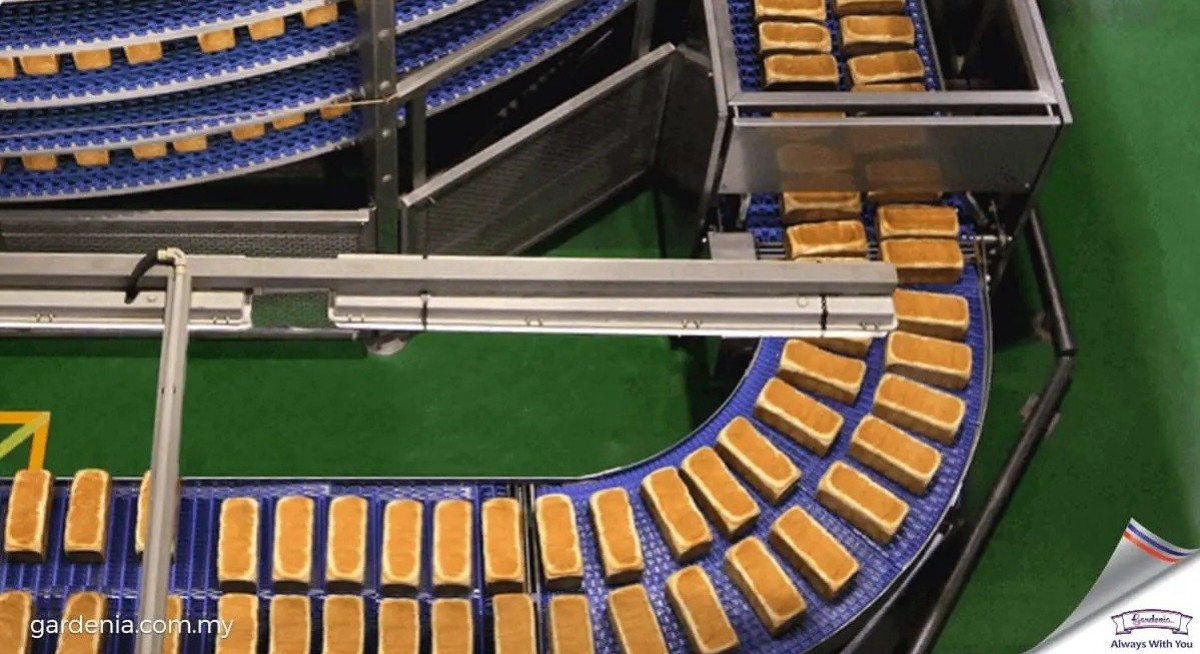
According to Eng, the consolidation of QAF’s Singapore production into Johor Bahru from June 30 onwards is seen to help improve efficiency and support structural cost savings. “While FY2026 remains a transitional year, we expect benefits to emerge progressively, supporting margin recovery from FY2027 onwards,” he says.
See also: Sats’ rally to above pre-war levels prompts divergent views
Last but not least, QAF holds a 50% stake in a joint venture in Malaysia, Gardenia Bakeries (KL). Eng suggests that GBKL, carried at book value by QAF despite its “meaningful” contribution to the earnings, provides the company with “optionality”. Eng prefers to stay conservative for now. “A future listing, stake sale or strategic transaction could provide additional upside but remain unconfirmed and is not reflected in our base-case valuation,” he says.
Operations-wise, QAF, given its established network across the region, has built up several competitive pillars, says Eng. First, the company has a good grasp on its own logistics. Fresh packaged bread has a relatively short shelf life, requiring daily delivery to thousands of outlets and the retrieval of near-expiry stock. “The ability to control this ‘freshness cycle’ at every outlet is what separates incumbents from challengers,” says Eng, suggesting that new entrants lack the volume to make such frequent, geographically dense distribution economically viable, making the route-to-market network a self-reinforcing competitive barrier that grows stronger with scale.
Next, QAF, having invested in Gardenia over the years, has built it into Singapore’s top-selling bread brand. In addition, the brand commands market-leading positions in the Philippines and Malaysia, too. “In a daily-consumption category where freshness and consistency drive repeat purchase, established brand equity functions as a genuine switching deterrent — enabling prime shelf positioning, resilience against private-label encroachment, and rapid consumer trial of new product extensions,” says Eng.
In addition, QAF has the scale and the automation. The capital intensity of food manufacturing — combined with food safety licensing, religious certification requirements across multiple jurisdictions, and the fixed infrastructure costs of operating at an industrial scale — creates meaningful barriers to new entrants, says Eng.
He cautions that the primary risk to QAF’s operating model is cost inflation — particularly in labour and distribution costs. “QAF’s limited ability to fully pass through cost increases to price-sensitive consumers constrains margin recovery,” he warns.
Eng has also observed that the company is rather tightly held, with two key shareholders, Lin Kejian and Lam Sing Chung, owning more than 70% of the shares between themselves. From Eng’s perspective, this means liquidity is reduced, and there is even a “governance risk” given how minority shareholders have limited influence.
Even so, Eng observes that the founding family has maintained a long track record of paying consistent dividends of five cents per share since 2012, including an extra two cents in FY2022 from divestment gains, thereby demonstrating “alignment of interest with minority shareholders” on dividend policy.




