




While global markets navigate growing fears of an “AI bubble” and the diminishing marginal utility of Large Language Model (LLM) scaling, a new strategic trinity is emerging in China that merits investor attention. The narrative has shifted from mere “text-bots” to a high-efficiency ecosystem defined by autonomous agents and localised edge intelligence.
Driven by “DeepSeek-style” algorithmic efficiency, China is narrowing the performance gap with global leaders while reducing costs to a fraction of traditional methods. This efficiency is fuelling the rise of “General Agents” like Manus — which delivers tailor-made applications or solutions rather than just answers — and a new wave of edge hardware that migrates AI traffic from the cloud directly into the consumer’s personal ecosystem. As China leverages these new entry points for intent recognition and spatial computing, we are at the cusp of an interacting agent network that will redefine mass consumption and industrial productivity in the world’s second-largest economy.
DeepSeek’s models are revolutionary. Beyond being a huge boost to confidence in China’s open-source-centred AI roadmap, it is also a powerful equaliser for small and medium enterprises (SMEs) and independent individual software developers. They can now afford AI technology, unlike in the past, when a handful of American companies controlled LLMs. DeepSeek’s stunning 97% cost savings per token versus OpenAI’s o1 model make AI applications more affordable worldwide.
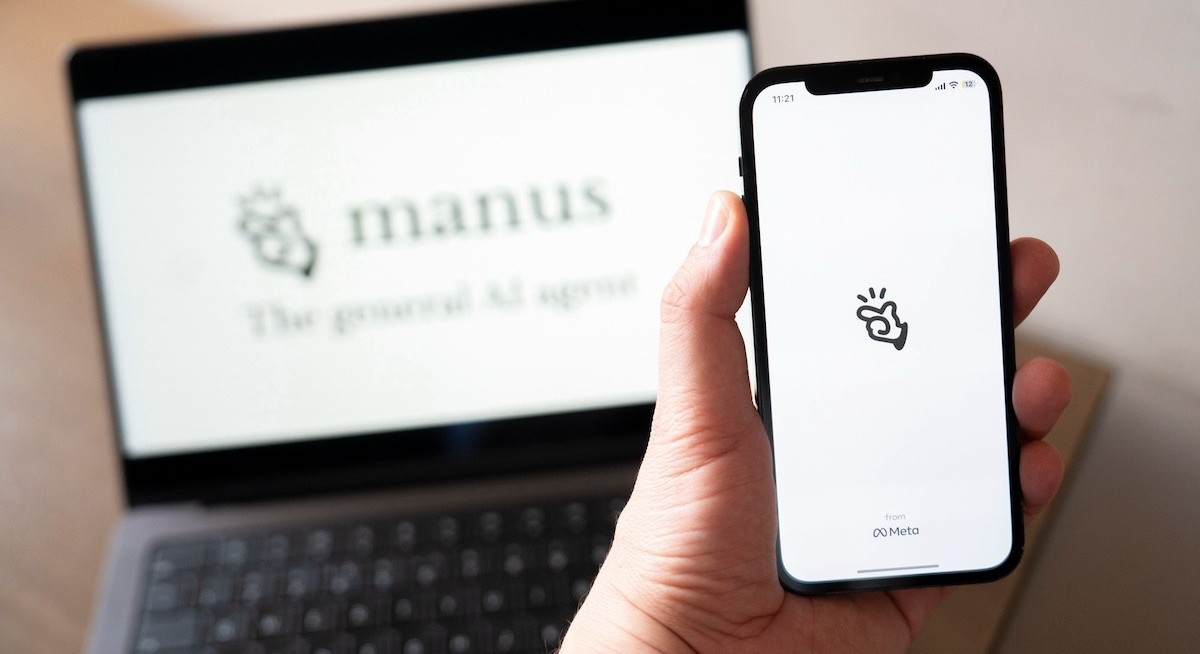
Manus is not just another chatbot. It represents a shift from “talking AI” to “doing AI”. Its core speciality lies in being a General AI Agent — autonomously performing complex tasks such as tailoring job applications to your resume, writing code, and planning an entire trip, including booking flights and hotels. Manus has the intelligence to execute without constant human intervention, while its transparent operation allows human supervision to ensure final output quality and uphold ethical standards. Within just eight months of its launch, it achieved an ARR (annual recurring revenue) of US$100 million ($127 million) by December 2025. Most users are professionals like developers, analysts, and management executives in the US, who are willing and able to pay up to US$200 per month for the premium service. The business model for such “killer” AI applications is superior — priced as a percentage of intelligence created for each client, rather than a standardised per-seat SaaS subscription.
See also: Asian shares rise as chips rally, brent advances
While Meta builds the brains (Llama), Manus provides the hands and feet to get things done, enabling Meta to compete with giants like Microsoft and OpenAI in real-world AI applications. The future AI race is shifting from models to agents.
Nonetheless, many investors cite MIT research showing that only 5% of enterprise AI projects delivered a measurable return on investment (ROI). If revenue fails to maintain a 100% year-on-year growth rate for the next two to three years, the probability of an AI bubble bursting reaches 70%, according to one study.
AI bubble fears – warranted or overblown?
See also: Stocks fall as Trump says Iran truce is over
In the US, concerns over AI mania have bubbled up again. The ongoing massive AI spend in the US and the increasing circularity of the AI ecosystem, with companies like Nvidia investing in the same startups (such as OpenAI) that are their biggest customers, raise concerns. Similarly, in China, investors are uncertain whether Alibaba’s or ByteDance’s plans for high AI capex over the next three years will ever yield a reasonable ROI.
In our view, these are the three most important issues surrounding the financial viability of today’s AI industry:
First, an AI bubble might be lurking in data centres, which is essentially a semiconductor and hardware bubble. Should the incremental investments chasing ever more computing power stop producing superior models, demand might collapse.
Then, we have AI models and applications. There is ChatGPT, with a staggering one billion daily active users. We also have Anthropic and Cursor. Even if the scaling law stalls, these frontier models will continue to monetise their massive user bases, offering greater intelligence and productivity.
The biggest of the three is Artificial General Intelligence (AGI) — the Holy Grail of AI. Unlike narrow AIs like ChatGPT and Gemini that excel at specific functions, AGI can learn and perform generalised tasks in generalised environments, like humans. It can reason across domains. It could write a legal brief, then pivot to debugging a robotic arm, then compose a symphony, and finally plan a corporate merger — all using the same underlying “brain”. AGI will likely be creatively destructive, upending most existing businesses — even current AI technology and its associated business models. AGI is the holy grail. The lofty valuations and near-endless mountains of financing for top AI companies, such as OpenAI and Anthropic, are based on the grand narrative that some form of AGI will be realised in the not-too-distant future. However, AGI is where the most uncertainty and risks lie, as the challenges are myriad and herculean. They range from a lack of cross-domain reasoning, creativity, and generalisation ability, to upgrading from statistical word-play to physical common sense via World Models, and more. Too many tough problems, coupled with enormous capital investment, point to highly asymmetric risks reminiscent of past hype cycles or speculative manias.
Nvidia’s estimate that annual AI capex will hit US$3 trillion to US$4 trillion by 2030, translating to a 38% to 46% CAGR from the 2025 “baseline” capex, has spooked many US investors. AI would need to deliver on its promise of enormous economic and societal benefits to justify such a large investment. However, investors are still willing to bet on Nvidia, Alphabet, Apple, and Microsoft, which are seen as being more likely to succeed at monetising AI technology.
The biggest, and perhaps more permanent, corrections came from stocks where investors were rightfully concerned over their weak business models. Investors see extreme risk in leveraged cloud infrastructure firms such as Oracle, CoreWeave and Nebius, which focus on serving AI Data Centre (AIDC) demand. Those are likely value destroyers.
For more stories about where money flows, click here for Capital Section
Their issues include: costly debt; negative free cash flow; Nvidia’s 18-month cycle, which means chips become obsolete faster than the typical six-year book depreciation. Also, lease prices for Nvidia H100 chips were down 70%–80% by January from their 2024 peak; thin operating margins of 20%; data centre leases ranging from three to 15 years, while client contracts typically last three to five years and finally, competition from AWS (Amazon), Azure (Microsoft) and Google Cloud Platform.
Essentially, their return on capital (ROC) is below their cost of capital. Those stocks are bets that AI growth will overcome and subdue all headwinds. Several experienced investors are betting it will not.
So, in addition to a possible hardware bubble, is AGI an even bigger bubble? Or will AGI be so powerful one day that it can replace a billion white-collar workers globally? This would make it a US$3 trillion market, assuming AGI replaces just 10% of the tasks of the world’s one billion white-collar workers, each with an average annual income of US$30,000. There are concerns that higher penetration will lead to massive unemployment, loss of end demand and collapsing GDPs.
No one truly has the answer to what the future holds for AGI and societies — not the experts, not the CEOs, not the VCs. What we do know with a reasonable degree of certainty is that we are in the very early innings of the AI game. The more important question might be: Does this technology work and will it deliver intelligence? Is there an increasing willingness to pay for it?
AI-assisted software engineering — often colloquially called vibe coding — is arguably the most popular and impactful professional application of generative AI today. With adoption rates hitting 90% and 40%–50% by US and Chinese developers, respectively, this “killer app” has boosted productivity by fundamentally shifting the developer’s role from writing syntax to orchestrating intent.
Efficiency: Token costs and Moore’s Law superseded
To discern how the Sino-US AI race may create new investment opportunities in China, we will focus on three areas in the AI domain: chips, models and applications. AI inference costs have been collapsing by 90% every 18–24 months, a crucial driver of AI’s accelerated commercialisation in recent years.
Here are three key points:
1. 50% gain from chip advancements
Moore’s Law, together with Graphics Processing Unit (GPU) design expertise, accounts for 50% of the gains. TSMC improved chip density from 7 nanometres (nm) to 5nm, then from 5nm to 3nm, every 18–24 months, delivering a 30%–40% performance increase per unit area. The remaining 10%–20% comes from GPU designer Nvidia, which continues to optimise chip architecture through innovations spanning algorithms, system software, and systems and networking. System optimisations include compilers and inference engines, with continuous improvements in memory and compute scheduling, implemented through backends such as vLLM and TensorRT-LLM and optimisation libraries such as DeepSpeed.
Successive AI Chip generations from Nvidia (Hopper→Blackwell→Rubin) and China’s domestic champion Huawei (Ascend roadmap from 26→28 and 910→950→960→970) deliver continuous performance-per-watt gains. Meanwhile, as agent applications accelerate, inference ASIC chips will further increase their market share, currently above 50%, at the expense of GPUs. Processors like Groq’s LPU and Huawei’s AscendAtlas series use Inference ASIC Chips, offering much lower cost-per-token than general-purpose GPUs by stripping away the overhead of training, benefiting companies that only need to run models (inference) rather than build them (training).
2. 80% gain from model optimisation
DeepSeek keeps raising the bar for open-source model performance with its revolutionary algorithmic efficiency, including the latest Manifold-Constrained Hyper-Connections, Engram, Sparse Attention, and more, which will pave the way for the iteration from its 2025 V3 model to the 2026 V4 model. The Engram module reduces High Bandwidth Memory limitations and infrastructure costs by decoupling storage from compute. This could address China’s AI computing constraints and demonstrate that the next AI frontier may not be simply bigger models but rather more efficient hybrid architectures.
DeepSeek’s systematic innovations, such as MoE architecture, MLA attention, multi-token prediction, FP8 mixed-precision training and GRPO reinforcement learning, have helped narrow DeepSeek’s performance gap with frontier models, while reducing training and inference costs to a sixth to an eighth of traditional methods, shifting the paradigm of large models from the “computing power race” to the “efficiency revolution”.
3. Sino-US gap – an opening for Chinese entrepreneurs
According to the latest research report from the US Council on Foreign Relations (CFR), the performance gap between US and Chinese single AI chips is expanding dramatically. Currently, the most advanced US single AI chips are about five times more powerful than Huawei’s strongest offerings. By the second half of 2027, this gap is projected to widen to a staggering 17 times.
While Moore’s Law still holds, we believe that beyond 2nm, progress may slow as hardware process nodes at the single-chip level are approaching physical limits. China is currently at the 7nm level, about two to three generations behind the West. Gaps also remain between domestic software stacks (such as Huawei’s Ascend and Cambricon) and those in Nvidia’s CUDA ecosystem. Huawei is deploying the Ascend Supernode cluster to overcome its weak single-chip performance. By 2H2026, this is expected to narrow the overall performance gap between Huawei’s Ascend 950 and Rubin (Nvidia’s newest release) to 1.5–2 times for FP8 (8-bit floating point) training, a significant leap from the 17 times raw performance gap at the single-chip level!
The disparity in total compute output is even more pronounced. Even under the most aggressive assumptions for Huawei’s production capacity (two million AI chips this year), Huawei’s AI compute power output would only be about 5% of Nvidia’s.
These gaps represent significant opportunities for Chinese entrepreneurs, pointing to substantial upside potential for both advanced chip manufacturing technology and increased production capacity in the mid- to long-term future.
In contrast, China is up to speed in LLMs. Table 1 compares the Top 4 US and Top 4 China open-source models, as of Jan 8.
The latest research from Goldman Sachs indicates that the technological gap between US and Chinese AI models has narrowed to three to six months. While US models like Google’s Gemini 3 and OpenAI’s GPT-5.2 maintain a lead with each update, Chinese AI models typically catch up and narrow the gap within three to six months. A January report from Epoch AI confirms this trend, showing that Chinese AI model progress lags the US by an average of about seven months, with a minimum gap of four months and a maximum of 14 months.
China has made significant breakthroughs in algorithmic efficiency. DeepSeek-R1 is approaching GPT-4-level performance across a series of benchmarks, while keeping training costs to a few million dollars, utilising “non-top-tier hardware and extreme frugal engineering” to cope with US-led sanctions. This proves the “algorithmic efficiency route” is viable under the constraints of limited compute and funding. Chinese vendors are trying to tread a path of being “affordable + usable.” If judged solely on the three dimensions of “can it be used, is it easy to use, and is it expensive?”, the experience gap for Chinese models is smaller than the common impression of “US strong, China weak”.
Chinese open-source models have steadily gained market share, to hit 20% of total usage in 2025.
The US, conversely, maintains its technological monopoly through its closed-source models. OpenAI’s 2025 annualised revenue might exceed US$20 billion, with GPT-5 driven products contributing roughly 40% and GPT-4 60%.
Investors are eagerly awaiting the DeepSeek-V4 release, expected in a few weeks during the Chinese New Year 2026 period. If its coding capabilities can match or surpass Claude’s SOTA model, the superior reasoning capabilities of Chinese large models will be unleashed. This will likely lead to new applications and agents, driving greater demand for cloud services.
China’s strategic agentic AI pivot
“What Andy (Grove) giveth, Bill (Gates)
taketh away.”
AI investments will eventually be justified through software value capture. This value will inevitably flow through to the end-user via monetisation, with applications capturing much of it and foundational model companies becoming the next generation of hyperscalers.
In the US, high-ROI domains such as multimodal applications, digital health, and education are becoming key breakout areas, characterised by being “low frequency, high value.” For instance, a single call to Google’s Nano Banana Pro costs 70 to 120 times as much as a text model, requiring only 1.5% of the call volume to achieve equivalent revenue.
In China, ByteDance’s Doubao AI chatbot large model processes over 50 trillion tokens daily, ranking first in China and third globally behind only OpenAI and Google Cloud. With AI revolutionising consumers’ first entry point, we expect a more aggressive user-acquisition cycle ahead among China’s leading consumer-facing AI chatbots such as Qwen (Alibaba), Doubao (ByteDance) and Yuanbao/Weixin (Tencent). They all aim to be the dominant OS (operating system) agent, gaining users’ trust and mindshare through long-context memory and the orchestration of disparate vertical agents.
On Jan 15, Alibaba unveiled its latest move towards agentic AI capability. Its Qwen chatbot app, “From Question to Action”, will be an AI gateway for users’ daily lives, reshaping the landscape of search, App distribution, and transaction entry points. This marks a critical milestone in bringing AI conversations into task performance, whether for consumption (including food delivery, travel and entertainment), professional, or academic use cases. Instead of navigating cross-company APIs and account-linking hurdles, Qwen operates as a native extension of the user’s commercial identity, potentially enabling greater data transparency and conversion. We expect it to increase user stickiness and drive growth in cloud and AI businesses.
General AI agents tend to consume much more tokens compared to their peers. In the case of Manus, its rounds of complicated tasks led to token consumption hundreds or thousands of times higher than that of simple chatbot queries. Its accumulated consumption of 147 trillion tokens in 2025 ranked it among the top three among AI agents and in the top 10 across all categories. Powered by ever-improving SOTA foundational models (where the scaling law still holds), the trend of agent creation, as well as the adoption of OS agents, vertical agents and general agents, is just beginning. We are at the cusp of emergent networks of interacting agents. In the near future, users will interact with OS agents that best understand them to navigate and manipulate their entire digital world.
China is also showing strong momentum in vertical industry applications. Government and enterprise projects explicitly require “domestic chip share not less than 30%.” Over 40 local AI projects were tendered in the first half of 2025 (the largest at RMB7.2 billion ($1.32 billion)). Such projects are expected to contribute 30% of domestic chip sales in 2026. Huawei’s Ascend and Baidu’s Kunlun chips are major beneficiaries, due to their “strong compatibility with state-owned and central enterprise systems.”
The key to this race has shifted from “who can build the strongest model” to “who can more efficiently turn AI into tangible national strength”.
Driving to the edge, before AGI’s arrival
Much discussion on AI intelligence has thus far focused on “text-bots”. While the marginal utility of scaling has materially declined for standard language modelling, it could probably hold for several more years in the next stage of the AI race — larger models, reasoning models and world models. We expect more breakthroughs in model capabilities, such as multimodal understanding, agent generalisation, agent self-iteration and deep research, from the new LLM releases in 2026 trained on Nvidia’s latest Blackwell chips.
China’s leading AI companies are employing edge hardware to secure a lead in next-generation AI traffic entry points. Huawei has launched its “Smart Dull Dull” AI toy, Alibaba is deploying its Quark AI glasses, ByteDance is collaborating with ZTE to create AI phones deeply integrated with the Doubao large model, and Li Auto has released its Livis AI glasses.
These edge devices are weapons in the critical battle of migrating AI traffic from the cloud to the consumer’s personal ecosystem. These are new entry points for emotional interaction, spatial computing, and intent recognition. In addition to large model capabilities, edge hardware also binds users through the “hardware + ecosystem” model, serving as a conduit for follow-on business models such as model subscriptions, content services and advertising monetisation. While Chinese consumption of traditional merchandise might have slowed, the growing maturity and ubiquity of AI edge devices could spur another round of mass consumption in China.
The right AI race to run
The battleground for AI supremacy has moved beyond the raw horsepower of individual chips to the orchestration of emergent, interacting agent networks. China is effectively bypassing US-led computing constraints through a combination of systematic algorithmic efficiency and distributed edge intelligence, by intertwining domestic hardware with robust ecosystems. While the scaling laws of the previous decade may be plateauing for standard language models, they remain the engine for the next theatre of the AI race: reasoning and world models integrated into the physical environment.
The AI race is likely to be a marathon that tightly weaves AI into the fabric of daily life. If this is indeed the race, then China could emerge as the gold medal winner, because this is an arena where China’s combined political will, entrepreneurial foresight and stamina, engineering skills, and humongous domestic market advantage have brought remarkable success to many of China’s industries.


Stella Zhang is deputy CIO of APS Asset Management




