


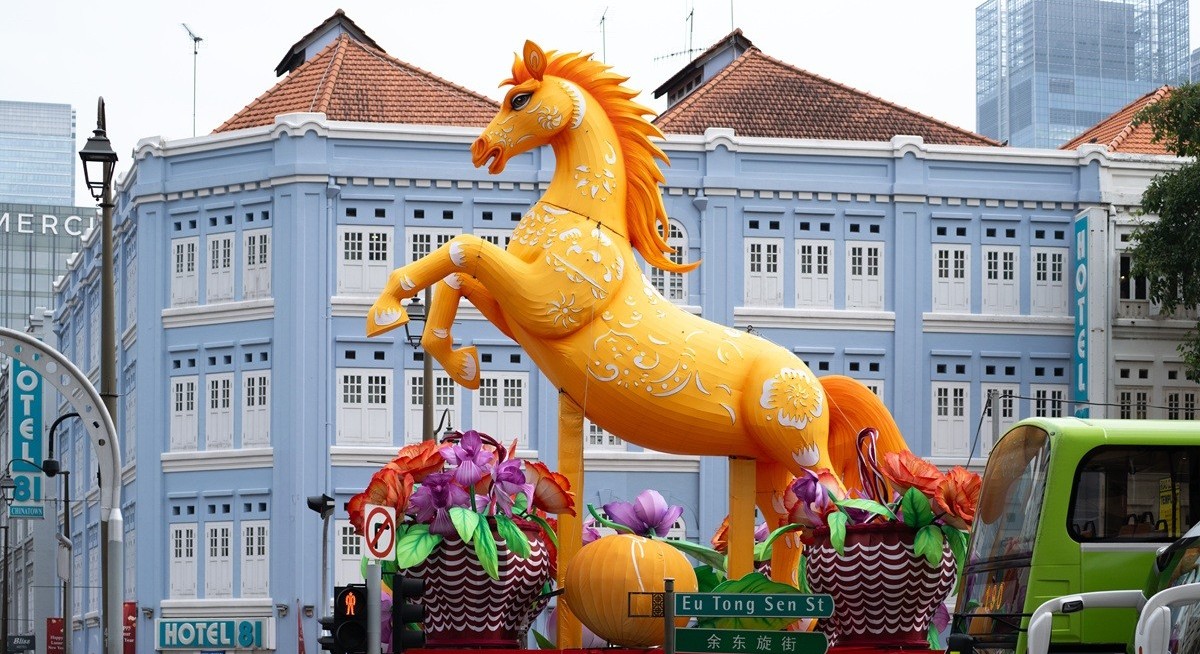


These astrological predictions are so general and can mean anything to anyone, so one should not believe in such prognostications, other than for entertainment.
However, the world is in a serious “rupture”, according to Canadian Prime Minister Mark Carney, or in transition to a new order or disorder. Hence, one’s fortunes could be disrupted by geopolitics, war or climate/natural disasters. The area that most people acknowledge as a serious disruptor is AI and technology, because since the arrival of ChatGPT in November 2022 and DeepSeek in January 2025, AI or generative AI, large learning models and faster chips for computing have propelled serious valuations to trillion-dollar levels, notably for Nvidia, Google, Meta, Apple and Broadcom.
How will the AI or agentic models play out in terms of diffusion, winners and investments? The AI landscape seems highly open-ended, with deadly serious competition between US and Chinese models, as well as massive competition from the leading players, especially the hyperscalers like Google, Meta, Alibaba, Grok (Elon Musk’s chatbot) and OpenAI (ChatGPT).
The US is going for a proprietary, closed-weight business model, where the income model is fee-based, depending on usage, or incorporated into other fee-paying services (such as Gemini bundled with Google services or Co-Pilot bundled with Microsoft products). The Chinese open-weight business model is open source (like DeepSeek), allowing anyone to build their own learning models based on DeepSeek code, and their funding ceoms from venture capital partners or rich hyper-platforms like Alibaba, Baidu, or Tencent.
See also: Investing in the anti-AI trade
Closed weight means closed-source models in which the weighting of numerical parameters used to calculate and the datasets used are not known to users. Open weight means disclosure of parameters, but not the datasets used to train such models. Chinese models are far cheaper to run than American ones, with DeepSeek at four US cents and Alibaba Qwen at three US cents per million tokens. The American ChatGPT-4o Mini costs 15 US cents per million tokens, while Gemini 2.5 Flash costs 10 US cents per million tokens.
In terms of scale, ChatGPT has 800 million weekly active users, roughly 65% of the standalone chatbot market, down from 90% in 2024. Gemini has gained market share the fastest, rising to 650 million monthly users, mainly because of Google’s billion-plus network reach and very user-friendly access. DeepSeek has 300 million monthly users and is popular with AI developers because of its open source. Perplexity (backed by Nvidia) has 4% to 7% market share, and Claude (Anthropic) has 2% to 3%.
It is unclear at this moment whether there will be any clear winners in the AI game, because leading depends on funding, computing power and research and development costs. While the market leaders will always have headline advantages due to scale, there is little doubt in my mind that each country and individual users will use different models built on their own diverse datasets to create specialised market niches that will appeal to specialist users.
See also: AI and irrational exuberance in South Korea
The big question is the viability of OpenAI, which is currently unlisted and has the largest unlisted valuation at US$500 billion ($636 billion), based on recent funding raised by investors such as SoftBank. Many investors are sceptical about whether OpenAI’s current cash flow revenue source (US$2 billion in 2023 to US$20 billion by end-2025) is sufficient to meet its commitments of over US$1 trillion in hardware (computing power) investments. Proponents think the hardware commitments are funded by Nvidia, Oracle and others with deep pockets, in a circular loop (Nvidia investing in OpenAI to use its superfast chips). Latest financial projections suggest that OpenAI will only reach break-even by 2030, whereas it will float an IPO (raise public funding) in 2027. The risk is that competitors like Gemini gain market share, or that ChatGPT’s business model is disrupted by a breakthrough in using cheaper chips with similar or faster computing power.
The fact that Nvidia and other Magnificent Seven stock valuations gained only 27.5% in 2025, compared with 48.3% in 2024, may be a sign that the AI super-valuations are being reassessed more cautiously by serious investors. The bigger you grow, the slower the growth rate. However, the Magnificent Seven are so profitable so far that they can outinvest others in R&D and understand how different technologies can improve their supply chain and overall productivity.
There are so many new players in the AI field in the US and China (let alone in Europe, Japan and India) that we cannot say for sure that the big players (hyperscalers) will continue to dominate. I believe that AI diffusion across countries, companies, and industries will create new valuations, but also cause serious value destruction for AI laggards. Retail investors are at a disadvantage because they don’t know which start-ups will become the latest winners, so the safer bet is to back the current hyperscalers.
This is where Trump’s policy gyrations may have a significant disruption on markets. The Trump administration wants a buoyant market to win the mid-term elections in November. It also wants lower interest rates to cut fiscal interest costs. But if inflation resurfaces as the dollar depreciates, markets will remain turbulent, even if the incoming US Federal Reserve chairman, Kevin Warsh, is an experienced monetary economist.
In short, the Fire Horse could be fiery in terms of volatile transformations, so buckle up and enjoy the thrills or scares in 2026!
Andrew Sheng writes on global issues from an Asian perspective. This story first appeared on Feb 9 in The Edge Malaysia.




