


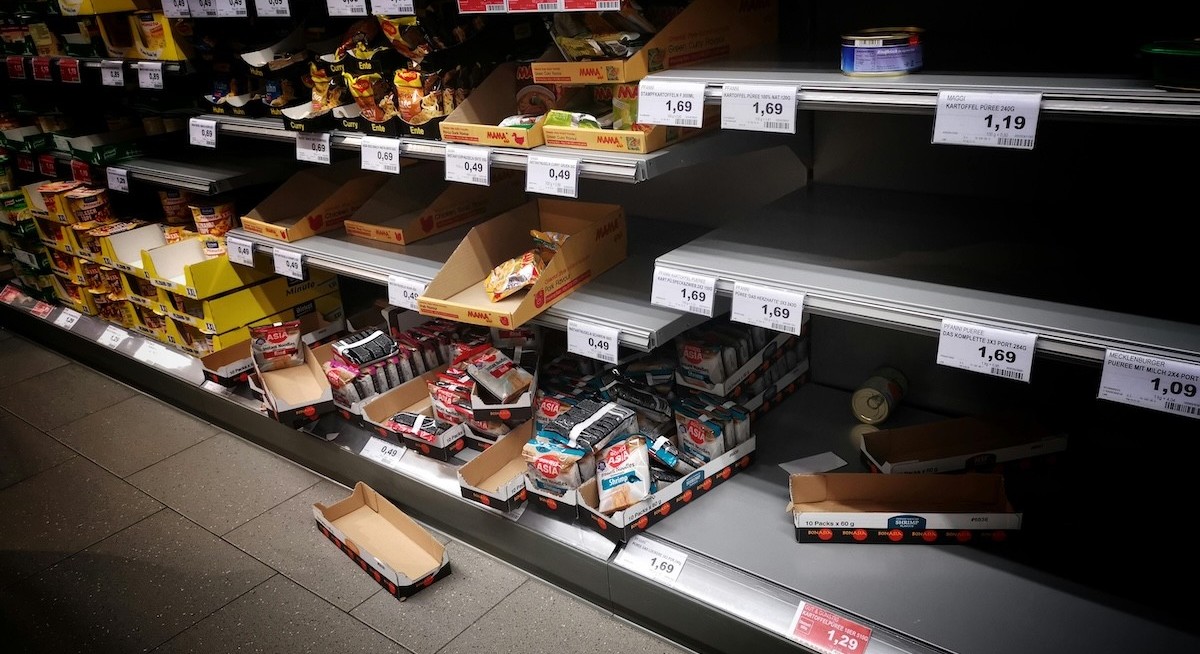


Nearly half of shoppers in Asia Pacific (Apac) now leave stores without buying everything they intended, with 63% blaming out-of-stock items, according to Zebra Technologies’ 18th Annual Global Shopper Study.
The problem often begins far from the shelves. In many warehouses, receiving processes remain partly manual, creating gaps between physical goods and digital records. Workers log shipments on paper or into software, but the data can be stale by the time products reach stores.
“[In warehouses where manual processes still dominate,] even though they digitise all the information, the information isn’t updated… or the information isn’t rich enough, such as not having the real-time location of a product. So, stores think they have stock, but when they open up the box, they can’t find the item,” says Budiyanto Tanjung, chief operating officer at Infolog, a Singapore-based provider of supply chain and logistics software that partners with Zebra Technologies.
When ambitions meet reality
The same study reveals that 62% of Apac retailers intend to implement generative AI systems over the next five years. Beyond that, 54% plan RFID implementations, with 55% eyeing computer vision systems.
RFID adoption underscores the shift. Global tag shipments have risen from 20 billion in 2020 to 80 billion this year and are projected to reach 110 billion by 2028. Each tag aims to give physical products what Zebra Technologies calls a “digital voice”, or the ability to report location and status without human input.
See also: UOB tests quantum computing for derivatives valuation
This approach reflects a broader shift in thinking. Rather than one massive AI system solving all workflow problems, Zebra Technologies is helping to build “augmented collective intelligence” or domain-specific AI agents trained to understand warehouse docks or retail floors and work alongside experienced humans.
“We’re working very hard to understand where our customers need the most help so that we can help them implement agentic AI in retail for specific use cases,” says Tom Christodoulou, Zebra Technologies’ sales vice president for Australia and New Zealand, Southeast Asia and Korea. He shares how AI agents can analyse shelf conditions using connected cameras to spot misplaced, missing or mispriced items and trigger actions such as restock or repricing.
The workforce question
See also: Ninja Van Malaysia speeds fulfilment with Zebra Technologies as e-commerce volumes rise
Technical infrastructure alone will not bridge the gap.
[Many retailers and warehouses are using software to] digitise from paper without improving their processes, so that’s just data entry. The software they use also doesn’t advise them what to do next.Budiyanto Tanjung, chief operating officer, Infolog

He also notes that workers still pause tasks to record information, creating bottlenecks during peak periods.
Making augmented collective intelligence work in practice, therefore, requires data capture of physical assets and stock movements to occur as work is done, rather than as a separate task. “We believe data capture needs to be a natural byproduct of the workflow of a retail or warehouse associate. [This is why] we put a lot of effort into designing wearable technologies that are ergonomic and capture data as associates do their day-to-day job,” says Christodoulou.
To help retailers and warehouses achieve augmented collective intelligence, Zebra Technologies has structured its strategy around three pillars.
The first is the connected frontline. By equipping workers with mobile computers, tablets and wearables, retailers can push real-time instructions to the point of work.
To stay ahead of the latest tech trends, click here for DigitalEdge Section
The second is asset visibility. RFID, barcode scanning and sensors generate continuous data on the location and status of physical items.
The third is intelligent automation. Software takes on routine tasks such as cycle counting while leaving complex decisions to people, supporting workers rather than replacing them.
Malaysia’s Alpro Pharmacy illustrates why those elements matter. The company, one of the country’s largest prescription pharmacy chains with more than 230 locations, faced rapid growth as e-commerce orders surged 400% during the pandemic and pharmacy visits doubled, overwhelming its paper-based inventory system.
To address the bottleneck, Alpro Pharmacy first equipped frontline workers with mobile devices to replace manual inventory tracking, covering tasks from receiving goods at the distribution centre to picking items for stores and online orders.
The move lifted efficiency by about 80% and improved accuracy by reducing human errors. Daily e-commerce orders rose from an average of 300 to more than 1,000.
Only after the mobile foundation proved stable did Alpro add RFID to verify product crates during loading and delivery. The staged approach expanded business capacity roughly five-fold without adding staff, enabling Alpro to handle the order surge within Malaysia’s tight labour market.
The experience reflects a wider pattern across the region. According to Zebra Technologies’ study, 84% of Apac retail associates report that effective technology makes work more enjoyable and less stressful, while 86% say it helps complete tasks faster. The challenge lies in execution and change management, not just technology procurement.
Calculating returns
For retailers weighing whether the transformation is worth the investment, the financial stakes are significant. Research from Zebra Technologies and Oxford Economics found retailers gained up to 1.8 percentage points in revenue growth and profitability from better inventory management, a sizeable lift in a low-margin sector.
Inventory optimisation has become the leading strategy for boosting online profits among 36% of Apac retailers, and ranks in the top three for in-store profitability. While most enterprise customers target a 12-to-15-month ROI, some collaborative implementations deliver returns in as little as nine months, says Christodoulou.
Yet, execution remains the biggest challenge. The Nanda Project by the Massachusetts Institute of Technology (MIT) last year reported that companies focusing on specific use cases outperformed those pursuing enterprise-wide overhauls.
If you look at all the data you have across your enterprise, it’s daunting. Pick use cases and harmonise your data [accordingly, to tackle one process at a time to make it manageable].Tom Christodoulou, sales vice president for Australia and New Zealand, Southeast Asia and Korea, Zebra Technologies

The MIT Nanda study also reveals that companies developing these capabilities in-house were far less likely to succeed than those partnering with specialists. Hardware providers understand data capture, software companies know retail workflows, and retailers possess operational knowledge, but few companies master all three.
“It takes a team effort to deliver on the promise of agentic AI,” says Christodoulou, noting that Zebra Technologies supplies data on the location of assets, workers and stock, while software providers such as Infolog bring industry-specific expertise. “Whether it’s retail or warehousing or manufacturing, they’re very niche,” he adds. “You really need to have the know-how on how to make things better.”
Tanjung emphasised the interdependence. “Without mobile devices and wearable technologies to scan, we do not know how fast or how productive workers are, and without that information, we cannot predict accurately.”
That reliance on multiple data sources has shaped Infolog’s strategy. The company has expanded from warehouse management software into end-to-end supply-chain solutions. “We are trying to cover more aspects for warehouses to be able to keep up with the customer demand. [Instead of being] limited to one vendor’s devices, we are trying to incorporate more technologies to combine [them and offer as a holistic] solution.”
For retailers still relying on manual processes, the path forward is clear but not simple. Frontline operations must be digitised first before more advanced systems are layered on top. Deploying sophisticated technology on unreliable data will only repeat the stock gaps that frustrate shoppers.




