




Most recently, China has undertaken efforts to curb outbound investment. China’s State Council Order No. 837 (effective July 1) significantly tightens oversight of outbound investments, explicitly including high-net-worth individuals. It has broadened the definition of “outbound investment”, subjects individuals to national security reviews, and imposes penalties for opaque or non-compliant wealth-transfer structures.
Since 2021, China’s property sector has been in the doldrums, leading to large writedowns by CLI. As at FY2025, CLI was nursing a $428 million Ebitda loss and a $545 million revaluation loss from China. To get around the disinterest in China from overseas investors, CLI introduced a China-for-China strategy. That led to the successful listing of its C-REIT, CapitaLand Commercial C-REIT.
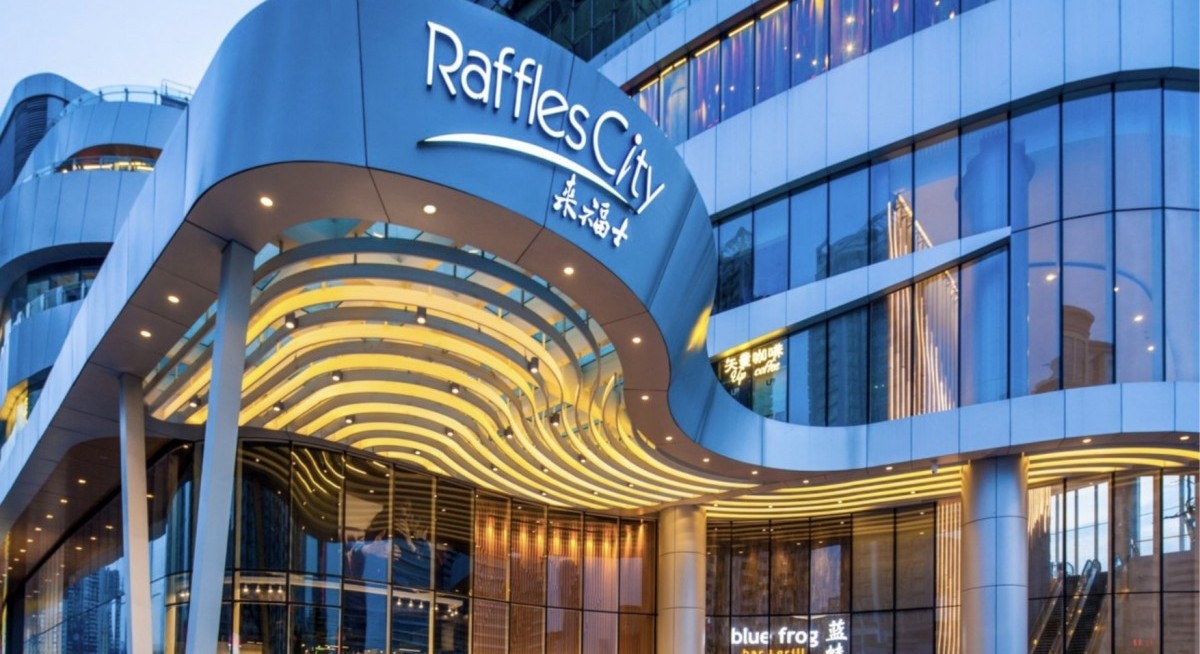
On June 22, CLI announced that it is planning to list a second C-REIT with Raffles City Shenzhen and CapitaMall Fucheng, Mianyang (a provincial town in Sichuan). This upcoming C-REIT could boost listed funds FUM by $900 million.
“The approval of CLI’s second C-REIT accelerates the growth of its flourishing listed REIT platform, and asset recycling initiatives,” a JP Morgan report, dated June 24, says. “We also believe the large on-balance sheet writedowns that have weighed on the stock are largely behind us, supported by the absence of significant disposal losses and management guidance,” the report adds.
See also: CGSI and DBS like Thai Beverage with Vietnamese milk
Despite the challenges in China, CLI has made significant progress since its business was split into CLI and CapitaLand Development. As indicated by JP Morgan, over the past five years, listed FUM has risen 36% to an estimated $79 billion. And, the CLI REITs on SGX are outperforming the S-REIT index. Organic growth drivers position the platform well for continued FUM growth, JP Morgan says.
The private funds business had a slower start, but recent large mandate wins demonstrate growing traction. “The private fund business momentum has accelerated, with the recent $2.4 billion NTUC Income madate, the $403 million Asia Pacific Credit Program II (ACP II) and a potential $0.6 billion China private REIT. This follows the establishment of lodging, storage, and credit funds, supplemented by the acquisition of Wingate and SC Capital. We estimate that private fund FUM has risen 82% over five years to $51 billion,” JP Morgan calculates.
Elsewhere, also since the split, CLI’s lodging business has seen units under management grow an estimated 44% and is projected to rise a further 59% to 176,000 over the medium term, generating an extra $150 million in revenue to reach $500 million.
See also: Info-Tech to benefit from 'structural shift' in government's AI-related push: RHB
DBS Group Research is also positive on CLI following the approval of its second Chinese C-REIT listing. “While impact is likely immaterial, it has strategic importance in our opinion as this transaction represents another meaningful step in CLI's asset-light strategy, providing an avenue to recycle capital from stabilised assets while growing recurring fee income,” DBS observes in a report dated June 25.
“We view the approval positively as it reinforces CLI's leadership in China's public REIT market and demonstrates continued regulatory support for commercial real estate securitisation. The approval marks another milestone in CLI's "domestic-for-domestic" strategy, allowing it to monetise mature China assets and potentially a “market-clearing price” for its real estate assets in China and a potential avenue for divesting its other assets in China over time. Beyond unlocking capital from mature assets, the successful launch broadens CLI's capital recycling runway and provides additional dry powder for redeployment into higher-growth opportunities,” DBS explains.
JPMorgan retains its overweight recommendation with a 12-month price target of $3.10, down from its previous $3.35 target. DBS has no change to its estimates with its buy call and 12-month price target of $3.40.




