




UOB’s local rivals, DBS Group Holdings and Oversea-Chinese Banking Corporation (OCBC) have been making inroads on wealth management as well. During DBS’s earnings briefing for 1QFY2026, the bank’s group executive and group head of consumer banking and wealth management Shee Tse Koon told reporters that the bank’s wealth arm is in “growth mode” and that there is a “rapid growth of wealth within Asia.”
“So, we’re hiring on all fronts across all three segments, [DBS] Treasures, Treasures Private Client and Private Bank.”
On May 4, OCBC announced that its Indonesian subsidiary, PT Bank OCBC NISP Tbk (OCBC Indonesia) was acquiring PT Bank HSBC Indonesia (HSBC Indonesia)’s retail banking and wealth management operations in Indonesia for a premium of $480 million. The deal is expected to raise OCBC Indonesia’s assets under management (AUM) by 25%, grow its credit card balances by more than 150% and raise its wealth management talent pool by an additional 1,300 staff.
Protecting customers over growing AUM
See also: UOB to set up new Board Technology Committee with effect from July 1
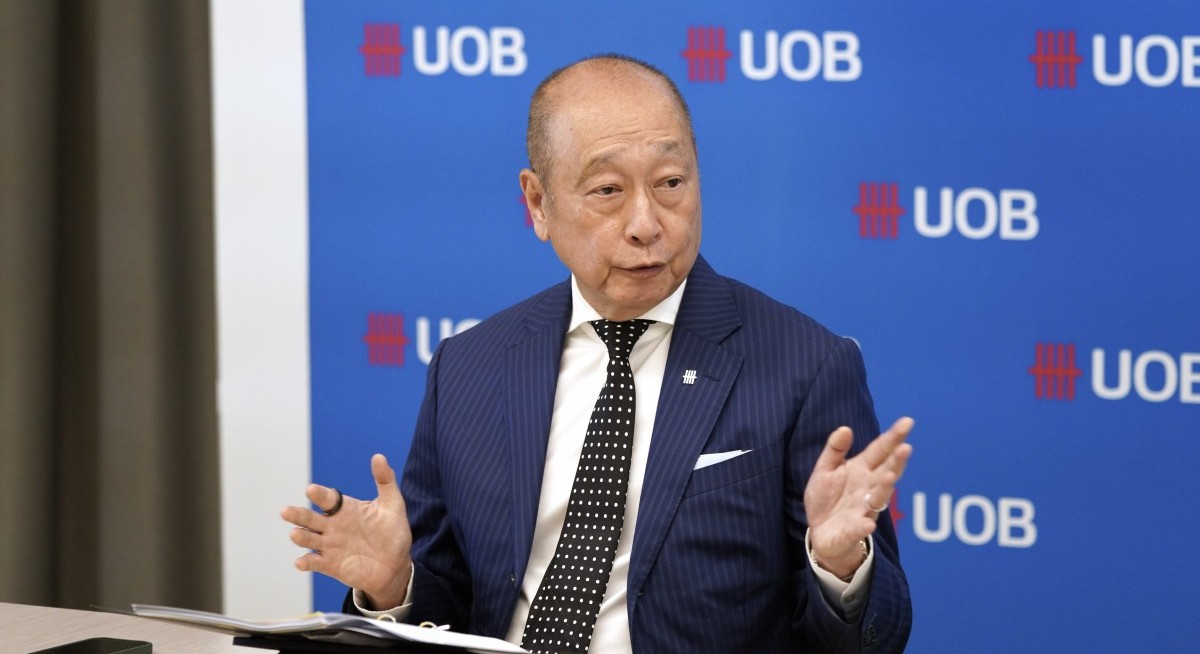
Wee, however, says UOB will be adopting a more cautious approach to grow their wealth management income. Instead of trying to draw in capital quickly to boost their AUM numbers, UOB wants to build up a long-term relationship with their customers and win their trust. This means the bank is willing to forgo some fee income in the short-term if it can help strengthen customer loyalty.
“[Our] relationship managers will target new customers but my existing customer base of eight over million. This is where the low hanging fruit is and this is why we are very, very confident,” Wee says. “The next few quarters, I cannot tell you the number, [but] we will definitely increase the AUM.”
“We are conservative. We want to protect our customers. You don’t just ask them [and] take [their] money, because today the environment is very uncertain. I would rather they be safe. We can earn less fees but I want them to be safe. When opportunity comes? This is where the potential is.”
See also: HSBC wealth survey shows AI losing out to humans in key areas
That applies to the bank’s view on using mergers and acquisitions to grow its wealth business as well. While Wee did not rule out making any acquisitions down the line, he emphasised that any acquisition target would have to fit with the bank’s overall strategy.
“Everybody is focusing on wealth, right? [If] there is opportunity, I believe the price will be very high. [At the] end of the day, [it has] got to make sense. What makes sense to me at this point? I’m not ruling out inorganic growth,” Wee says.
For UOB, deciding whether to pull the trigger on an acquisition goes beyond looking at the sticker price of a deal, says the bank’s group CFO Leong Yung Chee.
“Whether the opportunities make sense, it has to check quite a few boxes,” Leong says. “Whether it meets our strategy? Does it meet certain capabilities that we want? Are they filling certain business gaps that we don’t have, or geographical gaps? Ultimately, is the price to pay, correct?”
“It’s not just a dollar price. Don’t forget, there’s also integration cost. Going forward, do you think the cost synergies and revenue synergies are going to make sense for you? So, the calculation isn’t just about the transaction price, but the cost of the entire project itself has to make sense.”
Second order impact from Middle East may affect SMEs
Any first order impact to UOB’s book from the conflict in the Middle East is limited, given that loans for companies with direct geographical exposure make up less than 2% of its total book, says Leong.
For more stories about where money flows, click here for Capital Section
However, second order effects from the crisis may affect the bank’s small- and medium-sized enterprise (SME) customers. While the bank is currently undertaking stress analysis, things are still “too early to tell” at this point because everything is “fluid”, says Wee.
Leong notes that the bank’s focus is on the second order effects, which may impact energy vulnerable industries such as transport, basic materials, utilities and agriculture. “We’re looking at assessing how much of these industries and clients who are in these industries may be affected as a result.”
The third order is harder to determine given that there is no clear view on how long this conflict will take. “There is potential impact on overall Asia's economic growth environment, inflationary practices and so on. So that actually requires much further stress scenarios,” he says.
UOB, which considers interest rates, property price indices, unemployment rates, consumer price indices, gross domestic products and equity price indices in its macro-economic variable (MEV), says it is starting to take some of the uncertainties from the Middle East into account.
Given that tensions began in late February, Leong says the bank will continue to monitor the situation. Any changes to the MEV should be adjusted in the following quarters, he adds.
‘Not the time to de-risk’
Unlike DBS, which has chosen to de-risk its SME and consumer franchise in India and Indonesia, UOB prefers to stay put.
The bank, which also has a presence in Indonesia, says the country’s loans make up 3% of its total book.
“It’s easy to talk about de-risking. [At the] end of the day, it’s the origination, you look at the customer, employers, employment track record… We're still growing. You look at the consumer, look at the mortgages… This is a time especially [for] SMEs, you have to stand by them,” says Wee. “This is not the time to de-risk.




