


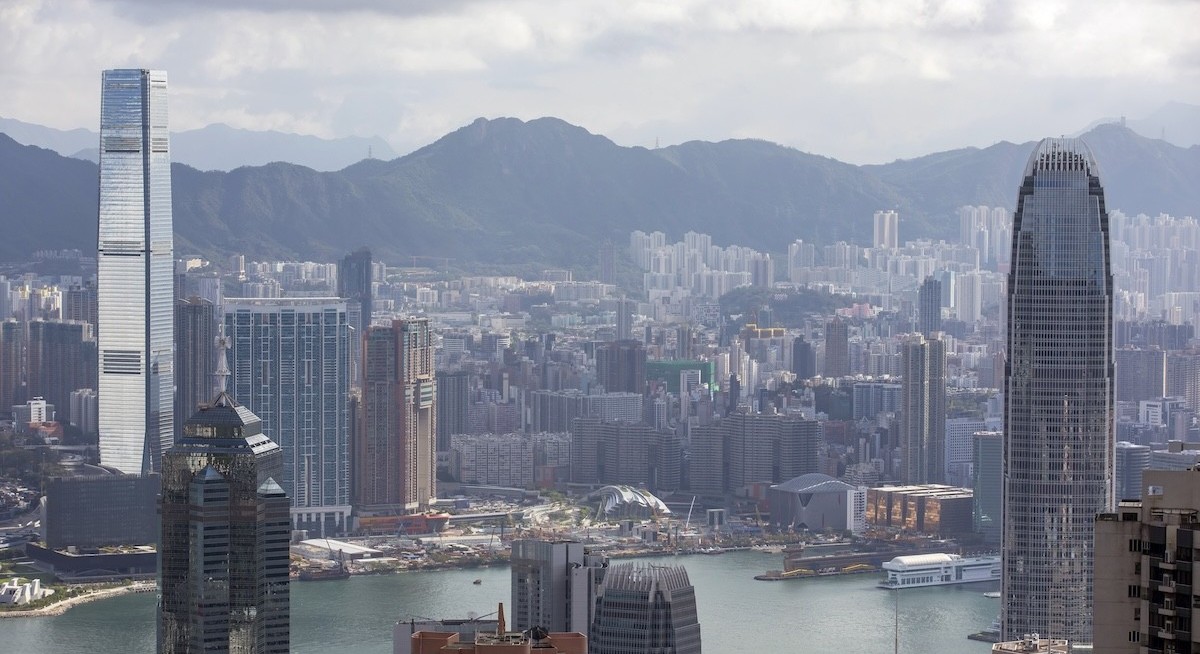


In particular, the market’s pace of change has picked up even more in recent years. Barely a few years ago, Hong Kong was feeling the chill, too, from China’s purge of the tech giants. Trading and IPO activities have recovered strongly since last year, and this year might just be a galloping horse for both Hongkongers and the Hong Kong market.
At least this year’s CLSA’s Year of the Fire Horse Feng Shui Index points steadily north after an initial February-to-April rest in the stables. Perhaps it was just that, or that everyone was shopping in Shenzhen, as the mojo I had been accustomed to in this vibrant city pre-Covid was still the stuff of cinema noir.
Comrades (Almost a love story)
My first trip to Hong Kong was 1991, with national service buddies whose friends there hosted us warmly. Coming from a far more sedate Singapore, I was drawn by the neon lights of Causeway Bay, Crossing Hennessy to the world of Suzy Wong in Wan Chai, gazing at the buildings in Central representing the British hongs of Jardine and Swire. We rode the Star Ferry across to Kowloon, window-shopped at Nathan Road, and dreamed of tea at the Peninsula Hotel that I could not afford then.
See also: BofA says anything-but-dollar trade to lift international assets
We trekked over Victoria Peak to Aberdeen to have dim sum, wandered through the nature trails of Lantau and Sai Kung. and feasted in the fishing villages in Tai-O. I had my first taste of an emerging Asian fad called karaoke and performed some Jacky Cheung, Alan Tam and Anita Mui numbers — badly.
In every corner of this city, there was vibrancy, ambition and willingness to make a punt. Car jockeys of Mong Kok dreamed of hustling their way up to become members of the Jockey Club; the Exchange Square was the focal point of those peering at the Hang Seng and other stocks; the mahjong halls were where gossip and tips were traded while tiles clanked.
In 1997, Morgan Stanley kindly put me up at the old Mandarin Oriental, when I made a trip to learn from their experts the finer points of securities borrowing and lending, and prime finance. When I set the business up in DBS, they were one of our best counterparties until 1998’s Asian Financial Crisis, when cross-border arbitrage CLOB trading died a Mahathir-imposed death. At 100 years old, the former prime minister of Malaysia is still going strong, but it has taken Bursa Malaysia over 20 years to gain back the volumes last seen in those go-go years.
See also: Stocks tumble as risk mood sours, gold rebounds
When I started my training in the DBS branch at Raffles City, one of our best-selling unit trusts was the Shenton Twin City Fund — which funnels retail and institutional monies alike into stocks of Hong Kong and Singapore. The Western media loves to stoke the great rivalry between the two cities, but from an investor’s perspective, there’s much to gain from exposure to both.
Fist Of fury
Hong Kong’s stock market has gone through many spectacular booms and busts since the 1997 handover. The Hang Seng Index peaked in July 1997 at above 15,000 points before the Asian crisis took it down to 8,000. The Global Financial Crisis, a decade later, saw it fall from a lofty 30,000 in March 2008 to 14,000 the following March. Driven by the stomping freight train-like dual listings of mainland state-owned giants, Hong Kong reached an all-time high of 33,000 in 2018.
Since then, Hong Kong’s increasingly inextricable ties with China have been more of a bane than a boon. On one hand, Hong Kong’s market enjoyed the southward gush from the stock connect channel; it welcomed the return of US American Depositary Receipts (ADRs) like Alibaba Group Holding’s. However, Hong Kong remains exposed to policy shifts within China, whose property market remains a struggle. The Hang Seng Index retreated to as low as 15,000 in 2024 before staging a recovery to around 25,000 now.
At this level, a large number of Hong Kong property counters from New World Development and Sun Hung Kai Properties to Regal Hotels International Holdings are trading at a fraction of their NAVs, at valuations that were even more depressed than those suffered by their Singapore counterparts, which are enjoying a lift from the market revival. Given that the Singapore property names traditionally have not marked up their asset values, the disparity is bigger, as many Hong Kong property stocks’ RNAV may well be well within the current book values of their balance sheet. The extension of New World’s loans last year by bankers and rumours of Blackstone potentially injecting equity are a cause for some optimism that we are closer to the bottom than the year before, but we may be some way from the base even if the stock market has rebounded.
Chunking express
In the 2000s, Chinese tourists flooding across the border triggered runs on milk powder, and Sasa Cosmetics outlets sprang up on every corner. Consumer and healthcare companies like Eu Yan Sang continued to thrive in Hong Kong from people’s trust in more reliable standards up till Covid.
Sink your teeth into in-depth insights from our contributors, and dive into financial and economic trends
Then, the Chinese consumer came to dominate designer stores in Landmark and Pacific Place. Indeed, New World’s artistic K11 mall on the Kowloon waterfront was built on the pinnacle of the never-ending numbers of luxury Chinese spenders visiting or living in the city with loose wallets. The slow traffic in the mall while we were there is perhaps encapsulated in New World’s current woes.
Due to the one-two-punch of Covid and the National Security Law, many multinationals shifted their regional headquarters south to Singapore. Banks brought along their servers holding sensitive trading data and, with travel restrictions slower to lift, the high-value staff themselves. The range of policies to attract talent back to Hong Kong has seen mixed results so far.
However, more recently, some global hedge funds are moving back or rehiring — a reflection of recovering market and IPO activities — primarily driven by Chinese issuers no doubt, but it has at least brought smiles to the faces of busier bankers, lawyers and accountants. Can these trickle down to economic activity and gradually support asset price recoveries? That remains the big question.
As we walked down Nathan Road in the Kowloon neighbourhood, the mix in shopfronts — those that have not shuttered — is telling. Retail and mall traffic is light and slow-moving, a contrast from the hustle and bustle and buzz of the past. Luxury and fashion houses have been replaced by claw machines and discount shops selling snacks. Sasa and Watsons now face competition from Lung Fung Pharma, a Chinese business importing cosmetics. The mix of tourists on the streets is distinctively less Western than pre-Covid even in Central. There are many Chinese students studying in Hong Kong — a key target of the SAR administration, which may reflect the retail mix.
To support rentals for those still in business, prices for restaurants and services have to be held high, which drives even higher cross-border consumption in Shenzhen. Rental yields across a range of asset classes, including consumption and hospitality, remain very low, versus where the book values are held. Where there are transactions, the mark-to-market, in some cases, is closer to half.
A better tomorrow
Older hospitality properties that require capex to upgrade and compete are better off being converted into student accommodation and co-living, which generate a potential higher ROI. Repurposed for the future of a city that is now safe after the 2019 disruptions, there is potential in this asset class, which has drawn Singapore property players, including Wee Hur Holdings.
Perhaps this is a good example of what is to come: a restructure and reset of Hong Kong — still a gateway city to China, but part of Greater Bay and Shenzhen — which needs to price-adjust over time as the mainland levels up. In the interim, there may be an overhang of debt for some, which needs to be equitised through stories of potential private equity firms scouring the real estate market, still asking for discounts.
One can never catch the bottom, and when the turn comes, our twin city of Hong Kong will surely find its mojo again — quickly. But this time, with the stock market having run up since 2024, my view is that Hong Kong, albeit a laggard stock market globally, has already gone ahead of the real economy. For those keen on shopping, opportunities may be better in private real estate and, with a lot of due diligence, property stocks trading at a third or less than “book”.
I do not know much about fengshui, but there may be merit in CLSA’s prediction this year to hold your horses in the first quarter with a forecast minor correction in the almanac.
Chew Sutat retired from the Singapore Exchange after 14 years as a member of its executive management team. During his watch, the exchange transformed from an Asian gateway into a global multi-asset exchange. He was awarded FOW’s Lifetime Achievement Award.




