




Given the US’s superpower status as the driver of global business, innovation and entrepreneurial success, driven by the twin juggernauts of its stock market and heavily indebted consumers, there are many reasons for American companies and others to oblige.
The parties kicked off last month with an Ultimate Fighting Championship event on the White House lawn, simultaneously celebrating President Donald Trump’s 80th birthday and the upcoming 4th of July celebrations. “The Greatest”, as Trump will describe it.
The limited-edition “Patriot Passport” featuring Trump’s portrait has already been unveiled, although the new US$250 ($324) bill featuring his image remains unapproved and legally blocked.
Is this the height of Empire America? After all, Treasury Secretary Scott Bessent described US markets last week as the world’s “deepest, most dynamic markets,” with US banks like JPMorgan, public and private asset managers like BlackRock or Blackstone, and investment banks and traders dominating.
See also: Stocks stabilise after tech-led sell-off, gold up
Or is this a parallel to the hubris of the last days of Nero and Rome, when looking at the US$39 trillion in US debt and counting? Ironically, an inauspicious interest bill of US$88 billion per month rolls on.
Born On The Fourth of July
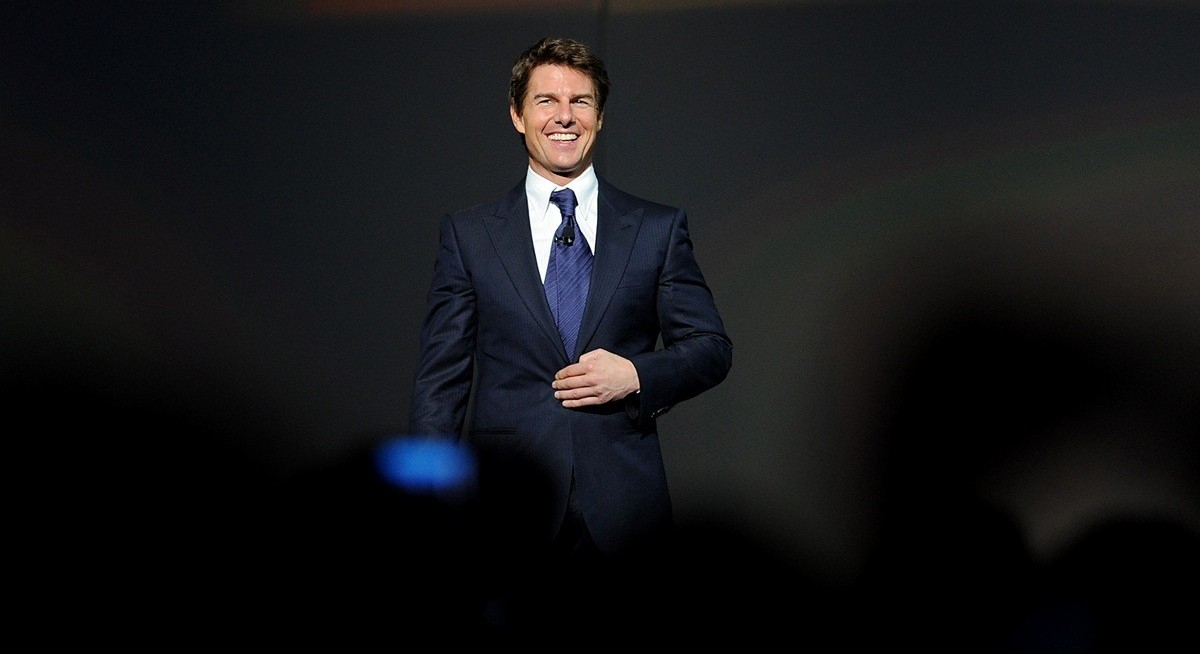
I recall from my youth that the 1989 movie, which won Oliver Stone best director and Tom Cruise’s first nomination for best actor, was a biographical anti-war drama film as part two of a Vietnam War trilogy, which included Platoon and Heaven and Earth.
Juxtaposed against the current quagmire that Operation Epic Fury — the “non-war” against Iran that started on Feb 28 — may have forever shaped how oil and gas are shipped through the Straits of Hormuz, despite ongoing negotiations on the 14-point agreement that frames a fragile ceasefire that both sides have already broken.
See also: Asian stocks fall on Korean chip sell-off, oil dips
It shows the limits of Top Gun air power, even with AI support. Especially if data inputs based on old maps inadvertently target schools without intel from boots on the ground. Nonetheless, as some of the 22,000 seafarers stuck for four months already in the Straits slowly make their way through, spot crude oil prices have mostly reversed to within 20% of pre-war levels, having almost doubled at their high.
A source of temporary relief, no doubt, for many economies, even if supply chain disruptions, pump prices and secondary food inflation will continue to cascade for many countries, especially in Asia.
Seeing American bluster on Truth Social, constrained by gasoline prices above US$4 that may cost Republicans in the Congress dear in the mid-term elections this November, and an Israel hell bent on self-defence trading fire still with Iranian backed Hezbollah in Lebanon, there is no guarantee that the Iranian regime will give the world relief by returning to pre Feb 28 arrangements, nor that a superpower needing to assert its status will be forced to wade back in.
Risky Business
Can markets like the Nasdaq, fuelled by AI dreams, continue to ignore the hot summer that is emerging — especially in inflation that has already stayed the hand of Kevin Walsh, the new Federal Reserve chairman?
At least for rate-sensitive assets in Singapore, our local banks, with DBS Group Holdings at new highs, continue to lift the Straits Times Index (STI) to new highs. At the same time, REITs and other property stocks have reversed course — a tad overdone, in my view, considering the liquidity flush in our banking system, low corporate borrowing rates and flat forward curves.
I am happy with my still-rising returns from the STI ETF held in my CPF retirement funds, which is making new highs on its concentration of shares in our local banks. However, my defensive local equity portfolio, after selling local tech stocks like AEM Holdings and CSE Global too quickly, is presently a drag.
One can’t help but wonder if there is a financial earthquake brewing in the bubbling AI and tech stocks, however much I sound like sour grapes.
Sink your teeth into in-depth insights from our contributors, and dive into financial and economic trends
The second-quarter surprise, hence, has not been how major markets and the STI have recovered (at least the headline indices) since the start of the war. Last year’s tariff tumble in April was another example that equity bulls could tout about buying the dip — after it was a V-shaped recovery when Trump folded and mostly reversed course after a month.
Eventually struck down by the courts, much of what tariffs were collected on is also being reclaimed by companies that had paid, with US consumers bearing the inflation that came with it.
The surprise is also not the investor stampede into all things AI, which has resulted in parabolic rises in a quarter, not only in US tech stocks (the IPO of SpaceX creating Planet Earth’s first trillionaire) or secondary fundraising (US$85 billion for Alphabet), but also in Asian stocks in chips and proxies for AI.
But how soon it is quaking a tad, with OpenAI and Anthropic issues not yet through the IPO gates till late 3Q. One would imagine that the traders and bankers will keep the market buoyant for a while.
Show Me The Money
The frenzy over the SpaceX IPO had led retail investors around the world to try to get a ticket to that ride. Apart from broker call centres in Australia opening emergency hours to cater to demand, investors from Japan to the UK all weighed in.
Perhaps some of them were Chinese — who were blocked by US authorities for national security reasons, but allegedly found their way through back channels — much like how US$1 trillion slipped through the Great Wall of China last year, prompting Chinese authorities to stem the outflow with more controls on local brokers.
As this column expected in early June, the IPO would do well even if it was priced at a “take it or leave it” US$135 and raised US$75 billion. Apart from the legions of Elon Musk followers, institutional and other Nasdaq 100-benchmarked portfolios were forced to buy, with SpaceX’s inclusion a rapid, fast-track one week after listing.
Punters who worked the odds like Rain Man or had the stomach for risk like Jack Reacher followed the stock up above US$225, before returning a little closer to earth at US$153 as of June 26 — still 10% above its IPO price, but dropping Musk from the trillionaire charts in the process. As initial liquidity ebbs, will prices hold, or will that be Mission: Impossible? Should investors demand to see The Colour of Money from the company’s profits sooner?
Riding on the initial equity enthusiasm, SpaceX also launched its first bond offering, raising US$25 billion within two weeks over a range of maturities to pay a bridging loan taken in March when xAI and X were merged with SpaceX (a case of shuffling the deck of companies among Musk, who holds super investor rights and controls over 80% of SpaceX) The “investment grade” bonds, as rated by Moody’s, Fitch and S&P, have sold off since, especially the longer maturities of up to 20 and 30 years, despite having an initial four times of demand on its issuance.
Being forced to buy and weigh in on a benchmark issue or stock, and riding the initial frenzy, does not seem to mean being required to hold it. Bond investors may be more finicky than stock investors or perhaps have more in common with Jerry Maguire. They may be sending a signal to tech equity investors, one to ignore at peril.
The Last Samurai
Patrick Foulis, a visiting fellow at the Hoover Institution, highlights that the world — excluding the US and China — has 38% of its public equity portfolio in US shares, up from 25% 10 years ago. Of the global public and venture capital raised this year, an estimated 65% is in the US.
Seemingly apocalyptic, a potential US market crash like 2008 could have an impact equivalent to 10% of non-US GDP. With national interests and geo-economic competition, American products may not be readily available to erstwhile Western “allies”, even if they were willing to rely on SpaceX satellites for defence. On June 12, the US Government restricted the use of Anthropic’s Fable 5 and Mythos 5 models by foreigners.
In response, Japan announced US$2.3 trillion in national investment targets for AI in late June, and the government may potentially nudge the US$1.8 trillion Japanese pension fund to invest more domestically. As countries from Canada to Germany view their sovereign wealth and domestic savings as strategic assets, the winning markets and companies may not be purely American in the second half.
Closer to home, the best-performing market in Asia this year has been South Korea, backed by Samsung and SK Hynix. The latter is also seeking US$29.4 billion by listing US American Depositary Receipts on Nasdaq next week. Korea Exchange (KRX) has, in the last week, triggered multiple circuit breakers on the Kospi, with 8% and 10% falls, as the way down often follows the steepening of the gradient on the way up in markets.
Of note, the KRX circuit breakers, which were not triggered all of 2025, have already kicked in five times. A summer of volatility may be in store for risk-seeking chip punters there.
Like their US equivalents, Micron, Nvidia and Qualcomm, Asian chipmakers, including Taiwan Semiconductor Manufacturing Co, and the wider US tech sector have had a late June tantrum and mild correction.
The tech market cap losses in the billions look big (a US$400 billion one-day selloff in SpaceX last week or Nvidia’s US$600 billion selloff last January) only because valuations are stratospheric. A summer of thinning liquidity in July and August is coming. I will not be shifting my portfolio anytime soon to join this party and stay with A Few Good Men back in our home market.
Chew Sutat retired from Singapore Exchange after 14 years as a member of its executive management team. During his watch, the exchange transformed from an Asian gateway into a global multi-asset exchange, and he was awarded FOW’s lifetime achievement award.




