


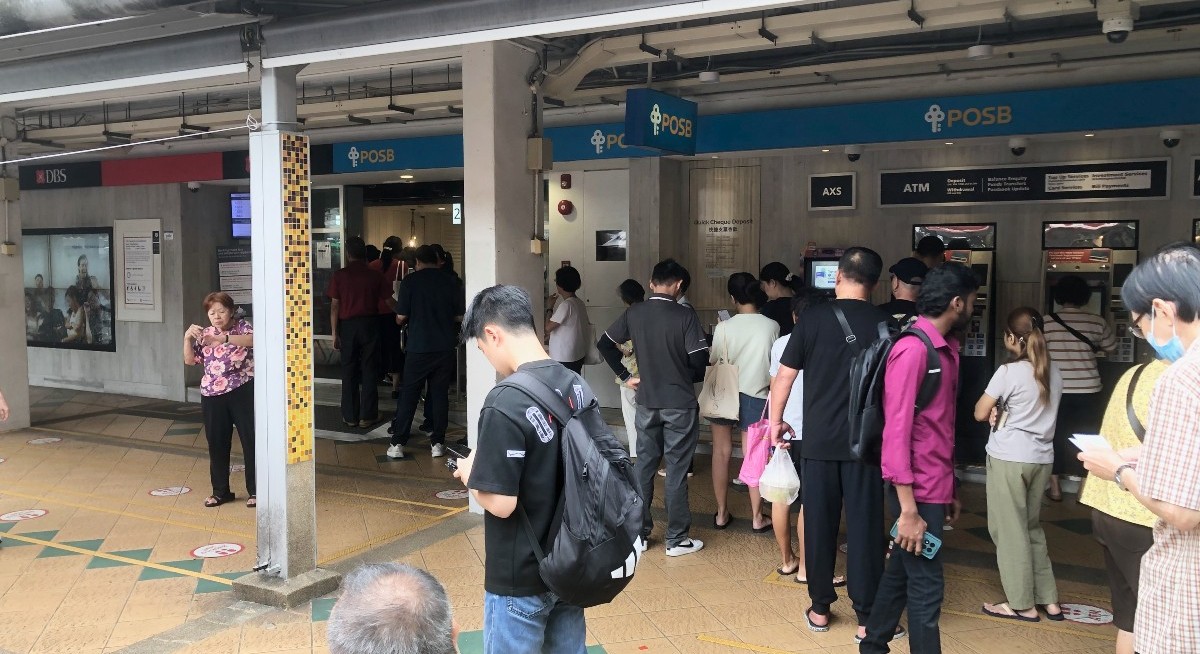


The move marks an about-turn after years of banks reducing their physical presence. Over the past decade, off-premise ATMs and branches in Singapore fell at an average of 2% a year, according to figures from the Monetary Authority of Singapore in response to parliamentary questions in January and February this year, while ATM withdrawals dropped by over 30% between 2015 and 2024. Off-premise ATMs refer to those that are not part of a branch.
Yet, ABS’s latest announcement comes as Singapore’s population crosses the threshold of being “super-aged”, with one in five citizens now aged 65 years and above. The shared commitment, among others, is made to better serve the banking needs of seniors, says ABS.
This is not the only policy whose lasting consequences may now need reversing. In the nation’s early years, certain policies were shaped by the circumstances of the time. The 1972 National Family Planning Campaign, known as “Stop at Two”, was one example, while the Speak Mandarin Campaign, launched in 1979 and revived in 1990, was another. In the 1960s and early 1970s, shophouses were also torn down in the name of urban renewal.
With the benefit of hindsight, these policies have had lasting effects that their architects did not plan for. The “Stop at Two” campaign may have helped curb population growth, but Singapore’s resident total fertility rate now sits at a historic low of 0.87 in 2025. The Speak Mandarin Campaign reduced the use of dialects to promote Mandarin and strengthen cohesion within the Chinese community.
See also: STI’s reserve list is more interesting than the STI itself
However, these dialects, once a key part of our culture and heritage, are now dying out with the generations that spoke them. Shophouses, once flattened in the name of renewal, are now protected by law, with many priced beyond the reach of most buyers.
The effects of these policies have continued to evolve long after the context that produced them. For instance, restrictions on dialect programming and the dubbing of dialect shows into Mandarin, including limits on screenings in dialects such as Teochew, remain in place — including in cases such as the film Dear You. This is an odd choice given that it is our dialects, not Mandarin, that are now most at risk of disappearing.
Turning to ATMs, it may not be too late for banks to reverse course if they choose to. Promoting digital transactions and increasing the number of cashpoints do not have to be mutually exclusive, and both approaches can be balanced.
See also: New Temasek must be more than old wine in new bottles
While further details have not been provided, a suggestion: DBS could consider integrating its ATM network with OCBC’s and UOB’s, which are already aligned. This would also help reduce the cost of building additional ATMs.
Another suggestion: fall-below fees should also be re-examined. Low account balances are not always a matter of choice, and allowing such fees to erode already limited savings risks being seen as exploitative




