




Not surprisingly, with the political leadership distracted by crises, the economy suffered as two decades of policy neglect left it unready to face a rapidly changing environment — surging competitiveness of rivals such as Vietnam and technological changes which undermined its existing growth engines such as its once-successful automotive sector. Thailand’s impressive technocrats did come up with new strategies such as the Eastern Economic Corridor but these were beset with implementation delays while political uncertainty deterred investment.
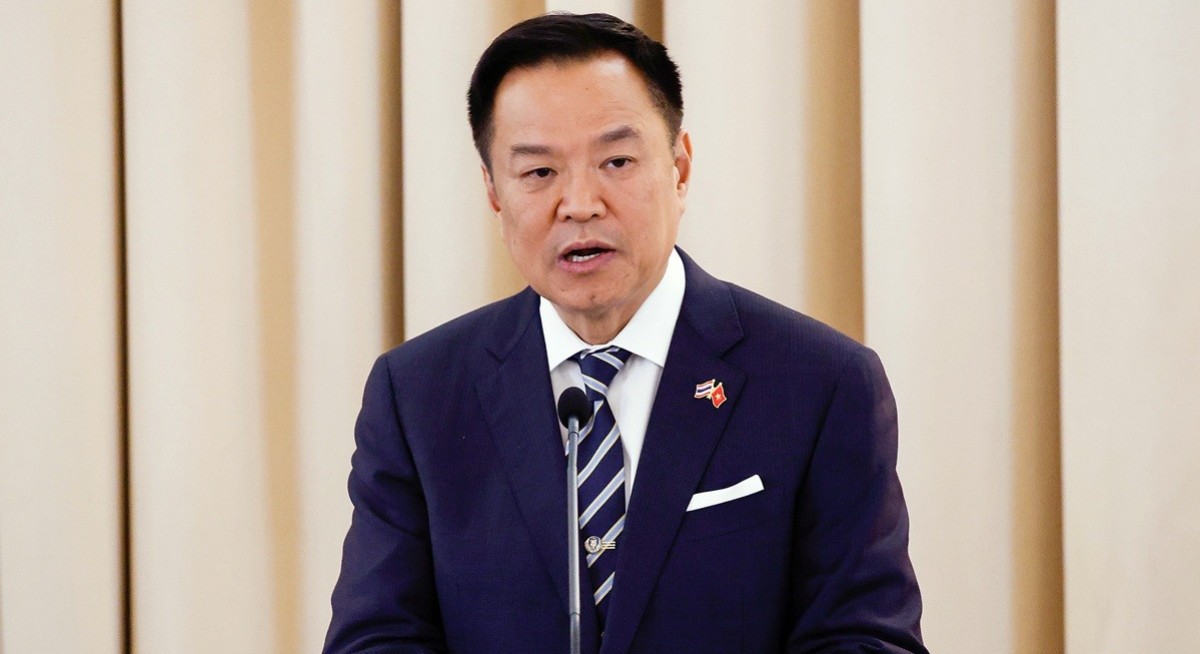
Now, Prime Minister Anutin Charnvirakul has the best chance in decades to turn his country around. He is the first Thai prime minister since 2023 to govern with the establishment’s backing rather than its hostility. As a result, Thailand now has a government with the requisite stability and breathing space to push through economic policies that can address Thailand’s economic woes.
To his credit, Anutin has appointed non-political technocrats to key economic policy positions. Deputy Prime Minister and Finance Minister, Ekniti Nitithanprapas, Commerce Minister Suphajee Suthumpun and Deputy Finance Minister Santitarn Sathirathai are seen as a “gold standard” economic team. Adding weight to the technocratic team is Deputy Prime Minister and Foreign Minister Sihasak Phuangketkeow who is regarded as one of Thailand’s most able and experienced diplomats. These appointments have gone a long way in convincing investors about the government’s determination to take Thailand in a better direction. Investors as well as the business sector like the government’s strategy of going for quick wins to steady the current state of the economy while also preparing the ground for vital structural reforms.
Prime Minister Anutin first moved quickly to strengthen the economy’s ability to withstand the shock from the war in the Middle East:
See also: Vietnam, Philippines raised to upper-middle income status
A new stimulus plan to support households has been implemented through the “Half-Half Plus” co-payment model that is similar to the programme implemented during the pandemic in 2020–2022.
The government has also introduced a debt-relief programme covering small-medium enterprises that reschedules the sector’s debt — though the root causes of the sector’s travails have not been addressed.
Investment facilitation has been fast-tracked through new programmes such as Thailand FastPass, while the Board of Investment process has been streamlined.
See also: Philippines sees another rate hike to curb war-driven inflation
With these “quick wins”, the Anutin government has successfully projected a sense of rapid delivery that has bolstered its credentials.
From a longer-term perspective, though, the more important moves are those that address structural challenges in the economy. A major plank in the government’s approach is to use external levers to overcome domestic resistance to much-needed reforms. The key change is that, after years of treating economic integration with scepticism, the government has set explicit targets for Thailand’s accession to the Organisation for Economic Co-operation and Development (OECD), while reconsidering entry into the Comprehensive and Progressive Trans-Pacific Partnership agreement (CPTPP). It has also acted to advance other trade agreements. Both initiatives will have profound implications for Thailand’s economic direction:
The Anutin government has an aggressive target to achieve OECD membership by 2028. Having submitted its Initial Memorandum in December 2025, it established a national accession committee chaired by Anutin himself in May 2026, with a permanent parliamentary council to oversee the process. The OECD push has given pro-reform forces a lever to press for much-needed reforms, particularly in tackling corruption. Business groups have been quick to remind policy makers that OECD accession requirements require quick action on anti-corruption measures. That helps to blunt domestic lobbying against such measures and gives reform-seeking officials the cover they need to press on.
After advancing a free-trade agreement with the EU and ratifying the upgraded Asean–China deal, the government is now working on entry into the CPTPP which will have an even more substantial impact. Thailand had explored joining the CPTPP in 2020 but talks stalled due to domestic opposition. The Thai leadership is now more willing to do what it takes to integrate with the global economy, after seeing how Thailand had lost ground to Vietnam whose zeal for free trade agreements has given it extraordinary export market access. It also understands that membership of a much larger trading bloc would ease the rules-of-origin constraints that have left Thailand on the back foot compared to regional peers. This will help Thailand gain more from the broader shift in supply chain configuration that is boosting Asean’s investment landscape.
Will this be enough to turn Thailand around?
There are two main obstacles to Thailand succeeding in its structural reforms, both rooted in the country’s politics.
The first is the still-unresolved political divisions in the country. The past 20 years have seen a struggle for the soul of the country that arose because the demands of new emerging political forces for an adequate voice were denied. In the provinces, economic development brought in a new class of entrepreneurs as well as middle classes whose interests and aspirations differ from those of the old Bangkok-centred establishment. Separately, across the nation, many Thais, especially the younger ones, seek a new and more progressive social contract that is less deferential to the authority of the traditional elite. In a country that is marked with extreme wealth disparity, these segments of the electorate seek a fairer share of the country’s wealth.
Anutin’s electoral victory — stemming in part from the national patriotic fervour induced by the short conflict with Cambodia — and his good intentions unfortunately do not resolve these deep divisions. In the 2026 elections, the progressive forces represented by the People’s Party (PP), won 30.5% of the party-list vote — a higher share than Anutin’s Bhumjaithai (BJT) Party which secured 17.9%. Anutin won a majority only because of his party’s strength in the separate constituency vote which favours well-funded party machines which can mobilise rural voters and win over local strongmen. The BJT won 29.6% of that vote while the PP only gained 24.3%. In the recent municipal elections in Bangkok though, the PP secured 22 of the 50 district seats on the Bangkok city council, a gain of eight seats, attesting to its continued popularity. Yet, the progressive segment of the population still lacks a voice in government and feels disenfranchised — meaning that future protests cannot be ruled out.
Sink your teeth into in-depth insights from our contributors, and dive into financial and economic trends
Worse still, the progressive forces continue to face pressure. The PP is a reincarnation of the Move Forward Party which the establishment dissolved. And that happened after the Mov Forward’s predecessor, the Future Forward Party, was also dissolved. In each case, the dissolved parties’ charismatic and highly popular leaders were banned from politics for extended periods. Now, the PP leader and many of its members of parliament are being charged in court for lese majeste — charges which could lead to the representative party of the progressive voters again being dissolved and their leaders being banned from politics or even jailed.
Without a new national consensus which gives the progressives a stake in the political system and which addresses their grievances, the danger is that unsettled political conditions will continue to disrupt economic transformation.
A second political risk is that vested interests will keep obstructing needed reforms. There are many politically connected groups that extract rents from the current half-reformed economy and who will stymie reforms that open up the economy to competition. There are also sectional interests such as agricultural groups that pressure political leaders to provide them with protection from external competition. For example, Thailand restricted imports of Malaysian sea bass in May 2026, claiming that the imported fish had chemical residues. But the move was more likely motivated by domestic fish farmers’ complaints of being undercut by cheaper Malaysian seafood imports. Malaysia’s retaliatory measures then prompted Anutin to order talks with Malaysia to avoid an unnecessary trade war with an important neighbour.
Beyond the political economy issues discussed above, Thailand does face other challenges which are well known. Two in particular stand out:
It is a rapidly ageing society: The working age population is already declining and the burden of looking after the elderly population will grow inexorably in coming years — the share of the above 60 years of age in the total population is projected to roughly double from 2020 to 36.1% in 2050.
Thailand’s competitiveness has weakened in recent years, dragged down by weak productivity. The OECD analysis shows that labour productivity growth decelerated sharply to only 2.1% on average in the 2015–2023 period from 3.7% in 1990–2010 and 4.8% in 2010–2015. Its total factor productivity performance has also stagnated since 2015.
These headwinds are real but our view is that if the right policy reforms are enacted, they can help Thailand mitigate these sufficiently to allow a pick-up in economic growth compared to its experience of the past decade.
Conclusion: The glass is half full
Recent government reforms have focused on administrative measures that improve the business environment but which do not touch the interests of powerful business lobbies. Expanding digital government services, having more open contracting data and the trimming of bureaucratic processes are all helpful but what Thailand needs to move out of relative stagnation are measures that go beyond simple deregulation and which target the core factors that weaken Thailand’s efficiency.
A positive view of the future would hinge on two assumptions. One is that Thailand’s economic underperformance has reached a point where the key decision-makers in the establishment accept that hard choices have to be made and that therefore, the political will is there to push reforms. The second assumption needed is that the current leadership has the political skill to manage the tensions between those groups within the government that are reform-minded versus those which are so invested in the status quo that they will resist the domestic changes required. On balance, we would agree with those assumptions and believe that Thailand could surprise pleasantly in the coming years.
Manu Bhaskaran is CEO of Centennial Asia Advisors




