


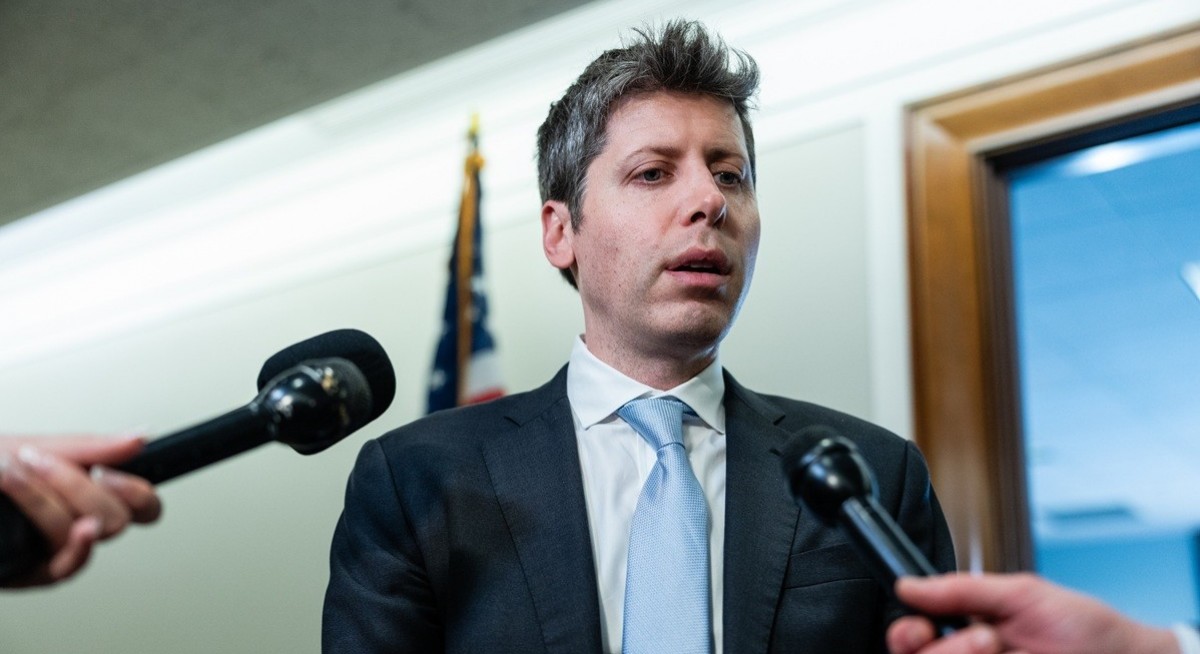


OpenAI became an icon with the release of the pioneering AI chatbot ChatGPT in November 2022 when central banks around the world were still raising interest rates to stem the rising tide of post-Covid-19 lockdown inflation. Its arrival ended the 2022 bear market and marked the beginning of a new bull market, albeit one that is now sputtering.
A flood of new shares from firms seeking money to help fund their audacious AI ambitions is now rattling Wall Street, which is concerned that demand might not be enough to absorb the new issuance and the humongous capital raising might impact valuations in the tech sector.
Until this past week, US-listed firms had raised up to US$76 billion through IPOs alone. Wall Street’s total capital raising for the year will exceed US$700 billion according to investment bank Goldman Sachs. Last year, US firms raised nearly US$220 billion — US$44 billion in IPOs and US$176 billion in follow-on secondary offerings.
Musk co-founded OpenAI in 2015 as a non-profit with Sam Altman. Their explicit objective was creating a “counterweight” to Google’s DeepMind, then the dominant AI lab. Their stated goal was to “advance digital intelligence to benefit humanity as a whole”. Musk quit OpenAI in 2018, citing a “potential future conflict of interest” with Tesla’s CyberCab project. Arguments over OpenAI’s attempt to turn into a for-profit organisation were the last straw. Eventually, he sued Sam Altman for “stealing a charity”. Last month, the court ruled against Musk, who has vowed to appeal.
See also: Global capitalism bets it all on AI future, alarming voters
As the creator of a pioneering chatbot, OpenAI had all the mindshare in AI. Indeed, ChatGPT became the default verb for AI chat, the way Google is for internet search, and helped it become the fastest-growing app in history. These days, it is seen as a laggard, struggling to catch up with Claude’s developer Anthropic and Gemini’s creator Google. With rival AI labs’ capital raising, OpenAI suddenly finds itself in a race to scoop up as much money as it can just to keep up with its peers. If it delays its IPO, or raises less money than them or at a lower valuation than Anthropic, it could become an also-ran in the AI race.
Google, Anthropic the AI leaders
The clear front-runners in the AI race are Google and Anthropic. Once written off as an AI leader, Google has the complete AI stack. Simply put, it owns or controls every layer needed to build and deploy AI, from the physical hardware all the way up to consumer products. No other firm comes close. Google designs its own chips, or AI accelerators called TPUs (tensor processing units). That means it does not depend on Nvidia’s GPUs (graphics processing units) the way OpenAI, Anthropic and others do. Nvidia chips are expensive and scarce, so it is able to charge top dollar from its buyers. By building its own TPUs aside from buying some Nvidia GPUs, Google has a cost-and-supply advantage. The search giant also runs its own network of data centres and sells compute through Google Cloud, controlling where and how its chips get deployed. Through DeepMind (since merged with Google Brain), it has been a foundational research powerhouse for years. Indeed, the transformer architecture, or the “T” in OpenAI’s GPT, that underpins large language models, came out of a 2017 Google research paper. And then, there are the AI models themselves, the Gemini family.
There are also Gemini’s image, video and audio models trained on Google’s own chips in Google’s own data centres. And then there is data. Google has its eponymous search, YouTube, Google Maps, Gmail, the Android operating system and Chrome browser, giving it enormous proprietary data sources and signals that rivals such as OpenAI cannot replicate. It also has a distribution edge. OpenAI has had to gradually build a user base from scratch while Google already has one of the largest user bases in the world. Google can push AI features to billions of users instantly through search, Android, Workspace, Chrome and YouTube. Google has the ability to subsidise Gemini indefinitely with a huge stream of search advertising profits while distributing it through Android and Chrome.
See also: Analysis: SpaceX’s AI fundraising campaign has just begun
OpenAI had US$2 billion in annualised revenues at the end of 2023. That had grown to US$25 billion in February this year. In comparison, Anthropic has a US$47 billion annualised run rate, up from US$9 billion at the end of 2025. xAI’s Grok generated merely US$350 million in 2025, though analysts forecast it could reach US$2 billion this year.
OpenAI is expected to lose US$14 billion this year and rack up cumulative losses of US$40 billion by 2028. OpenAI burned through US$3.7 billion in the January-March quarter on US$5.7 billion in revenue. It lost US$1.22 for every dollar it generated in revenues. ChatGPT claims to have 900 million users. That is clearly a big number. But here is the thing: 95% of those users are on the free tier. That means OpenAI earns no money from them. The irony is that paying subscribers hurt its bottom line even more. Here’s how: Flat-rate ChatGPT Pro plans allow a US$ 200-per-month subscriber to draw up to US$14,000 in tokens per month at API (application programming interface) prices. Research firm SemiAnalysis estimates a maxed-out Pro user costs OpenAI about US$3,500 in compute with just US$200 in revenue.
In comparison, 80% of Anthropic users are enterprise and they include eight of the world’s top 10 firms. Indeed, it has over 1,000 companies paying it more than a million dollars a year. Anthropic loses money on consumers too but its huge enterprise base offsets those losses. Anthropic is now projected to have positive free cash flow by next year. OpenAI’s gross margins were 33% last year, and are falling. Anthropic has gross margins of roughly 40%. Apple had gross margins of 49.3% in the last quarter.
There are other issues with OpenAI, which has committed to literally hundreds of billions in future compute spending and now faces pressure to show it can generate enough cash to pay for its spending spree. Unlike Google, OpenAI rents its compute, buys its chips and depends on partners like Microsoft and Oracle. Model capabilities between top AI labs are converging, which will likely compress pricing power. If frontier models become commoditised, their economics will look more like airlines than software.
OpenAI’s revenues are derived mainly from its consumer subscription business. It has leaned into consumer features, pushed ChatGPT as a mass-market product and talked about expanding into shopping as a competitor to e-commerce giant Amazon.com and going head-to-head with iPhone maker Apple in devices. Rival Anthropic’s North Star is business. A large share of its revenue comes from enterprises building on Claude — coding tools, customer service and document analysis.
While consumer-focused OpenAI has chased advertising and shopping, Anthropic has shunned ads and engagement-optimised services. OpenAI recently began pushing ChatGPT Enterprise, its API business, and has won several US government deals. Anthropic too has a consumer business of its own with the Pro and Max subscriptions of Claude and Claude App. In contrast, ChatGPT has a broader ecosystem of consumer features like image generation (DALL-E), voice modes and custom GPTs.
As the heaviest-spending frontier AI lab and with no visible path to profitability until 2030 at the earliest, OpenAI desperately needs access to more cash as soon as possible. It has entered into massive infrastructure contracts of up to US$600 billion in committed spending to secure data centres and AI chip supply chains. There are also concerns about a fragile “financing loop” where billions raised from Microsoft and Amazon are funnelled right back to the same hyperscalers to pay for cloud computing. In a desperate bid to catch up with Anthropic and Google, OpenAI is now in an aggressive price war with them. It has also had to resort to desperate revenue alternatives like placing ads inside the free ChatGPT version.
Sink your teeth into in-depth insights from our contributors, and dive into financial and economic trends
Google’s Gemini does not report its AI revenues or profits separately. The Gemini app has grown to have over 750 million monthly active users, with its models processing over 16 billion tokens per minute via direct API use, up from 10 billion in the previous quarter. While Google does not break down Gemini’s revenue, Google Cloud grew an annualised 63% to US$20 billion in the January-March quarter, or an US$80 billion annualised run rate, fuelled largely by Gemini-powered enterprise services, with over 120,000 enterprises using Gemini.
Microsoft too does not break out its Copilot revenues. Analysts at Citi and JPMorgan have cited heavy discounting — in the 40% to 60% range — on competitive Copilot deals. Some analysts estimate that Copilot revenue ranges between US$1.5 billion and US$2.5 billion, way below what the US$30 per seat sticker price and Microsoft’s announced deployments would suggest. Recon Analytics data suggests only one in 12 users chooses Copilot when given alternatives.
Microsoft was an early backer of OpenAI, investing US$13 billion in the pioneering AI frontier lab. That gave it an initial 49% economic interest in OpenAI. Over the past two years, Microsoft and OpenAI have shifted away from their tie-up into a non-exclusive agreement. Microsoft remains a 27% shareholder and a cloud partner while OpenAI is now allowed to distribute models across rival platforms. Microsoft no longer pays a revenue share to OpenAI. The longer OpenAI waits for its IPO, the more problems it is likely to face.
Tall Poppy Altman?
A bigger problem with OpenAI may be the CEO himself. In a 16,000-word deep dive titled “Sam Altman May Control Our Future — Can He Be Trusted?”, The New Yorker focused on the persistent doubts about Altman.“He’s unconstrained by truth,” a former OpenAI director is quoted as saying. Though he has never been charged for a crime or found liable for any wrongdoing, his character, candour and conduct have been questioned by many friends, foes and colleagues in the Silicon Valley. His fans say Altman is merely a victim of the “tall poppy syndrome” — the social tendency to criticise people who have achieved visible success. As one of the most powerful people in the world, they argue, Altman leads a company reshaping civilisation and as such is intensely scrutinised. Moreover, critics like Musk may also have a personal or competitive axe to grind.
So, what’s next for OpenAI? Florida state recently sued the firm for “knowingly releasing and aggressively marketing ChatGPT to the public while concealing serious risks, including offering instructions to children considering suicide and helping suspects plot crimes”. Separately, a coalition of state attorneys general in the US recently opened an investigation into OpenAI’s advertising, user engagement and retention, model sycophancy, handling of consumer data as well as health data, and treatment of minors and seniors. OpenAI’s road to IPO will likely be far rockier than other mega IPOs.
Assif Shameen is a technology and business writer based in North America




