


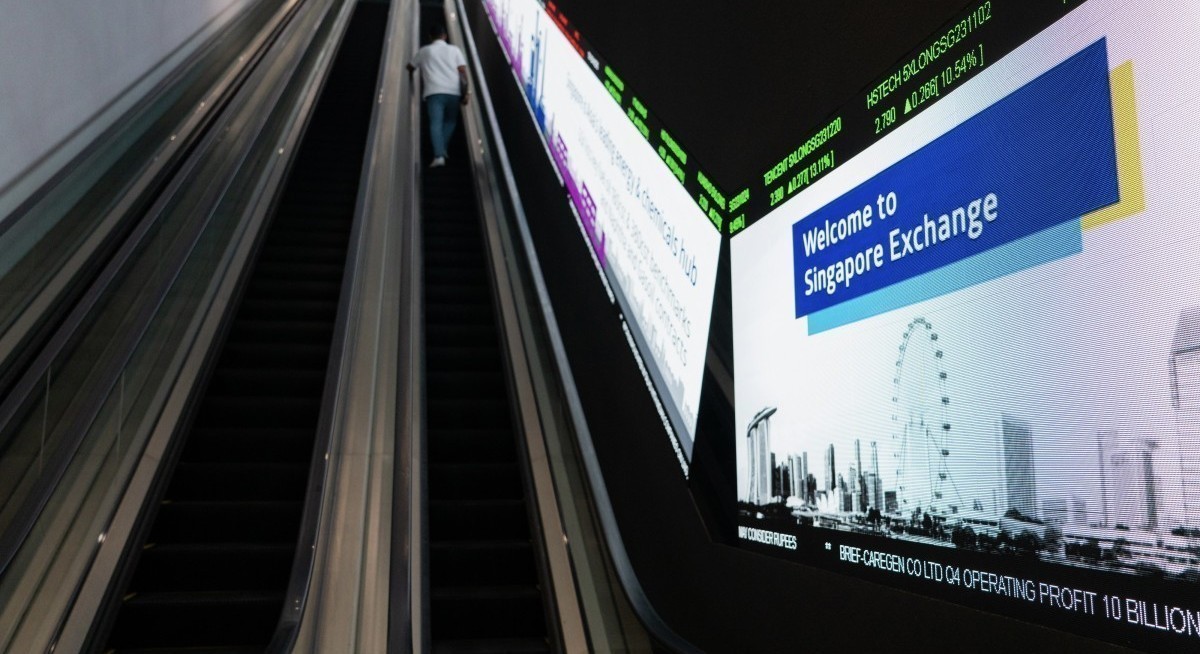


The Monetary Authority of Singapore’s (MAS) Equity Market Development Programme (EQDP) certainly has succeeded in juicing up the local bourse and attracting new companies to SGX.
Yet the experience has been underwhelming at best for investors who bought into this year’s IPOs.
The most recent listing, JustCo Holdings, even turned out to be an outright disaster. The Singapore-headquartered co-working operator’s pitch might seem compelling on paper — that Asia’s flexible office market still has plenty of room to grow — but investors clearly thought otherwise.
While JustCo’s IPO, priced at 94 cents a share, was 3.4 times subscribed and backed by GIC, Frasers Property and a bunch of EQDP fund managers, the stock crashed to 77.5 cents on its May 22 debut, making it the worst performer among this year’s new listings. It continues to trade below 94 cents.
The disappointment extends beyond JustCo.
UI Boustead REIT, the largest new listing on SGX so far this year with IPO proceeds of nearly $1 billion, ended at 80.5 cents on its March 12 debut, down from its offer price of 88 cents. The stock has yet to close above its IPO price.
The three new listings on the Catalist board — Toku, The Assembly Place and Kin Global — all closed above their offer price on their trading debut but have since struggled to gain any meaningful traction with investors.
See also: First Resources and Olam to replace Netlink and SIA Engineering in STI reserve list
Concord New Energy Group, the sole new secondary listing so far this year, is also hovering near its closing price of 6.1 cents set on Jan 6, the day it debuted on SGX. The renewable energy company has been listed on Hong Kong’s mainboard since 2007. Its closing price on Jan 5 was 34 Hong Kong cents (5.6 cents).
In a nutshell, no new listing on SGX this year has delivered a sustained post-debut rally. That should worry anyone celebrating Singapore’s IPO comeback.
First-day trading is usually less about fundamentals than about confidence. Investors are often willing to tolerate rich valuations if they believe the growth story is compelling and future upside is intact. But when stocks break below their issue price and stay there, it signals doubt about valuation, timing or why the company listed in the first place.
Better bets elsewhere
Singapore’s underwhelming performance becomes more obvious when compared with new listings elsewhere in Asia. Across the region, IPO markets have sprung back after several difficult years. While not every debut has held up after day one, many have managed to preserve at least some of their early gains.
Hong Kong raised about HK$110 billion through 40 new listings in the first quarter alone. The former British colony’s IPO market has been powered by technology, AI, semiconductor and biotech companies.
Notable performers include Shanghai Biren Technology, an AI chip designer, which rose 76% on its Jan 2 debut; and MiniMax Group, an AI company that builds models combining text, voice and images, which doubled in price on its Jan 9 trading debut. Both and several other new listings are still trading above their IPO prices.
The difference between Hong Kong and Singapore is not the number of IPOs hitting the market. It’s what happens after they list. For investors, Hong Kong is still producing winners, while Singapore is mainly producing stocks that are merely trying to stay above water.
Sink your teeth into in-depth insights from our contributors, and dive into financial and economic trends
Malaysia, too, has been punching above its weight. Bursa Malaysia hosted 32 new listings in the first four months of 2026, raising US$1.2 billion ($1.53 billion), nearly matching the full-year total for 2025. Sunway Healthcare, Malaysia’s largest IPO in nine years, surged 28% on its March 18 debut and continues to trade above its RM1.45 (47 cents) offer price.
Again, not every new listing this year in Hong Kong, Malaysia or any other Asian market besides Singapore has done well on its debut or held on to its initial gains. India remains one of Asia’s most active IPO destinations, but volatility and valuation concerns have begun clouding sentiment and only a minority of this year’s new listings are still generating meaningful returns.
Singapore’s experience, then, may not be an isolated problem but part of a broader regional phenomenon: IPO markets across Asia are reopening because liquidity and sentiment have improved, but investors are becoming far more disciplined about what they’re willing to pay for new listings.
Some may argue that sentiment in Singapore may also have been affected by the outbreak of the Iran war. But if so, nobody told the rest of Asia, where new listings kept coming and many did just fine.
The contrast remains hard to ignore.
Who’s really benefiting?
A booming IPO market doesn’t necessarily mean investors believe every newly listed company offers attractive upside. It just signals the return of conditions that make it easier for companies and existing shareholders to sell equity at favourable valuations.
That raises a few important questions: Who’s really benefiting from Singapore’s IPO revival? Are these companies listing because a public market will help them build a better business, or because the iron is hot and now’s a good time for their owners to cash out?
The timing of a listing is rarely accidental. IPO windows tend to open when liquidity picks up, valuations rise and retail participation strengthens. In other words, when conditions become favourable for sellers, but not necessarily for buyers.
Singapore’s broader market rebound has created exactly such a setup. The Straits Times Index has surged to record highs. Small- and mid-cap stocks that had long been ignored are once again attracting institutional attention. Trading volumes have improved significantly.
Against this backdrop, it’s entirely rational for founders and early investors to monetise assets through an IPO and seek the highest valuation the market will stomach. The issue is not that founders are selling, but whether public investors are being adequately compensated for taking the other side of the trade.
Consider the profile of this year’s SGX debutants. There’s nothing inherently wrong with the businesses themselves. They operate in sectors ranging from flexible workspaces and co-living to AI software, sports events and renewable energy. The issue is not the quality of their business, but the market’s assessment of the value they offer at the time of listing.
That said, the half-dozen new listings on SGX this year aren’t necessarily the sort of companies that will convince investors that Singapore is a listing venue for the next generation of global corporate champions. This may explain why these stocks have generally struggled to gain traction.
The EQDP irony
There’s another possibility. The EQDP may have become a victim of its own success. By reviving the broader market, the programme has raised the hurdle for new listings. Investors no longer need to chase IPOs when many established SGX stocks are already delivering strong returns.
In other words, the central bank has made existing stocks more attractive than many of the new companies coming to market. The problem is that IPO investors are not necessarily sharing in the benefits. That competitive reality could become an increasingly difficult hurdle for future IPO candidates.
This doesn’t mean Singapore’s IPO revival is failing. A healthy stock market needs a functioning capital-raising ecosystem. New listings create visibility, attract banking activity, broaden sector representation and signal confidence in the economy.
The return of IPOs after years of drought is unquestionably a positive development. But quantity alone isn’t enough. What ultimately matters is whether IPOs create lasting value for public shareholders rather than simply providing liquidity events for founders, private equity investors and early backers.
Indeed, the animal spirits that MAS has worked hard to reignite should not be squandered on listings that leave investors holding the baby while founders and early backers head for the exit.
If investors begin to associate new listings primarily with disappointing returns, future issuers may find the market becoming far less forgiving. Retail investors have long memories. Burn them on a few high-profile deals and they may stay away for years.
For now, the Singapore market remains strong enough to absorb some disappointments. But the performance of this year’s IPO crop serves as a reminder that liquidity alone can’t generate lasting shareholder returns.
Singapore has all the ingredients to compete. It has a world-class regulatory framework, deep pools of institutional capital, a sophisticated investor base, and a government willing to commit significant resources to developing the stock market.
What it seems to lack, for now, is a pipeline of issuers capable of matching the quality, growth profile and investor appeal of the companies listing in Hong Kong and other markets in the region. The challenge facing SGX is no longer persuading companies to list; it’s convincing investors that new listings deserve their capital more than the opportunities already sitting on the exchange.




