


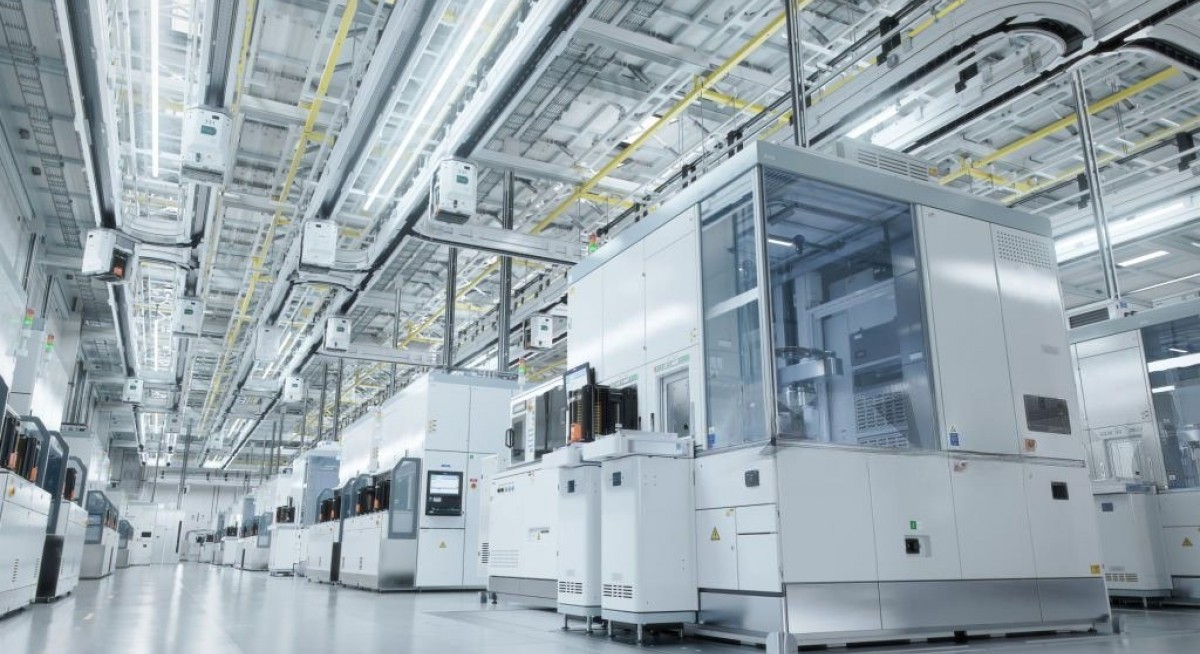


As AI workloads intensify, computing hardware becomes more densely packed, pushing data centre operators to expand infrastructure and upgrade cooling systems to handle the growing heat load.
This, in turn, reinforces demand for aluminium, which is also widely used in the power systems needed to support AI. Large-scale AI clusters consume enormous amounts of electricity. Meeting this demand requires not only generation capacity but also expanded transmission and distribution networks, where aluminium is extensively used in cables and electrical systems.
The AI boom, in other words, is not just a story about semiconductors. It is also increasingly a story about aluminium. In fact, the build-out of AI-related infrastructure is adding pressure to an already tight aluminium market that is barely keeping up with demand across multiple fronts, including electric vehicles, renewable energy, construction and aerospace.
As far as investors of Singapore stocks are concerned, this dynamic could place a company like Soon Lian Holdings in an interesting, if indirect, position.
See also: ByteDance, Alibaba pull AI companions as Beijing tightens rules
Global aluminium supplier
Listed on the Catalist board since 2007 (Sesdaq then), the homegrown company distributes aluminium alloys to users in the precision engineering, marine and aerospace industries. These alloys are aluminium blended with elements such as copper or silicon to enhance performance.
Soon Lian also supplies to aluminium stockists and traders and can cut these alloys into customised forms to meet precise specifications.
See also: Investing in the anti-AI trade
The company started in 1983 and has since grown into a global supplier with operations and warehouses in Asia and a diversified base of more than 1,000 customers in nearly 20 countries. Its products, too, are sourced globally, including from Alcoa, the largest aluminium producer in the US.
Soon Lian gets more than half of its annual sales from the precision engineering industry, where its products are used in semiconductor equipment, robotics and automated assembly lines, among other things. Singapore, Malaysia and China are its top three markets by revenue.
How Soon Lian makes money
The business model is straightforward. Soon Lian buys alloy products from global producers, holds them in inventory, and sells them to industrial users. What sets it apart is not what it sells, but how it sells. By stocking a wide range of materials and cutting them to exact specifications, it turns aluminium into a ready-to-use resource for industrial clients.
That positioning shapes how it makes money. Soon Lian earns a spread between procurement cost and selling price, adjusting prices in line with underlying aluminium costs to preserve margins. But the real lever lies in execution.
This is where inventory management is critical. If it buys ahead of rising aluminium costs and sells at even higher prices, margins expand. If costs move faster than it can pass them through, margins compress. The business is therefore less about the direction of aluminium prices than about timing, discipline and inventory turnover.
This is what makes Soon Lian easy to misread. On the surface, it looks like a proxy for aluminium prices, or even for the broader AI-driven demand narrative. In reality, it behaves more like an infrastructure play on industrial activity.
Sink your teeth into in-depth insights from our contributors, and dive into financial and economic trends
Its earnings are tied not to technological breakthroughs, but to how efficiently it manages working capital, secures supply, and serves customers in industry segments where reliability and speed command a premium.
For investors, the question is not whether aluminium prices are rising, but whether Soon Lian can continue to navigate the cycle better than the market expects.
While global demand is robust, supply dynamics are also shaping the aluminium market, with geopolitical tensions fuelling volatility in prices and trade flows.
Even before the war in Iran, aluminium supply was already tightening as high energy costs forced several smelters in Europe to curtail production or shut down. The US-Israel assault on Iran has since compounded those pressures, severely disrupting key shipping routes in the Middle East, which accounts for a meaningful share of global aluminium output.
Meanwhile, rising oil and gas prices have further pushed up power costs, deepening the strain on energy-intensive aluminium smelters and limiting their ability to ramp up supply.
Together, these factors have cut availability and pushed aluminium prices on the London Metal Exchange above US$3,500 ($4,489) per tonne in recent weeks, a level last seen in 2022 when supply struggled to keep up with demand in the aftermath of the Covid pandemic. While prices have eased somewhat from their recent highs, they are still up by more than 10% year to date.
As at Dec 31, 2025, Soon Lian had $40.2 million in inventories, up from $31.4 million a year earlier and from $31.1 million as at June 30, 2025. That stockpile is worth more than its current market cap. As it funded the inventory build-up using internal resources, it reported negative operating cash flow as at the end of 2025.
With inventories accumulated earlier, likely at lower costs, current aluminium prices may not immediately weigh on Soon Lian’s margins. Instead, they could provide a buffer, or even a tailwind, as inventories are gradually turned over at higher selling prices.
Its balance sheet reinforces that stability. With borrowings at $3.6 million and total assets at $84 million, of which $10.5 million is cash, Soon Lian carries minimal leverage. This gives it flexibility to manage working capital even as higher aluminium prices raise the cost of holding inventory.
Other SGX aluminium stocks
Aluminium exposure on the Singapore Exchange (SGX) is both limited and fragmented. Nam Lee Pressed Metal Industries and New Wave Holdings offer exposure to aluminium, but through different business models.
Nam Lee designs, fabricates and installs architectural metalwork for public housing, condos and commercial buildings. It is also the world’s only third-party manufacturer of aluminium frames for a global container refrigeration company.
For the financial year ended Sept 30, 2025, Nam Lee’s revenue rose 15.7% y-o-y to $208.6 million while earnings doubled to $24.8 million. Net profit margin climbed to 11.9% from 6.8%.
New Wave runs two businesses: an aluminium distribution arm supplying industries across Singapore, Malaysia and China, and an electronics company distributing IT cabling solutions and network monitoring tools.
New Wave has been in the red for the last three financial years. Revenue for the last financial year ended March 31, 2025, rose 12.8% to $17.1 million. Its net loss narrowed to $2.1 million from $4.3 million for the previous year.
Beyond the AI narrative
Soon Lian is far more narrowly defined as a distributor of aluminium alloys. Its earnings are driven less by project execution or engineering activity and more by how effectively it manages inventory. This makes it a relatively pure-play aluminium stockist whose performance is closely tied to price cycles and capital discipline.
That positioning comes amid a mixed operating outlook. Last month, Soon Lian said its 2025 revenue rose 11% year-on-year to $79.4 million, but earnings fell 17.4% to $4.8 million as cost of sales and administration and distribution expenses rose. Net profit margin slipped to 6% from 8%.
Management has flagged potential headwinds in its core precision engineering segment, particularly if global trade tensions disrupt demand or cross-border supply chains. On the flip side, the marine segment remains supported by a healthy order pipeline and is expected to stay resilient.
Whether Soon Lian’s guidance remains intact is now in question, as it was issued two days before war broke out in Iran.
That uncertainty highlights the nature of the company’s exposure: while AI may support demand, its earnings remain susceptible to price cycles and external shocks. Soon Lian is not a proxy for innovation but for infrastructure. Its fortunes hinge not so much on breakthroughs in chips or software but more on how well it navigates cycles, manages inventory and preserves margins.
This cuts both ways. The same inventory positioning that supports margins in a rising market can just as quickly erode value if prices reverse or demand softens.
Valuation, then, is less about where aluminium prices go next and more about how much confidence investors place in Soon Lian’s ability to execute. The market has so far assigned it a modest multiple, reflecting its cyclical earnings and reliance on working capital.
That discount is a double-edged sword. If the company turns inventory efficiently into higher-margin sales, earnings can re-rate quickly. If the cycle turns, the downside is just as immediate.
Soon Lian may sit on the periphery of the AI trade, but its valuation hinges on something far more old-fashioned: buying well, selling better and getting the timing right.




