




Shares of microprocessor giant Intel are up 209% this year. From its previous peak in June 2000, the stock had fallen a whopping 76% even as the SMH ETF rose nearly 1,180%. Shares of SanDisk, the flash drive and solid-state drive maker, are up 478% this year and a parabolic 5,190% since their lows in April last year.
Memory chip maker Micron’s shares are up a rocket-like 865% over the past year. In 2011, it was trading at US$5. Another big winner is AI chip maker Broadcom. Its shares are up 79% over the past year and 1,416% since late 2017, when I wrote The Edge Singapore’s cover story about its Penang-born CEO, Tan Hock Eng, shepherding it towards becoming a chip colossus.
Other runaway chip winners include South Korea’s chip-heavy benchmark Kospi Composite Index, which is up 85% this year and nearly 198% over the past year. Just two memory chip giants, Samsung Electronics and SK Hynix, make up about 48% of the Korean bourse’s total market capitalisation. SK Hynix shares are up 245% since January and a whopping 1,007% over the past 12 months, while Samsung Electronics shares are up 156% this year and 469% over the past year. Meanwhile, shares of the UK’s ARM Holdings are up 191% over just the past two months.
Move to agentic AI
See also: AI and the human compact
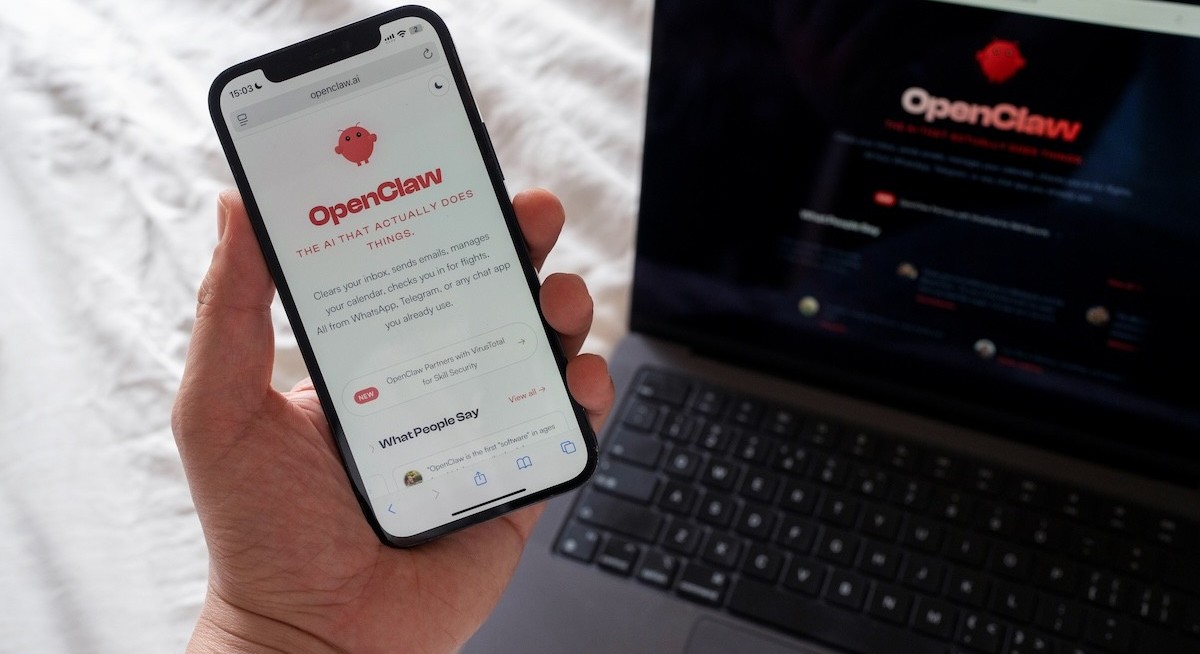
What’s going on? For one thing, the AI world is changing fast. We are moving from chat-based AI, like ChatGPT or Google Gemini, to agentic AI. Last November, Austrian AI developer Peter Steinberger unveiled Clawdbot. This open-source AI agent can perform a range of tasks using large language models, with messaging platforms as the main user interface. In January this year, Clawdbot morphed into Moltbot and was soon renamed OpenClaw.
Here is what OpenClaw can do: It can automatically browse the web, summarise PDF documents, schedule calendar entries, conduct agentic shopping, and send or delete emails on a user’s behalf. Back in the days of chat-based AI, a journalist like me would just pepper the chatbot with a ton of queries and it would respond. The process was cumbersome. While it saved me a bit of time, it did not give me what I really wanted. And Google Search went from bad to worse, with annoying ads popping up all the time. ChatGPT, Gemini and Claude seemed like a breath of fresh air. But the chatbots did not make me any more efficient in finding answers. Chatbots are suddenly starting to resemble ad-based search. Indeed, ChatGPT recently began rolling out ads. This past week, Google announced it would merge its eponymous search with the free version of Gemini.
Enter agentic AI, the new AI systems capable of taking action on behalf of users without human intervention. It’s basically a software that acts autonomously to do tasks for you. Let’s say you want to find an apartment or a house to rent or buy. All you have to do is spin up an agent and share your requirements, amount of built-up space — let’s say 2,000 sq ft — and the number of rooms your family requires, plus the neighbourhood you’d like to live in, as well as your budget. The agent will then browse the web, filter the homes based on your criteria and spit out a shortlist. If the listing provides an email address, it could send an email to the renter or seller of the home to ask when you could see it. It will then tell you what day the landlord or owner might be free to show you the place.
See also: A cold shower for the AI mania
Of course, you can always tell the AI agent that you can only look at the home over the weekend, preferably in the afternoon. It will also make an appointment in your calendar app and remind you on that day. Oh, if you want a coffee break at work, you just need to tell the AI agent to send a note to your supervisor: “Away from the desk for 10 minutes to fetch a Starbucks Latte.” Brokerage Robinhood now enables AI Agents to trade stocks and make credit card purchases on your behalf on its platform.
A financial journalist like me might ask an AI agent to get me data on a company I am writing about from the Securities and Exchange Commission (SEC) website, the CEO’s last-quarter earnings call, or CNBC’s website, and compare it with data from other similar firms. That requires generating 10 to 100 times more tokens. What are these tokens, you might ask. Think of a token as the basic unit of data in AI computing. Agentic AI systems produce a lot of tokens. Growth in token utilisation has gone through the roof. At the end of January, or before OpenClaw emerged, token growth was about 20% over the previous two months. Over the following two months, growth exceeded 120%. Growth has accelerated since.
“Demand has gone parabolic,” thanks to the rise of agentic AI, Nvidia’s CEO Jensen Huang said during the chip behemoth’s earnings call on May 20. “Tokens are now profitable, so model makers are in a race to produce more. In the AI era, compute capacity is revenue and profits,” he said. “The world is going to have billions of agents. Every one of those agents is going to spin off sub-agents, and every time they spin these off, you’re going to need to do inference. That’s where the thinking happens. All of the thinking happens on GPUs. All of the orchestration essentially runs on CPUs.”
What’s happening here is that the AI agent is replacing a human being and working around the clock, searching for data, comparing and analysing it, and then giving me the data so I can explain to you what’s going on at a particular tech company or segment of the tech industry. Sometimes, getting data from the SEC, quotes from CEOs’ earnings calls, or comparing one company against another can take not hours but a day or two. AI agents can work 24 hours a day or 48 hours non-stop and report back to me the next day. They can also send emails to my contacts and analysts who might be helpful, and help set up Zoom appointments. If necessary, I can send the AI agent to get me more data, or information from more 10-K or 10-Q corporate filings on the SEC website, all the Substacks that I subscribe to, scan, read and summarise all the analyst reports that I get, so I have more time to write or craft a story that puts things in a better perspective for readers.
CPU stocks surge
To make an effective AI agent, we need an orchestration engine. We require something that organises all the tasks an AI agent must undertake. Nvidia’s graphics processing units, or GPUs, are excellent at training AI. They are good for repetitive tasks. AI training using GPUs helped create great chatbots like ChatGPT. But here’s the thing: Chatbots are so 2022. ChatGPT was a nice little novelty four years ago. Now we can power an AI agent to do things for us.
That’s where CPUs, or central processing units, from Intel, Advanced Micro Devices (AMD), and ARM Holdings come in. In the chatbot era from the end of 2022 until recently, GPUs were hot. We needed 12 GPUs and maybe one CPU. That went down to eight GPUs to one CPU. The new agentic AI era requires one CPU for every GPU. So, how fast will the growth be? On May 20, Nvidia forecast that its revenue will grow at an annualised rate of 95% in the second quarter ending July 2026. Imagine CPU demand for agentic AI workloads growing seven times faster. That’s why CPU-related stocks such as AMD, Intel and ARM Holdings have been surging lately. Nvidia is joining the CPU party, too. It recently flagged US$20 billion in revenue from CPU sales this year, adding to its core GPU revenue. The total market for AI CPUs is expected to hit US$200 billion annually. If Nvidia has a 25% share, it will earn US$50 billion a year just from CPUs in addition to nearly US$390 billion from GPUs.
Sink your teeth into in-depth insights from our contributors, and dive into financial and economic trends
Here’s another way to look at what’s going on: There are about 1.4 billion knowledge workers around the world who spend the day staring at a computer screen, reading and responding to emails, working collaboratively on spreadsheets, and using an array of different tools. The advent of agentic AI means agents will begin handling some of that work. Instead of trying to figure out how many of those knowledge workers will be fired, focus first on how much more productive every knowledge worker who uses these AI agents becomes. While some knowledge workers will lose their jobs over time, far more new jobs will be created for them.
All that, in turn, will push AI usage to new heights. That means a lot more compute, a lot more GPUs and CPUs, and memory chips, particularly high bandwidth memory. Here’s how the new agentic AI era differs from the old chatbot era: A chatbot session is quick, GPU-heavy and low-context. An agentic session is just the opposite. It runs for hours, sometimes a day or two, constantly does things, and pulls on CPUs to orchestrate actions, as well as high bandwidth memory, for more context.
Goldman Sachs forecasts that consumer and enterprise agents will push monthly token consumption to 24 times the current global capacity by 2030. “Over the next decade, fully autonomous agent and robot fleets may ultimately alter verticals heavily reliant on human capital and spark a corporate efficiency revolution that transforms the global economy,” Bank of America noted in a recent report. Funding for Agentic AI startups nearly tripled from US$1.3 trillion in 2024 to US$3.8 billion last year. Yet, we are still in the very early stages of agentic AI. Over the next two years, we will start to see commercial enterprises deploying AI agents at scale. Goldman analysts believe token economics will turn positive this year. Any operator will be able to deploy an agent whose output value exceeds its compute cost. That will force companies worldwide to use AI agents to remain competitive, which, in turn, will help reaccelerate demand for chips. Not just GPUs — yes, they will grow too, albeit at a much slower pace than they have in the recent past — but also CPUs in a big way, as well as high bandwidth memory that will power the race to build AI agents for all of us. It may also mean the babble about the imminent popping of the AI bubble will only grow louder.
Assif Shameen is a technology and business writer based in North America




