








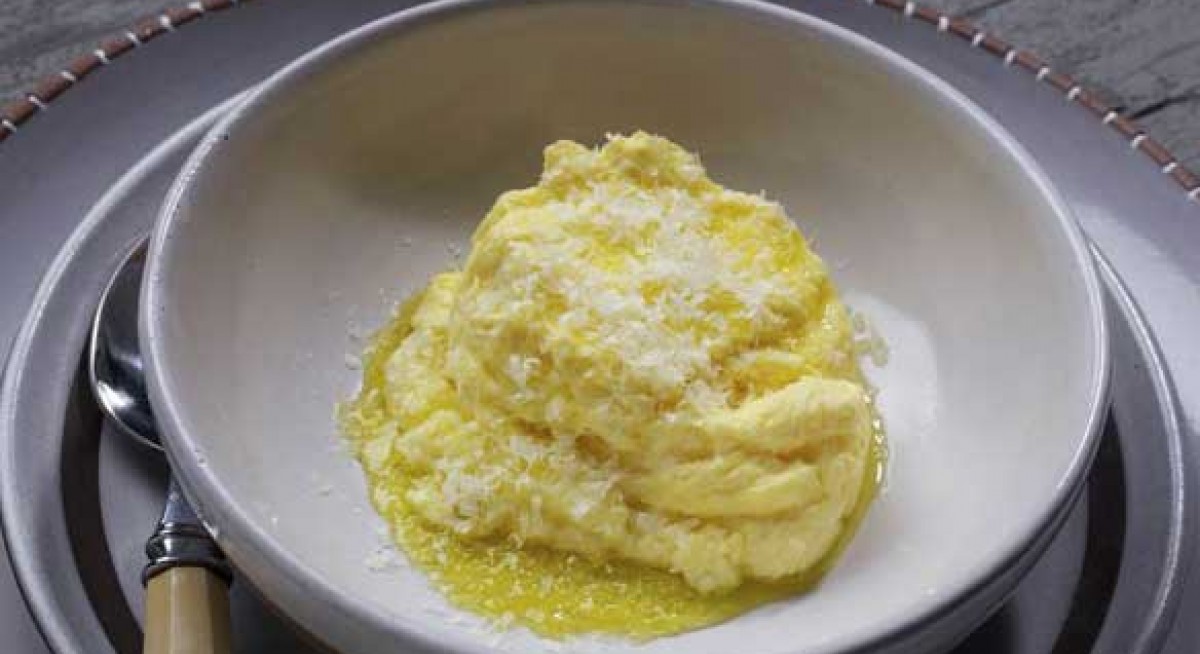

 It’s hard to think of a dish as elemental as scrambled eggs. The only requirements for the original two-ingredient recipe (if you don’t count seasoning) are fat for cooking and eggs. Though plenty of ways exist to make them more ambitious, with fancy ingredients and elegant presentations, it seems impossible to think of a way to change them beyond the three-step process of cracking, whisking, and pouring into a hot pan.


 Learn to hit your flavor target, says Patterson.
“There are a million recipes out there, but hardly any that explain why you’re mixing this with that, or that empower you. This book is about the ‘whys,’ about knowing what your flavor target is, and how to hit it,” says Patterson. “If you like spicy foods, high acid foods, dishes with that rich umami flavor, then get a handle on the ingredients that push that forward.”
Take sweet potatoes, he says. One of his favorite dishes in the book is for a soy-glazed version. Using three ingredients (sweet potatoes that are roasted, plus melted butter and dark soy sauce), Patterson transforms a staple side dish into one with sophisticated layers of dark, sweet, and salty flavors. “It will change your Thanksgiving,” predicts Patterson.
Learn to hit your flavor target, says Patterson.
“There are a million recipes out there, but hardly any that explain why you’re mixing this with that, or that empower you. This book is about the ‘whys,’ about knowing what your flavor target is, and how to hit it,” says Patterson. “If you like spicy foods, high acid foods, dishes with that rich umami flavor, then get a handle on the ingredients that push that forward.”
Take sweet potatoes, he says. One of his favorite dishes in the book is for a soy-glazed version. Using three ingredients (sweet potatoes that are roasted, plus melted butter and dark soy sauce), Patterson transforms a staple side dish into one with sophisticated layers of dark, sweet, and salty flavors. “It will change your Thanksgiving,” predicts Patterson.
 The simplest of recipes. Photographer: Daniel Patterson
Boiled Scrambled Eggs
The simplest of recipes. Photographer: Daniel Patterson
Boiled Scrambled EggsServes 2 4 large eggs, as fresh as possible
Salt and freshly ground pepper
Unsalted butter
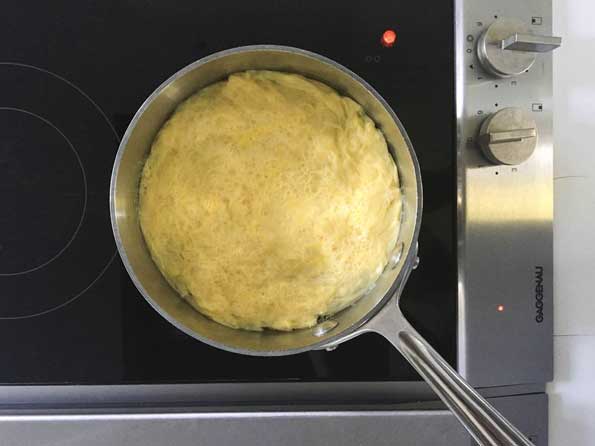 Your scrambled eggs are done. Photographer: Daniel Patterson
Stir the water to create a whirlpool, then pour in the eggs. Cover and count to 20. Uncover: The eggs should be floating on the surface in ribbons. Carefully pour the eggs into the strainer and let drain, gently tapping the strainer against the side to shake off any extra water. Divide the eggs between plates. (Tester’s note: Blot off any excess water from the plate with a paper towel.) Season the eggs with salt and pepper and a hunk of butter and serve with toast.
Your scrambled eggs are done. Photographer: Daniel Patterson
Stir the water to create a whirlpool, then pour in the eggs. Cover and count to 20. Uncover: The eggs should be floating on the surface in ribbons. Carefully pour the eggs into the strainer and let drain, gently tapping the strainer against the side to shake off any extra water. Divide the eggs between plates. (Tester’s note: Blot off any excess water from the plate with a paper towel.) Season the eggs with salt and pepper and a hunk of butter and serve with toast.




 Prefer is the brainchild of co-founders Tan Ding Jie (left) and Jake Berber (Albert Chua, The Edge Singapore)_0.jpg)