








 Brandt senior founded his small watchmaking workshop in the city of La Chaux-de-Fonds in 1848. Fast forward to 2019 and the company is marking the 125th birthday of the 19-ligne Omega Calibre and its naming with two new creations, unveiled by president and CEO Raynald Aeschlimann at the Omega Museum in Biel, across the road from its headquarters.
Aeschlimann recaps the brand’s journey: “Omega is the only watchmaker to be named after a movement, which proves our commitment to the art of precision. It is also a name renowned in so many areas — from moon landings and the Olympic Games to James Bond films and ocean exploration. This anniversary certainly deserves to be celebrated.”
Capping the celebration is the return of the 19-ligne calibre, which will be housed within a new half hunter pocket watch, expected to be launched later this year. Only 19 units of the movement will be produced, making this a truly exclusive edition befitting the iconic creation and the special occasion.
Brandt senior founded his small watchmaking workshop in the city of La Chaux-de-Fonds in 1848. Fast forward to 2019 and the company is marking the 125th birthday of the 19-ligne Omega Calibre and its naming with two new creations, unveiled by president and CEO Raynald Aeschlimann at the Omega Museum in Biel, across the road from its headquarters.
Aeschlimann recaps the brand’s journey: “Omega is the only watchmaker to be named after a movement, which proves our commitment to the art of precision. It is also a name renowned in so many areas — from moon landings and the Olympic Games to James Bond films and ocean exploration. This anniversary certainly deserves to be celebrated.”
Capping the celebration is the return of the 19-ligne calibre, which will be housed within a new half hunter pocket watch, expected to be launched later this year. Only 19 units of the movement will be produced, making this a truly exclusive edition befitting the iconic creation and the special occasion.
 Ligne, an old-fashioned unit of length first introduced in France, was widely used in Swiss watchmaking. Watch movements used to be named according to their diameter and one inch comprises 12 lignes. One ligne is about 2.26mm.
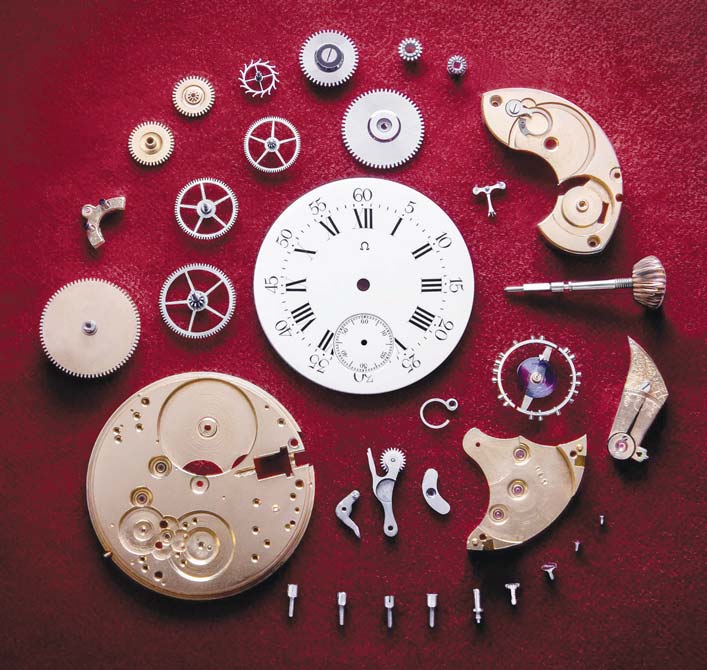
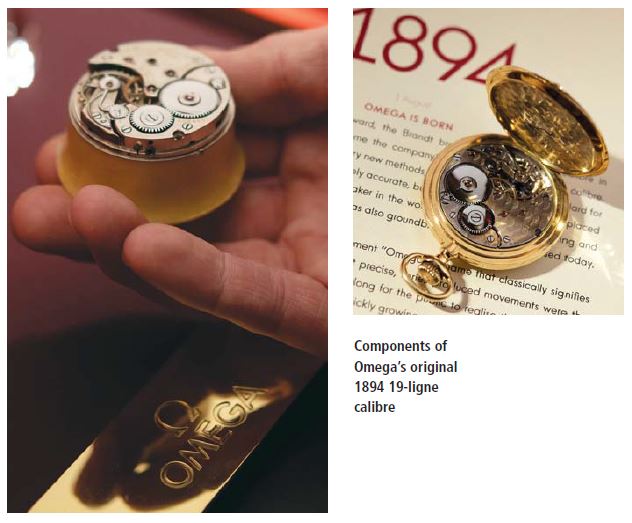
Omega had stopped producing the original 19-ligne calibre in 1923, but the last components in stock were put away in the Omega Museum, guardian of the brand’s history and heritage timepieces, for close to 100 years. These parts have been retrieved from its vaults and watchmakers at its Atelier Tourbillon are busy using original bridges, mainplates, escapements and bimetallic balance springs to recreate 19 new movements and imbue them with “a truly authentic and historic spirit”.
As a brand synonymous with evolution, Omega is fitting the second-generation 19-ligne with an innovative Swiss hand-setting system. Other updates include new parts, such as the barrel, main spring and some screws. The chatons and ruby stones will be recreated and the entire gear train will be recalculated to meet modern standards.
For an artistic flourish, the revitalised movement will be decorated with an intricate “damaskeening” pattern used by Omega early in the last century. When everything is in place, it will be assembled with a crown at three o’clock and placed inside a half hunter pocket watch.
“People like pocket watches, especially one built from original movements,” says Aeschlimann, after welcoming guests to the 125th anniversary celebration. “They appeal to young people and collectors.”
Limiting production to 19 units in keeping with the name of the movement is novel, but would that number be enough to satisfy collectors?
“It is never enough. We want to make it exclusive,” he adds, because owning a watch with a calibre given a new lease of life is “an emotional thing”.
Ligne, an old-fashioned unit of length first introduced in France, was widely used in Swiss watchmaking. Watch movements used to be named according to their diameter and one inch comprises 12 lignes. One ligne is about 2.26mm.
Omega had stopped producing the original 19-ligne calibre in 1923, but the last components in stock were put away in the Omega Museum, guardian of the brand’s history and heritage timepieces, for close to 100 years. These parts have been retrieved from its vaults and watchmakers at its Atelier Tourbillon are busy using original bridges, mainplates, escapements and bimetallic balance springs to recreate 19 new movements and imbue them with “a truly authentic and historic spirit”.
As a brand synonymous with evolution, Omega is fitting the second-generation 19-ligne with an innovative Swiss hand-setting system. Other updates include new parts, such as the barrel, main spring and some screws. The chatons and ruby stones will be recreated and the entire gear train will be recalculated to meet modern standards.
For an artistic flourish, the revitalised movement will be decorated with an intricate “damaskeening” pattern used by Omega early in the last century. When everything is in place, it will be assembled with a crown at three o’clock and placed inside a half hunter pocket watch.
“People like pocket watches, especially one built from original movements,” says Aeschlimann, after welcoming guests to the 125th anniversary celebration. “They appeal to young people and collectors.”
Limiting production to 19 units in keeping with the name of the movement is novel, but would that number be enough to satisfy collectors?
“It is never enough. We want to make it exclusive,” he adds, because owning a watch with a calibre given a new lease of life is “an emotional thing”.
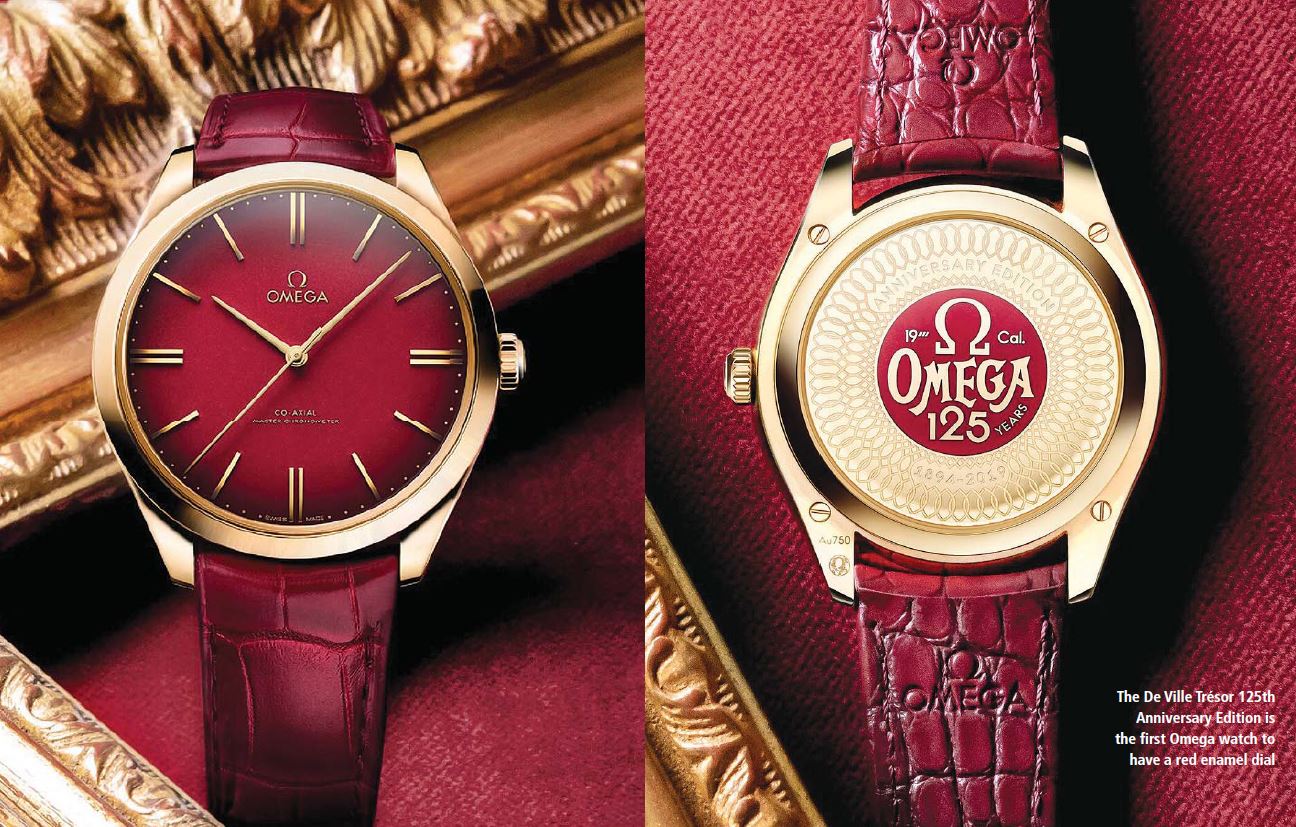
 As excited collectors look forward to a fresh chapter on the 19-ligne calibre, Omega is celebrating its quasquicentennial with a new De Ville Trésor that boasts another first — a wristwatch with an enamel dial in red, inspired by its brand colour, with matching burgundy leather strap adorned with tone-on-tone stitching.
This creation follows the design of the Omega De Ville Trésor gents’ collection and has a 40mm case in 18-carat yellow gold, domed indices and elegant hands. Flip to the caseback and you will see “OMEGA 125 YEARS” marked on an 18-carat yellow-gold medallion filled with red enamel and embellished with swirling damaskeening.
The heartbeat of the De Ville Trésor 125th Anniversary Edition — gently passed from one hand to another in Biel after it was unveiled — is the new Omega Master Chronometer Calibre 8929, the brand’s first manual-winding master chronometer movement. It is a fitting tribute to a company that constantly turns to its heritage to come out with unique watches that relate to the present and will, no doubt, stand the test of time.
Talking about that, what could be more relevant to the times than man’s landing on the moon, 50 years to the day come July 16? The landmark event is doubly significant for Omega because it was the “First Watch Worn on The Moon”, a tagline strapped to the timepieces on the wrists of astronauts Buzz Aldrin and Neil Armstrong.
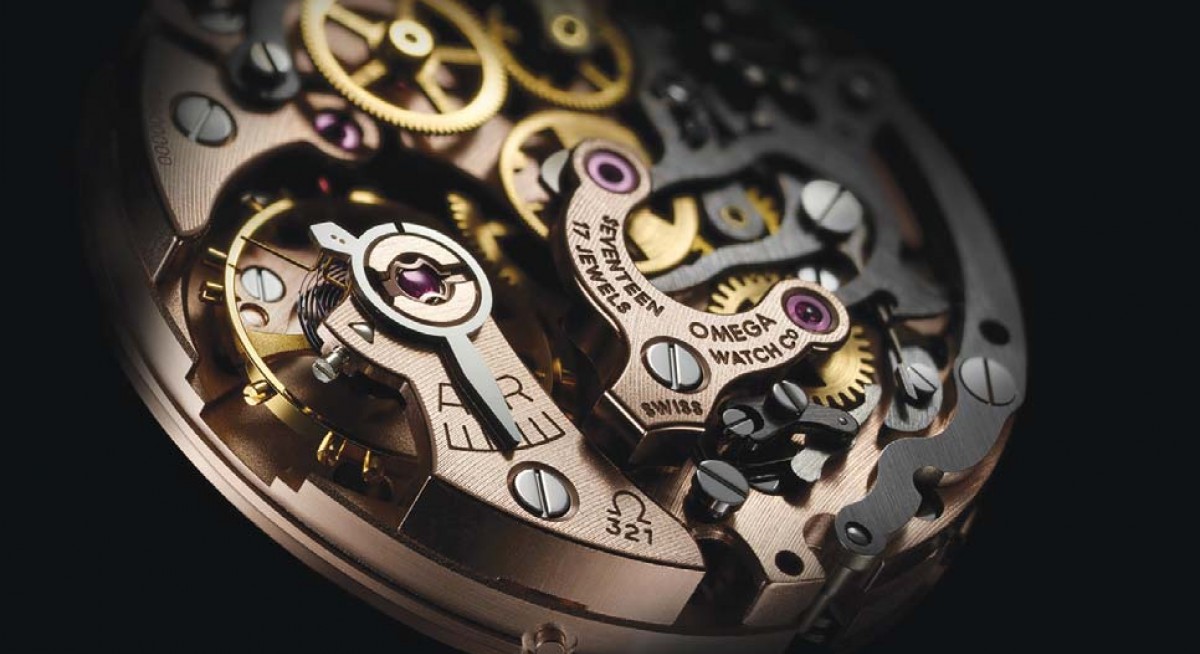
The atelier is relaunching the Calibre 321, the chronograph movement behind the first generations of the Omega Speedmaster Moonwatch. Production of the calibre stopped decades ago, and the company is all geared up to bring it back. Robust yet elegant, this calibre uses a monobloc column-wheel machined from a single piece, a fact that enhances its technical value to collectors.
As excited collectors look forward to a fresh chapter on the 19-ligne calibre, Omega is celebrating its quasquicentennial with a new De Ville Trésor that boasts another first — a wristwatch with an enamel dial in red, inspired by its brand colour, with matching burgundy leather strap adorned with tone-on-tone stitching.
This creation follows the design of the Omega De Ville Trésor gents’ collection and has a 40mm case in 18-carat yellow gold, domed indices and elegant hands. Flip to the caseback and you will see “OMEGA 125 YEARS” marked on an 18-carat yellow-gold medallion filled with red enamel and embellished with swirling damaskeening.
The heartbeat of the De Ville Trésor 125th Anniversary Edition — gently passed from one hand to another in Biel after it was unveiled — is the new Omega Master Chronometer Calibre 8929, the brand’s first manual-winding master chronometer movement. It is a fitting tribute to a company that constantly turns to its heritage to come out with unique watches that relate to the present and will, no doubt, stand the test of time.
Talking about that, what could be more relevant to the times than man’s landing on the moon, 50 years to the day come July 16? The landmark event is doubly significant for Omega because it was the “First Watch Worn on The Moon”, a tagline strapped to the timepieces on the wrists of astronauts Buzz Aldrin and Neil Armstrong.
The atelier is relaunching the Calibre 321, the chronograph movement behind the first generations of the Omega Speedmaster Moonwatch. Production of the calibre stopped decades ago, and the company is all geared up to bring it back. Robust yet elegant, this calibre uses a monobloc column-wheel machined from a single piece, a fact that enhances its technical value to collectors.
 Work on the hush-hush Calibre 321 project, code-named “Alaska 11” — a reference to the names Omega used for its secret Speedmaster designs for NASA in the 1960s and 1970s — began in Biel two years ago. It involves a small group of researchers, developers, historians, craftsmen and watchmakers. Every aspect of the movement will be created at a dedicated workshop there, with the same watchmaker assembling each calibre as well as the watch head and bracelet.
The team looked to the second-generation Calibre 321 to reconstruct the new movement. A Speedmaster ST 105.003 timepiece worn by Eugene Cernan on the moon during the 1972 Apollo 17 mission was scanned digitally, utilising tomography technology, to see how it works inside. All these undergird the brand’s efforts to bring out a calibre that stays true to its authentic specifications.
“It’s amazing that so many people are passionate about the Calibre 321. We produced the last one in 1968 and fans have never stopped talking about it. That shows how special it is. We’re very excited to finally meet their wishes and have gone to great efforts to bring the movement back,” Aeschlimann said.
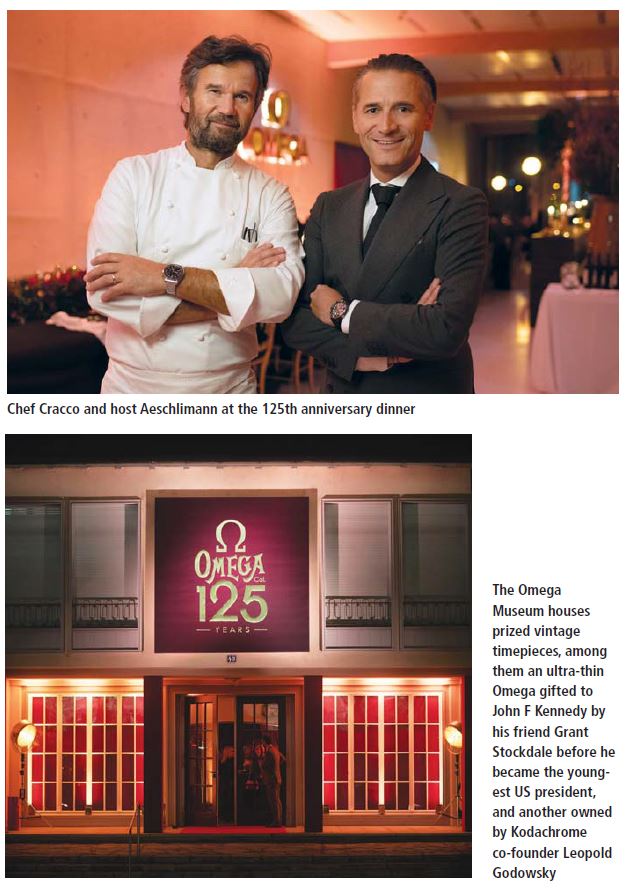
Guests had their turn at various stations where they got a closer look at a sample of the new 19-ligne calibre and the original movement components brought out from the Omega Museum vault, as well as treasured watches from its collection — such as Cernan’s Speedmaster ST 105.003. After that, everyone sauntered over to the atelier for dinner, prepared by Carlo Cracco, Italian chef, TV host, Michelin-starred restaurateur as well as a close friend of the brand, the host added.
Work on the hush-hush Calibre 321 project, code-named “Alaska 11” — a reference to the names Omega used for its secret Speedmaster designs for NASA in the 1960s and 1970s — began in Biel two years ago. It involves a small group of researchers, developers, historians, craftsmen and watchmakers. Every aspect of the movement will be created at a dedicated workshop there, with the same watchmaker assembling each calibre as well as the watch head and bracelet.
The team looked to the second-generation Calibre 321 to reconstruct the new movement. A Speedmaster ST 105.003 timepiece worn by Eugene Cernan on the moon during the 1972 Apollo 17 mission was scanned digitally, utilising tomography technology, to see how it works inside. All these undergird the brand’s efforts to bring out a calibre that stays true to its authentic specifications.
“It’s amazing that so many people are passionate about the Calibre 321. We produced the last one in 1968 and fans have never stopped talking about it. That shows how special it is. We’re very excited to finally meet their wishes and have gone to great efforts to bring the movement back,” Aeschlimann said.
Guests had their turn at various stations where they got a closer look at a sample of the new 19-ligne calibre and the original movement components brought out from the Omega Museum vault, as well as treasured watches from its collection — such as Cernan’s Speedmaster ST 105.003. After that, everyone sauntered over to the atelier for dinner, prepared by Carlo Cracco, Italian chef, TV host, Michelin-starred restaurateur as well as a close friend of the brand, the host added.
Tan Gim Ean is an assistant editor of the Options desk at The Edge Malaysia