


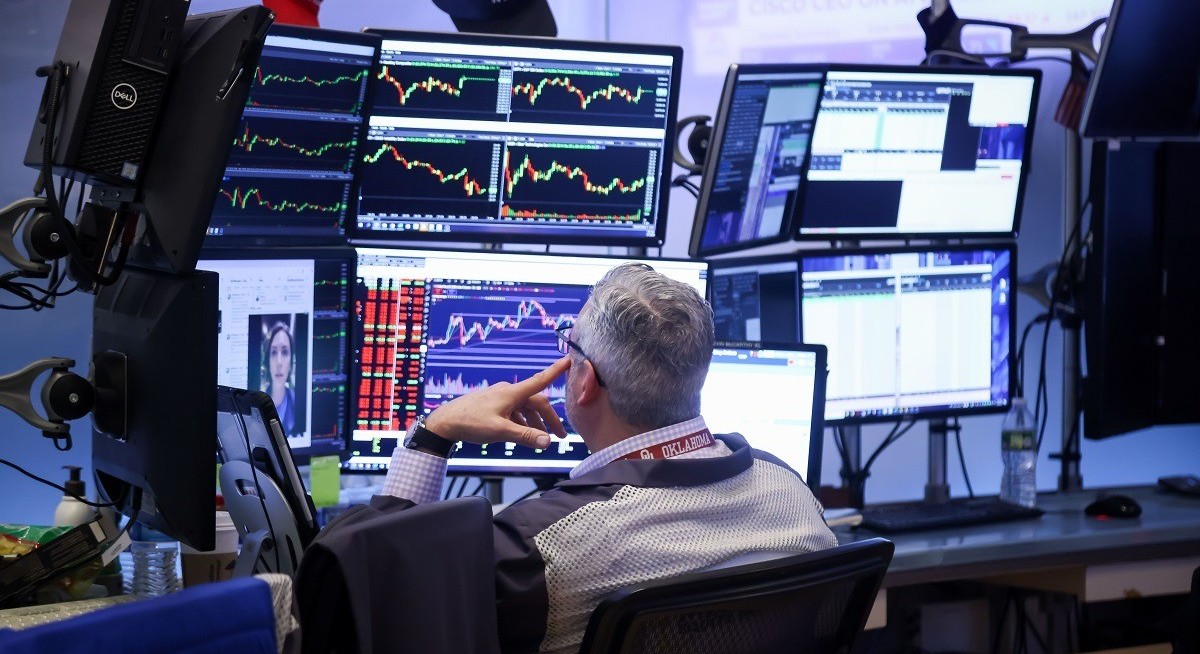


(May 19): US stocks opened lower on Tuesday, weighed down as US long-term yields touched their highest since 2007. Software shares rallied while chip stocks extended declines, signaling some rotation within the tech sector.
The S&P 500 Index fell 0.4% at 9:58am in New York, while the tech-heavy Nasdaq 100 Index dropped 0.2%. The Philadelphia Stock Exchange Semiconductor Index, known as the SOX, was little changed. Nvidia slipped 0.9% ahead of results due later this week.
An S&P 500 decline would drag stocks into a third down day. The index ended a choppy Monday session slightly below where it started, with rising yields, hot inflation and elevated oil prices are curbing investors’ appetite. Treasury yields continued their ascent Tuesday, with the 30-year benchmark touching 5.18% and the 10-year rising to 4.66%.
“The US 10-year properly valued should be near 4.68%, which drives the cost of capital higher which will damp equity valuations during a week when investors will get a number of consumer bellwethers,” RSM economist Joseph Brusuelas said.
Beaten-down software stocks were advancing, with the iShares Expanded Tech-Software Sector ETF, ticker IGV, up 2%. Software’s risk-reward ratio is “still attractive given the sizeable underperformance since October,” Fundstrat head of research Thomas Lee wrote. The IGV was down about 19% since the end of September as of Monday’s close, while the SOX index had rallied 77%.
West Texas Intermediate crude oil rose was little changed at around US$109. President Donald Trump said he called off a new bombardment of Iran planned for Tuesday after Saudi Arabia and other Persian Gulf allies wanted more time to pursue diplomacy. That’s helped ease oil prices, though crude is still up more than 50% since the hostilities began, serving as an inflationary accelerant.
See also: Trump administration set to roll out plan for trading crypto versions of stocks — Bloomberg
“Stagflationary macroeconomic environments don’t necessarily hobble a country’s stock market,” Ed Yardeni, president and chief investment strategist at Yardeni Research, wrote in a Tuesday note. That’s as long as “companies can grow profit margins nonetheless.”
Some market observors are growing more circumspect. “We’re not bearish yet, but becoming increasingly more cautious on the second half,” Wells Fargo Securities equity analyst Ohsung Kwon wrote in a note. He cited increasing supply of stocks due to initial public offerings, along with risk from the midterm elections, inflation and fiscal pressure. Kwon noted that the S&P 500 fell more than 10% in the second half of midterm years 71% of the time, versus 44% in other years.
Home Depot Inc shed 1.4% after reporting mixed earnings, with comparable sales missing expectations. Business has been hurt by elevated interest rates and high housing prices, and as shoppers defer large projects.
See also: US SEC ends decades-old ‘gag rule’ in enforcement settlements
Citigroup Inc fell 1.7% after a downgrade from CFRA’s Kenneth Leon. He wrote that the Iran conflict “could trigger tail risks including inflationary pressures and lower consumer confidence.” If the US economy were to slow, borrowing would likely ease, hurting credit card income and commercial loan activity.
Uploaded by Magessan Varatharaja




