


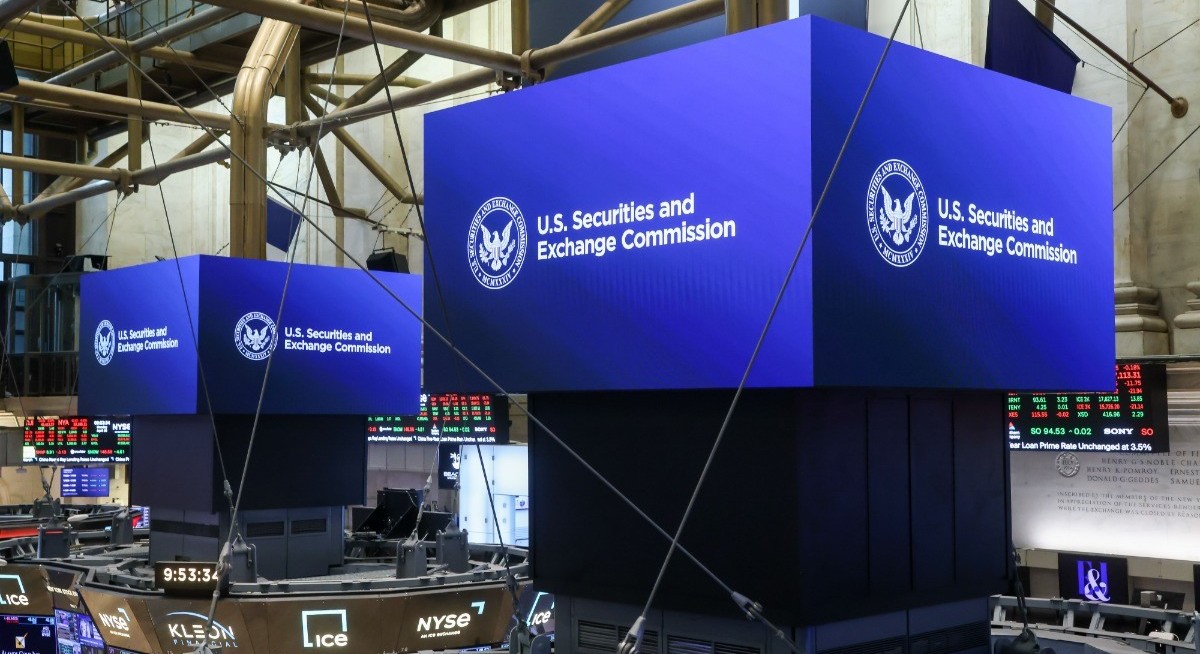


(May 19): The Trump administration is poised to roll out a plan for trading digital versions of securities that could reshape the landscape of the American stock market as it continues to loosen the rules for free-wheeling crypto markets.
The Securities and Exchange Commission (SEC) is expected to release its so-called innovation exemption for tokenised stocks as soon as this week, creating a new framework for betting on the fortunes of publicly traded companies, according to people familiar with the matter.
In a surprise move, the SEC is leaning towards a decision to allow the trading of tokens that do not have the backing or consent of the public companies whose shares they track, the people said. These “third-party” tokens — effectively a novel way to speculate on the direction of the share price — would be tradeable on decentralised crypto platforms, though not all such instruments necessarily carry the same benefits as normal stocks, such as voting rights or dividends. Under the SEC’s proposal, platforms that fail to provide those benefits would lose the right to list the tokens.
The move would mark one of the most significant regulatory tests yet of whether stock trading can migrate onto crypto infrastructure without the protections that govern traditional equity markets. By allowing third parties to create tokenised versions of public-company shares without issuer consent, the SEC would open a multi-year experiment in whether parallel markets for listed stocks can function outside parts of the regulatory framework designed to ensure fair pricing, transparency and investor protection.
The SEC has said tokenised securities fall into two categories: those tokenised by or on behalf of issuers, and those tokenised by third parties that are not directly affiliated with the issuers. SEC officials are still working on the exemption and details could change before it is released. An SEC spokesperson said the agency has met with hundreds of market participants and sought broad feedback on how to calibrate its rules for new types of trading.
Hot crypto trend
See also: US SEC ends decades-old ‘gag rule’ in enforcement settlements
Tokenisation of real world assets has become one of the hottest trends in crypto in the past year. It involves the creation of digital representations of assets such as stocks, bonds, real estate and private credit. Backers of the technology say the near-instant settlement and 24/7 trading it supports can help make markets more efficient and provide new benefits to investors.
Last week, the Senate Banking Committee advanced a landmark digital asset market structure bill. The so-called Clarity Act would establish the Commodity Futures Trading Commission as the primary regulator for large parts of the crypto industry while the SEC would retain authority to oversee digital securities.
US stock markets are racing to prepare for a tokenised, around-the-clock trading future as the SEC, under the leadership of chairman Paul Atkins, eases rules governing the crypto industry. Earlier this month, Bullish, the crypto exchange run by former New York Stock Exchange (NYSE) president Tom Farley, bought transfer agent Equiniti in a US$4.2 billion ($5.4 billion) deal. Transfer agents are stock-exchange record keepers that track ownership of shares and facilitate dividend payments, among other duties.
See also: Stocks and oil whipsaw on mixed US-Iran signals
The NYSE is also building a venue using blockchain technology to allow for trading tokenised stocks and exchange-traded funds. Nasdaq, the second largest US stock exchange, has said it is working on a token design that gives publicly traded companies more control over their shares in tokenised form.
Crypto carve-out
Parts of the regulatory framework governing US stock trading would not apply to third-party tokenised securities, which are essentially vehicles intended to mirror the shares of public companies. The exemption covers tokens traded on decentralised finance platforms, or DeFi, a US$130 billion corner of crypto where investors trade, borrow and lend digital assets over protocols that run on automated code with minimal human intervention.
Several DeFi platforms have been targeted by hacks this year that have drained hundreds of millions of dollars from their coffers, underscoring the vulnerabilities that persist in the relatively nascent technology.
Expanding trading of tokenised securities to DeFi has raised concerns that they could add to the fragmentation of the stock market as assets linked to the same underlying stock change hands on multiple crypto venues.
The Securities Industry and Financial Markets Association said in a December post that the potential lack of standard requirements such as market interconnectivity and price transparency for tokenised markets could create the risk that markets “will fragment and become disorderly”.
“If third parties can tokenise Apple or Amazon without the issuer at the table, there’s no theoretical limit on how many wrappers of the same company exist at once,” said Brett Redfearn, the president of tokenisation firm Securitize and former director of the SEC’s trading and markets division. “This could create a whole new level of market fragmentation and could leave investors less certain what their shares are actually worth at any moment.”
To stay ahead of Singapore and the region’s corporate and economic trends, click here for Latest Section
SEC dissent
Some SEC officials don’t support the decision to allow the trading of third-party tokenised securities, according to people familiar with the agency. The push for the exemption largely came from commissioner Hester Peirce, a long-time ally of Atkins, the people said.
In remarks at an SEC meeting in March, Peirce raised a number of questions about the innovation exemption, including whether it should “require a third party to obtain issuer consent to issue tokenised versions of existing equity securities of that issuer”, according to a transcript of her remarks.
The exemption was pitched as a way to let firms experiment with tokenised securities without immediately running afoul of US securities laws. Atkins, who took over the SEC promising a “new day” at the agency and an end to so-called regulation by enforcement in crypto, began floating the idea early in his tenure.
Securities industry insiders such as Citadel Securities and SIFMA have pushed back, warning that broad exemptions for tokenised stocks could weaken know-your-customer, anti-money laundering and other investor protections. Citadel wrote in December that any exemption should not override core market safeguards.
In recent months, Atkins and Peirce had sought to temper expectations, describing any potential carve-out as narrower and incremental. “It would be an important step toward facilitating the integration of tokenised securities into our existing financial system, but it would not change the entire financial system overnight,” Peirce said in February.
Uploaded by Tham Yek Lee




