


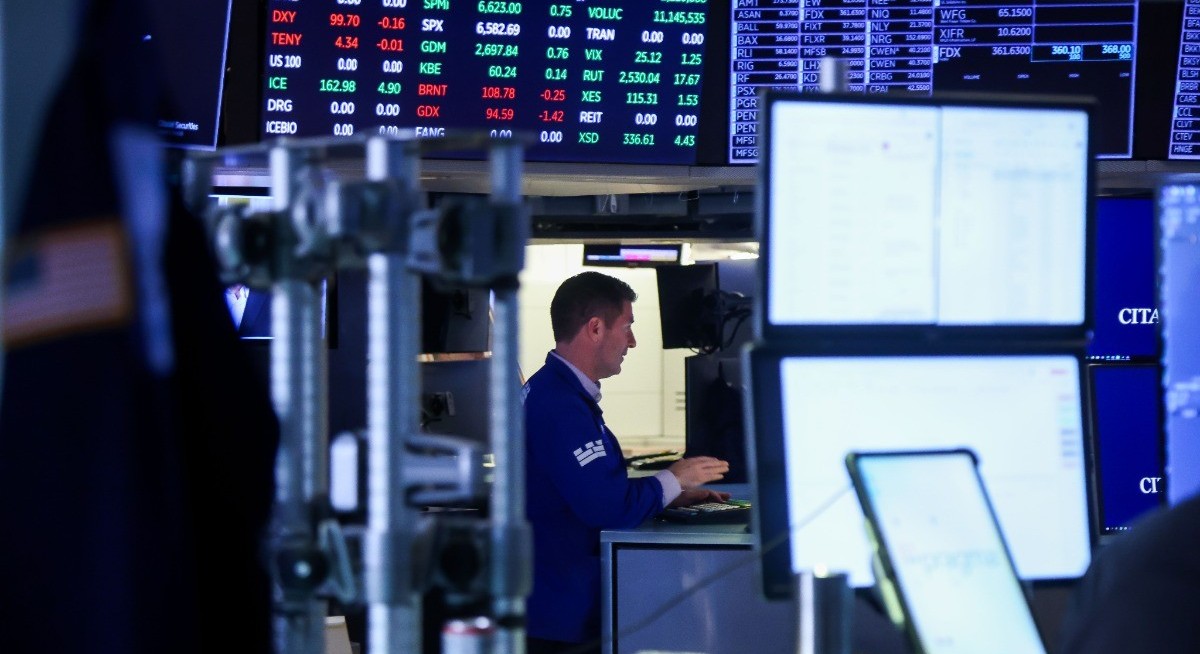


(June 15): A deal to reopen the Strait of Hormuz spurred a rally in riskier corners of Wall Street, with stocks climbing alongside cryptocurrencies as oil sank on hopes the war that has jolted markets is close to an end.
The advance in equities drove the S&P 500 higher by 1.7% on Monday. The tech-heavy Nasdaq 100 added 3.1% while the Dow Jones Industrial Average hit all-time highs. US crude settled below US$81, easing inflation concerns. While Treasuries and the dollar barely budged, bets on Federal Reserve (Fed) rate hikes receded. Bitcoin topped US$66,000.
President Donald Trump and Vice President JD Vance signed an electronic copy of a memorandum of understanding with Iran, a senior US official said in a call with reporters. Hormuz “is already partially opened,” and “it’ll be completely opened” on Friday, Trump noted during a meeting with French President Emmanuel Macron.
“The agreement between the US and Iran is a major breakthrough and a positive for markets as the back and forth in the negotiations has only caused additional uncertainty and volatility,” said Michael Landsberg at Landsberg Bennett Private Wealth Management.
While the nature of the deal could bring about further breakdowns between the sides — especially surrounding the major sticking point of removing Iran’s nuclear material — the reopening of the strait will help push oil prices down, he added.
“Volatility may persist in the near term as markets assess the implementation and durability of the deal, but we maintain our view that resilient growth and robust earnings should continue to drive stocks higher,” said Ulrike Hoffmann-Burchardi at UBS Chief Investment Office.
See also: Stocks fall as traders see Fed hike by October
US stocks could get an additional boost from a rotation into economically-sensitive sectors that have lagged during the war, according to Morgan Stanley strategists led by Michael Wilson. JPMorgan Chase & Co’s Mislav Matejka said the move into cyclicals is “on track to remain a winning strategy” through year end, provided geopolitical tensions ease and earnings and inflation remain stable.
“We believe easing geopolitical tensions could help alleviate inflation pressures and help reduce bond yields, potentially driving a rotation into cyclical sectors and previously lagging areas of the market,” said Angelo Kourkafas at Edward Jones.
After starting the week with a boost from the US-Iran deal, the equity market will quickly search for a new source of momentum, noted Chris Larkin at E*Trade from Morgan Stanley. While that won’t come in the form of a Fed cut, this week’s meeting will be an opportunity to get a read on how new Chair Kevin Warsh may pursue his longer-term agenda, he said.
See also: Nasdaq 100 falls 2% as chipmakers halt solid run
With the drop in oil, swap traders priced in lower chances of rate hike by December. The Fed is due to announce its next policy decision Wednesday, with economists expecting the central bank to keep its benchmark rate in a range of 3.5% to 3.75% as it waits to see how the war’s energy-price shock ripples through the economy.
Uploaded by Isabelle Francis




