


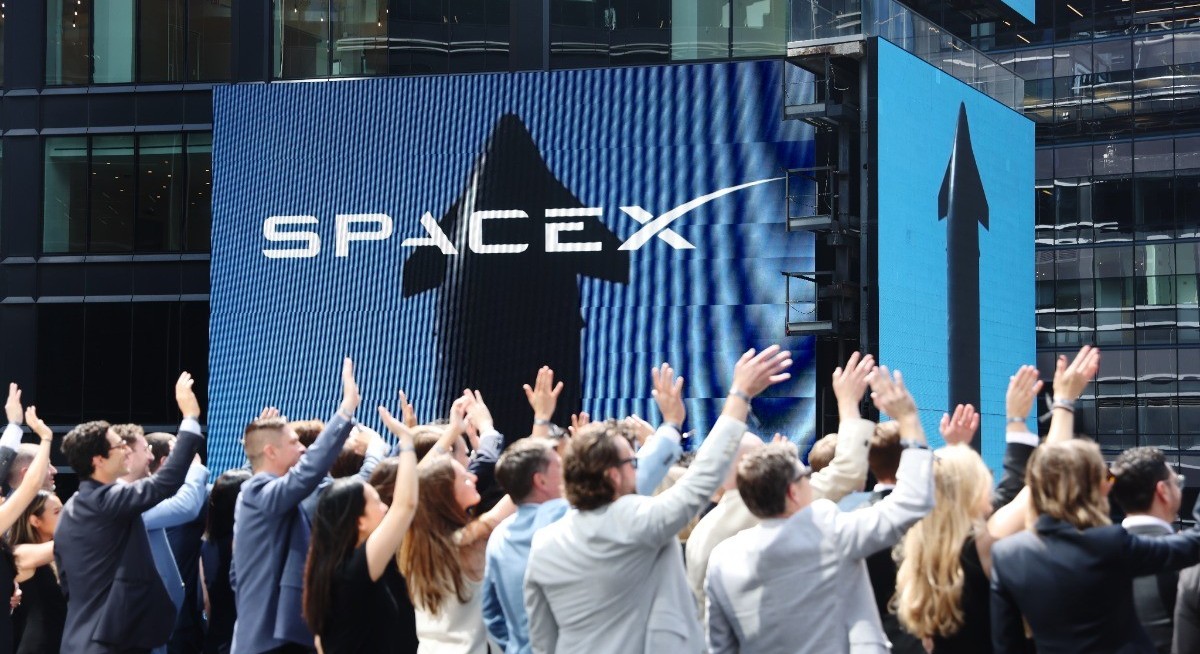


(June 30): It was supposed to be the deal that vaulted Mirae Asset Securities Co into the global big leagues.
But SpaceX’s record-breaking initial public offering has instead forced South Korea’s biggest brokerage to apologise to its clients and have its practices inspected by local regulators.
The episode, which left Mirae as the only one of 23 underwriters to receive no stock allocation in SpaceX’s IPO, underscores how even the most mundane communication snafus can have big consequences for financiers working on multibillion-dollar deals.
At the heart of the issue was a misunderstanding over how orders were supposed to be submitted for SpaceX’s offering, according to people familiar with the situation, who asked not to be identified discussing previously unreported details about a private matter.
The brokerage inadvertently treated an early request to indicate investor interest as the point at which it had submitted binding orders, the people said. As a result, more than US$1.1 billion (RM4.48 billion) worth of Korean demand was never entered into the IPO order book, they said.
The apparent misunderstanding — the most consequential in what the people described as a series of miscommunications between Mirae and the lead managers — came during a step in the IPO process known internally as “Project Apex". In mid-May, weeks before bookbuilding began, the bookrunners circulated an email asking underwriters to indicate investor demand, which was aggregated in a virtual data room in line with standard practice for large deals.
See also: Most US stocks rise as Warsh says price risks fading
Mirae responded to that request, believing it had placed its clients’ orders, according to some of the people who are familiar with the firm’s thinking. But from the perspective of the Wall Street banks running the deal, those responses were only indications of interest, not bids. The actual orders were entered in June after a separate email from the bookrunners, as is customary for such IPOs.
In other words, the New York-based banks viewed Mirae as having submitted zero retail orders and ultimately allocated it zero retail shares, according to the people.
The miscommunication has emerged as one of the few blemishes on an otherwise successful deal. The US$86 billion offering, the biggest in history, has won praise from investors for proceeding smoothly despite its complexity and compressed timeline.
See also: US stocks decline as traders await Warsh comments, fresh data
The IPO’s lead arrangers — Goldman Sachs Group Inc, Morgan Stanley and Citigroup Inc — as well as Mirae declined to comment. A South Korean government spokesperson and the Financial Supervisory Service also declined to comment. SpaceX didn’t respond to a request for comment sent outside business hours in Texas.
“We bow our heads in apology for delivering such unfortunate and heavy news to customers who participated in the SpaceX IPO subscription with great interest and anticipation,” Mirae vice-chairmen Kim Mi-seop and Heo Seon-ho said in a text message to clients on June 15, the Seoul Economic Daily reported. They pledged a review of the process and measures to “restore consumer trust", according to the newspaper.
The FSS in Seoul had earlier started an inspection to determine whether investors who signed up for the SpaceX shares met eligibility requirements, people familiar with the matter have said. That process was later expanded to examine the brokerage’s failure to secure an allocation of SpaceX shares, they said.
Mirae was an early investor in Elon Musk’s rocket, satellite communications and artificial intelligence company, giving it an inside track to become one of only a handful of foreign underwriters on the IPO. It also had access to South Korea’s eager retail investor base, which has helped drive one of the world’s best-performing stock markets.
Regulators in Seoul haven’t yet disclosed the findings of their inspection — a more formal process than a review in the FSS’ practice and one that could lead to sanctions. Lee Chan-jin, the head of the watchdog, told reporters on June 22 that he found it “incomprehensible even now” that Mirae ended up with no shares and had expected that Korean professional investors would “of course” win allocation.
Uploaded by Arion Yeow




