


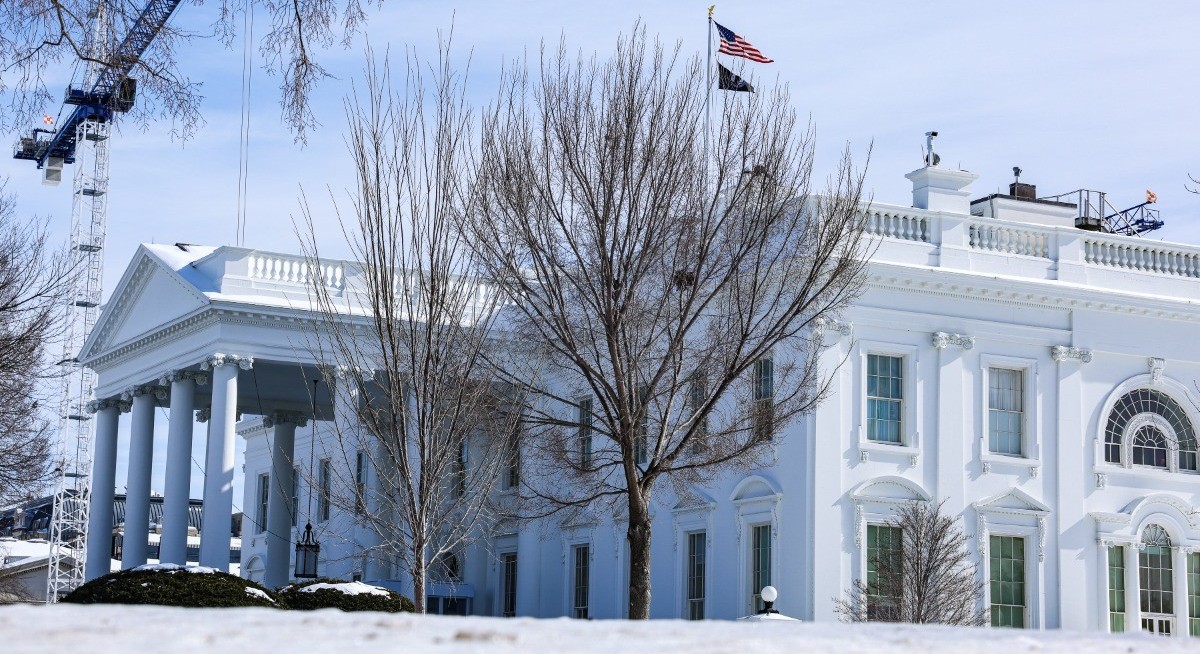


(Feb 24): Donald Trump’s new 10% global tariffs went into effect on Tuesday, kicking off a White House effort to preserve the president’s trade agenda after the Supreme Court struck down his original sweeping duties.
The president signed an executive order last Friday authorising the 10% import tax just hours after the ruling. He subsequently threatened to raise the number to 15%, but Trump did not officially issue a directive to increase the rate by Tuesday at 12.01am Washington time when the 10% levy went into effect.
The White House is working on a formal order that will increase the global tariff rate to 15%, according to an administration official. The timeline for implementing that higher levy has not been finalised, said the official, who spoke on the condition of anonymity to discuss private matters.
The lack of clarity from Washington has spawned confusion around the globe about Trump’s tariff agenda. Countries and corporations are poring over existing trade agreements to determine how they’d fare under Trump’s latest threats. Major trading partners, including the European Union and India, have abruptly halted ongoing trade negotiations amid the uncertainty.
Trump is applying the 10% baseline levy under Section 122 of the 1974 Trade Act, which allows the president to impose the charge for 150 days without congressional approval. He turned to this approach after the court ruled he violated an emergency-powers law by using it to enact his so-called “reciprocal” tariffs on goods from countries worldwide.

See also: Panama to occupy canal ports after court scraps CK Hutchison deal
The order preserved some exemptions, including for goods compliant with the North American trade pact between the US, Canada and Mexico as well as an exception for some agricultural goods that existed under Trump’s invalidated levies.
The average effective US tariff rate will settle around 10.2% including those exemptions, down from 13.6% before the court decision, according to a Bloomberg Economics analysis. Under a 15% global levy, that effective rate would be about 12%, according to the study.
Trump’s team has said tariffs will remain central to his trade policy, reiterating plans to launch a series of investigations on accelerated timelines that allow him to unilaterally impose duties — all with the goal of rebuilding the tariff regime the court ruling effectively destroyed.
See also: Trump eyes new trade probes to revive tariffs after court defeat
None of the authorities the White House has identified — such as Section 301 and Section 232 — are as flexible as the emergency powers Trump had previously used to wield leverage against trading partners.
The administration is preparing to launch investigations into the impact of importing a spate of industrial goods — including batteries, cast iron and iron fittings, electrical grid and telecom equipment, plastic piping and some chemicals — on the basis of national security concerns.
The probes, which haven’t yet been officially announced, are a precursor to new tariffs, but could take months to conclude.
As they respond to the justices’ decision, administration officials have urged trading partners to uphold deals they’ve negotiated with the US over the last year.
“We want them to understand these deals are going to be good deals,” US Trade Representative Jamieson Greer said on CBS’s Face the Nation on Sunday. “We’re going to stand by them. We expect our partners to stand by them.”
That argument proved less than reassuring to some major economies. The European Union froze ratification of its agreement with the US on Monday until Trump firms up his latest tariff plans. In New Delhi, officials cited similar reasons for India postponing talks in the US this week on finalising an interim trade deal.
Trump on Monday threatened even higher tariffs on partners that “play games” with their existing agreements.
To stay ahead of Singapore and the region’s corporate and economic trends, click here for Latest Section
European Central Bank President Christine Lagarde said on Face the Nation that it’s “critically important” for global trade to “have clarity” from the US administration.
Trump’s threat to raise the global baseline to 15% has also rattled some traditional allies that cut deals with Trump. The UK negotiated a 10% rate with the administration last year and the higher level could create a less favourable situation for its exporters.
Meanwhile, other more adversarial nations including China may find their hand strengthened in negotiations with Trump now that his emergency powers have been curtailed. The US president is set to visit Beijing late next month for a highly anticipated meeting with his counterpart, Xi Jinping.
The tariffs took effect hours before Trump is expected to deliver his State of the Union address to Congress, which will be attended by Democrats and some Republicans who have opposed elements of his trade policy.
The prime-time speech is expected to focus on his economic agenda as Republicans try to land on a midterm message for an electorate frustrated by the cost of living. The public is souring on Trump’s trade policies and increasingly sees them as driving prices higher, polls show. A Washington Post/ABC/Ipsos survey found that 64% of Americans disapproved of Trump’s handling of tariffs, compared with 34% who approved.
Uploaded by Evelyn Chan




