


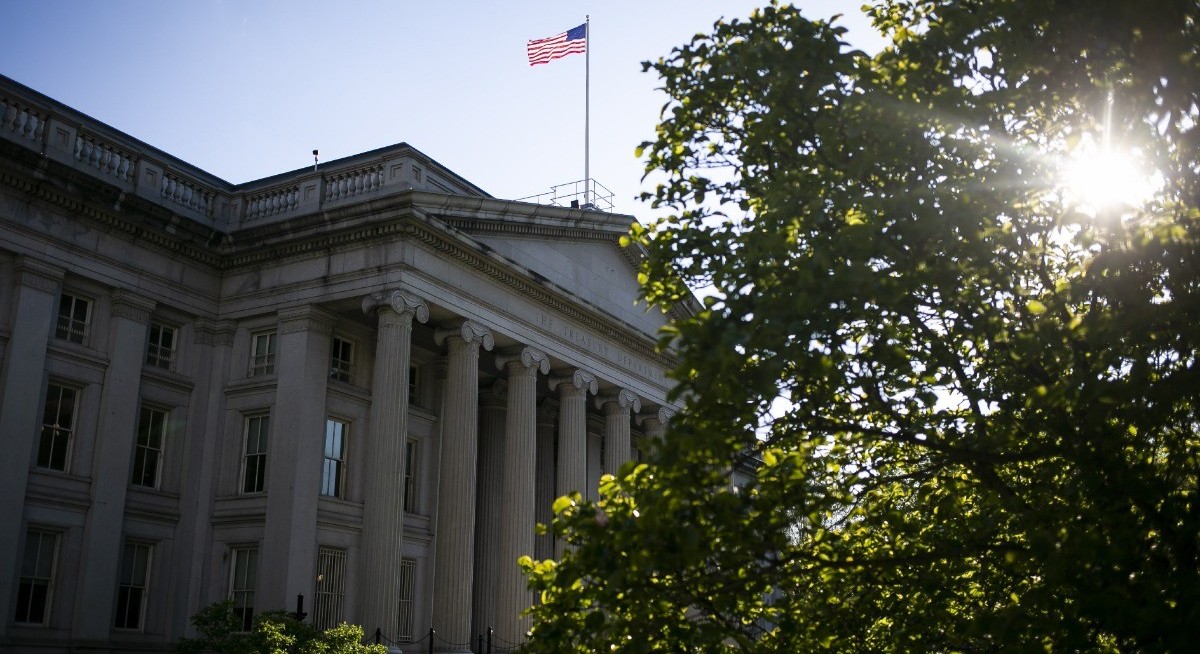


(May 13): The yield on benchmark 10-year Treasuries rose to the highest since July as evidence of accelerating US inflation pushed traders to almost fully price in a Federal Reserve (Fed) interest-rate hike in the coming year.
The 10-year yield increased almost two basis points on Wednesday to as high as roughly 4.49% after US wholesale inflation accelerated in April to the fastest pace since 2022 amid a war-driven rise in energy prices. Yields across maturities reached session highs after the data before retreating to little-changed levels, and the dollar rose.
While the increases were small, yields on five- and 30-year Treasuries also reached their highest levels of the year. The 30-year topped 5.04% for the first time since July ahead of an auction of new bonds of the tenor at 1pm New York time. At that level in the auction, the new bonds would carry a 5% fixed interest rate — the first for the 30-year since 2007.
Traders boosted bets that the Fed will hike rates by the middle of next year. Contracts linked to future policy decisions briefly priced in as much as 24 basis points of a quarter-point increase by June 2027 meeting, compared to 21 basis points at Tuesday’s close.
“The conversation for new rate hikes may be opening, but first and foremost the Fed is going to remove some of that easing bias from the statement and reaffirm their positions on the sideline,” Lindsey Piegza, the chief economist of Stifel, told Bloomberg Television after the release of the wholesale prices data. “What’s more concerning is this morning’s report suggests that the brunt of the pain has not yet been felt.”

See also: Foreign holdings of Treasuries fell in March amid bill sales
As recently as late February, when the US attack on Iran unleashed a surge in oil prices that’s fed into broad inflation gauges such as Wednesday’s producer price index (PPI), short-term interest-rate futures were fully pricing in two interest-rate cuts by the Fed this year.
The PPI follows consumer price index (CPI) data for April released on Tuesday, which showed less dramatic acceleration. The PPI rose 6% year-on-year in April, up from a revised 4.3% in March. Excluding food and energy prices the rate climbed to 5.2% from 4%. Both rates exceeded economist estimates. The CPI and core CPI rose 3.8% and 2.8% respectively, also higher than estimated.
Meanwhile, oil prices have risen further from their April levels, suggesting the impact on broad inflation gauges will be sustained. Retail gasoline prices remained above US$4 a gallon in April and have exceeded US$4.50 this month.
See also: US industrial production rises by most in over a year
Market-based inflation expectations rose further, approaching this year’s highs. The breakeven rate for 10-year inflation-protected bonds, representing the average CPI rate needed to match the return of a conventional bond, rose one basis point to 2.51%, having reached a multi-year high of 2.53% earlier this month. That increase was curtailed by traders’ amped-up bets on Fed tightening, which could counterbalance to price pressures.
In the lead-up to the PPI print, there was heavy demand for downside protection in short-term interest rate options that would benefit from an increase in the amount of Fed tightening anticipated by mid-2027.
Uploaded by Tham Yek Lee




